
AR

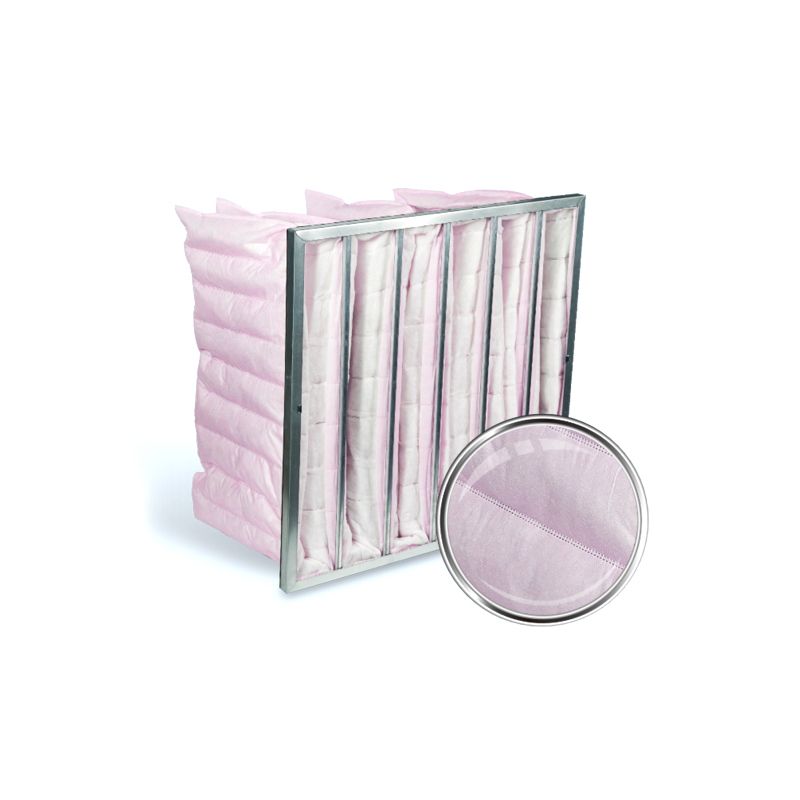
The Celrith Bag Filter is a high-capacity air filter that captures particles and protects HVAC systems, cleanrooms, and industrial processes. It filters airborne dust, lint, and other particulates in G4 to F9 efficiency grades, using non-woven fiber or fiberglass media in aluminum or galvanized frames. It is designed for facility managers, HVAC engineers, and OEMs who need reliable pre-filtration and medium-efficiency filtration in commercial buildings, electronics plants, pharmaceutical facilities, and data centers. Celrith manufactures this filter in Zhongshan, Guangdong, China, with over 20 years of filtration experience.
Airborne contaminants are relentless. In urban and industrial environments, outdoor air carries dust, pollen, soot, and fibrous particles that enter buildings through ventilation systems. Inside facilities, manufacturing processes generate metal shavings, chemical fumes, and fine powders. Without effective filtration, these particles accumulate on coils, clog ducts, and settle on critical surfaces. The result is reduced heat transfer, higher energy consumption, and increased maintenance downtime. In cleanrooms and pharmaceutical areas, even microscopic particles can compromise product quality and regulatory compliance.
Odours and gases also pose challenges, though bag filters primarily target particulate matter. The load on equipment is cumulative: the longer particles remain in the airstream, the more they deposit on fans, dampers, and heat exchangers. This buildup forces systems to work harder, driving up electricity costs and shortening equipment life. The Celrith Bag Filter addresses this by providing a high-capacity first line of defense, capturing large volumes of contaminants before they reach sensitive components.
Every HVAC system and process exhaust is designed to handle a certain contaminant load. When that load exceeds expectations—due to construction dust, seasonal pollen, or increased production—the consequences ripple through the entire system. Fans must overcome higher pressure drops, motors draw more current, and cooling coils lose efficiency as they become insulated by dirt. In cleanrooms, particle ingress can lead to product rejects and costly revalidation. Data centers face overheating risks when dust clogs servers and cooling units.
The Celrith Bag Filter relieves this load through its large media area and deep pockets. By capturing more dust before it reaches downstream filters, it extends the life of secondary filters and reduces the frequency of coil cleaning. The high dust-holding capacity means fewer filter changes and less disruption to operations. In facilities where air quality is critical, this pre-filtration step is essential for maintaining consistent performance and avoiding unplanned shutdowns.
The Celrith Bag Filter is built around three core features: high dust-holding capacity, low energy consumption, and a robust structure that withstands high velocities. The filter media—either high-throughput non-woven fiber or flame-retardant fiberglass—is pleated into multiple pockets, providing a large surface area for particle capture. This design allows the filter to hold more dust before reaching its final pressure drop, reducing the frequency of replacement and the associated labor costs.
The frame, available in aluminum or galvanized steel, maintains rigidity under turbulent airflow. At a rated operating velocity of 2.5 m/s, the filter resists deformation and media rupture, ensuring reliable performance even in demanding HVAC systems. The bag configuration is customizable: standard sizes include 594 × 594 × 534 mm with 6, 8, or 10 bags, 594 × 492 × 534 mm with 6 or 8 bags, and 289 × 594 × 534 mm with 3 or 4 bags. Depths of 381 mm and other options are available to fit specific housings.
Celrith offers efficiency grades from G4 (coarse) to F9 (medium-high), allowing specifiers to match the filter to the contaminant level and required air quality. For pre-filtration in commercial buildings, G4 or M5 grades are common; for cleanroom pre-filters or electronics manufacturing, F7 to F9 grades provide finer particle removal. The filter is compatible with standard HVAC filter frames and can be custom-sized to retrofit existing systems. With over 1,000 filtration solutions developed, Celrith can engineer a bag filter that fits your exact dimensions and performance requirements.
| Item | Detail |
|---|---|
| Filter grade | G4, M5, M6, F7, F8, F9 |
| Media | High-throughput non-woven fiber or flame-retardant fiberglass |
| Frame material | Aluminum or galvanized steel |
| Rated operating velocity | 2.5 m/s |
| Standard sizes (W × H × D) | 594 × 594 × 534 mm (with 6, 8, or 10 bags); 594 × 492 × 534 mm (with 6 or 8 bags); 289 × 594 × 534 mm (with 3 or 4 bags); depth 381 mm and other options available |
| Core applications | Central HVAC pre-filtration in commercial buildings, cleanroom fresh air systems, HVAC filtration in electronics, pharmaceutical, and coating plants |
| Customization (OEM) | Custom sizes and bag counts supported based on 20 years of manufacturing experience and CNAS testing center |
The Celrith Bag Filter serves a wide range of industries where air quality and equipment protection are priorities. In commercial buildings, it is used as a pre-filter in central air handling units to capture outdoor dust and pollen, protecting coils and extending the life of higher-efficiency filters. Cleanrooms in semiconductor and microelectronics manufacturing rely on bag filters as the first stage of their filtration train, preventing larger particles from loading final HEPA filters. Pharmaceutical and food processing facilities use bag filters to maintain hygiene and comply with cleanroom standards.
Automotive and machinery manufacturing plants deploy bag filters in paint booths and general ventilation to control overspray and metal dust. Energy and metal smelting operations use them in harsh environments where high dust loads are common. Battery energy storage facilities and AI data centers require reliable filtration to protect sensitive electronics from particulate contamination. In each application, the bag filter’s high capacity and sturdy construction deliver dependable performance.
Celrith products comply with REACH and RoHS environmental regulations, and we can provide the necessary compliance documents for your procurement. Our manufacturing facilities hold ISO 9001, ISO 14001, and ISO 45001 certifications, reflecting our commitment to quality, environmental management, and occupational health and safety. In 2024, we obtained IATF 16949 certification, the automotive industry quality standard, demonstrating our ability to meet rigorous customer requirements.
Our CNAS-accredited laboratory performs filter efficiency, dust-holding capacity, and pressure drop testing, and we provide detailed test reports with each batch. The 50,000 m² production base includes 20,000 m² of cleanrooms across six workshops, ensuring controlled conditions for sensitive products. With multiple automated production lines, our monthly capacity reaches millions of pieces, supporting stable supply for large projects and seasonal peaks. Our IQC, IPQC, and OQC processes cover every stage of manufacturing, from incoming materials to final inspection.
To receive a tailored quotation for the Celrith Bag Filter, please provide the following details: the device or vehicle model (if applicable), required dimensions or a drawing, airflow rate or water flow (if relevant), operating conditions (temperature, humidity, contaminant type), and estimated quantity. Our technical team will review your requirements and recommend the appropriate efficiency grade and configuration. We support OEM/ODM customization, including custom sizes, bag counts, frame materials, logos, and packaging.
Contact us through our contact page to discuss your filtration needs. We aim to respond promptly with a comprehensive proposal that addresses your specific challenges.
The Celrith Bag Filter removes airborne particulate matter such as dust, lint, pollen, and other solid particles. It is available in efficiency grades from G4 to F9, allowing you to target different particle sizes. It is not designed for gas or odour removal, but it effectively captures the particulate load that burdens HVAC systems and cleanrooms.
The choice depends on your air quality requirements and the contaminant load. For general HVAC pre-filtration in commercial buildings, G4 or M5 grades are often sufficient. For cleanroom pre-filters or electronics manufacturing, F7 to F9 grades provide finer filtration. Our technical team can help you select the right grade based on your system specifications.
Yes, Celrith fully supports OEM/ODM customisation. We can adjust the frame dimensions, bag count (3, 5, 6, 8, or 10 bags), bag length, filter grade, frame material, and labelling to match your requirements. With over 20 years of experience and more than 1,000 filtration solutions developed, we can quickly respond to drawings or samples.
Under standard HVAC conditions with a face velocity of 2.5 m/s, the typical replacement interval is 6 to 12 months. However, this depends on the actual air quality and operating hours. A pressure drop monitor can help determine the optimal change-out point. Celrith recommends replacing the filter when the pressure drop reaches the final recommended value for your system.
For standard specifications, the MOQ is typically 100–200 pieces. Custom specifications have a negotiated MOQ. Lead time for regular orders is 15–25 days, while large or highly customised orders may take 30–45 days. Our Zhongshan production base has ample monthly capacity to ensure stable delivery.
Yes, we welcome sample testing. For standard specifications, we can provide free samples, with the customer covering international shipping costs. Custom samples may incur a development fee, which is deductible from the bulk order. Each sample comes with a performance test report from our CNAS-accredited laboratory.
Every batch undergoes testing for filtration efficiency, pressure drop, dust-holding capacity, and structural strength in our CNAS-accredited laboratory. We provide detailed test reports with each shipment. These reports help you verify performance and support your own compliance documentation.
The bag filter’s high dust-holding capacity means it can capture more contaminants before reaching its final pressure drop, which extends the replacement interval and reduces average pressure drop over time. Lower pressure drop translates to reduced fan energy use. Additionally, by protecting downstream coils and filters, it helps maintain heat transfer efficiency and lowers overall system energy demand.