
AR

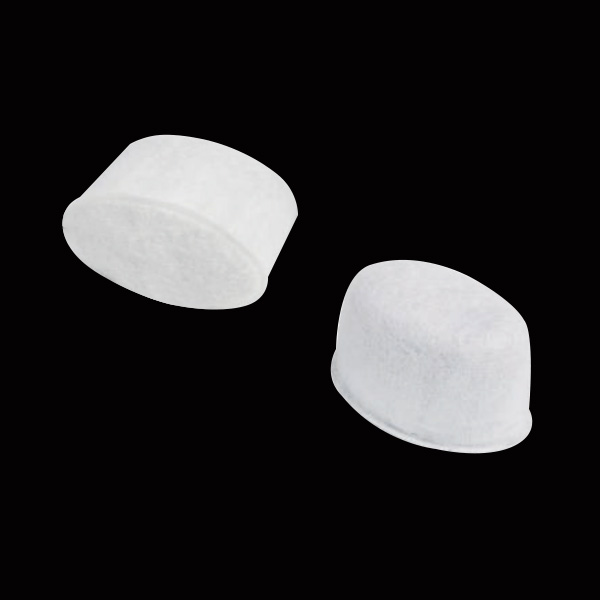
Celrith coffee machine filter cartridges are compatible with BLACK & DECKER machines that use a drop-in water filter. They reduce chlorine, odour, heavy metals and hardness from tap water before it reaches the brew path, protecting the heating element and keeping coffee taste clean. The cartridge is aimed at households, cafés and OEM buyers who want a reliable, certified replacement filter with flexible branding and supply.
Tap water carries more than water. Residual chlorine from municipal treatment reacts with coffee compounds and leaves a flat, chemical note in the cup. Fine sand and rust particles pass through supply pipes and settle in valves and small orifices. Calcium and magnesium ions, present as hardness, precipitate as scale when water is heated, coating the inside of the thermoblock or boiler. Heavy metals such as lead and copper can be present at trace levels and are not removed by simple sediment screens. Left unchecked, these contaminants do two things: they degrade flavour, and they build up on the surfaces that do the heating and pumping.
Celrith treats this as a water-quality problem first and a filter-shape problem second. The cartridge uses a composite bed of coconut-shell activated carbon and food-grade ion exchange resin to address the chemistry, and a fine microporous structure to intercept larger particles before they reach the brew circuit.
Scale is the slowest and most expensive contaminant. Every heating cycle deposits a thin layer of calcium carbonate on the hot surfaces. That layer insulates, so the element works longer to reach temperature, energy use rises, and the thermostat sees a different response. Over time the flow path narrows and the pump has to push harder. In hard-water areas, the effect is visible in weeks rather than years.
Particles create a different kind of load. Small grains that pass through the water supply can lodge in solenoid valves, flow meters and shower screens, causing uneven extraction or intermittent faults. Chlorine and organic odours do not block anything, but they make the coffee taste dull and can leave an odour in the water tank and lines between uses.
The filter’s job is to remove these loads before they reach critical components. That means reducing hardness to limit scale formation, adsorbing chlorine and odour-causing organics, and retaining fine sediment in the filter bed rather than in the machine. The result is a brew path that stays cleaner for longer and a cup that tastes of coffee rather than of the supply water.
Celrith uses a two-stage media design. Coconut-shell activated carbon provides a high surface area for adsorbing chlorine, chloramine breakdown products and taste-and-odour compounds. Food-grade ion exchange resin exchanges hardness ions for softer ones, reducing the scale potential of the water as it passes through. The media are held in a fine microporous structure that intercepts sand, rust and other large particles, so the cartridge acts as both a chemical and a physical barrier.
The cartridge is designed for cold-water filtration only, operating between 2°C and 38°C, and works across a pressure range of 20–120 psi (approximately 1.4–8.3 bar). It fits machines that accept a drop-in style filter, and the connection dimensions are matched to the original cartridge format so that no modification is needed. For OEM customers, the media blend, filtration rating and flow characteristics can be adjusted to suit different source-water profiles, and the external structure can be customised for specific machine models.
It is a drinking-water filter cartridge built with food-grade materials and produced under the company’s ISO 9001 and IATF 16949 quality systems, with GMP-compliant production for water-contact components. Performance claims are supported by testing in the company’s CNAS-accredited laboratory.
| Item | Detail |
|---|---|
| Filtration media | Coconut-shell activated carbon combined with food-grade ion exchange resin |
| Micron rating | Fine microporous interception; retains sand, rust and other large particles |
| Filter life | Approximately 250 litres or 2–3 months, depending on local water quality and usage frequency |
| Operating pressure | 20–120 psi (approximately 1.4–8.3 bar) |
| Operating temperature | 2°C–38°C (cold-water filtration only) |
| Applications | Automatic coffee machines, semi-automatic espresso machines, commercial coffee machine water softening, OEM water filter cartridge customisation |
| Quality systems | Production follows ISO 9001, ISO 14001 and IATF 16949; GMP for medical supplies; CNAS national-level testing |
This cartridge is used by households with BLACK & DECKER coffee machines that want a straightforward replacement filter without buying a new appliance. Cafés and small offices use it where coffee quality matters and water hardness is a concern, particularly in areas where scale builds quickly. Equipment distributors and service companies stock it as a consumable for their installed base.
OEM and ODM buyers use Celrith as a development and manufacturing partner for private-label water filter cartridges. The company can adjust the media, housing dimensions and packaging to match a target machine or market, and can supply the cartridge under the customer’s brand. Because the cartridge is compatible with a known machine format, it shortens development time for buyers who want to enter the coffee filter category without designing a new interface.
Celrith products comply with REACH and RoHS environmental regulations, and the company can provide compliance documentation to support market entry. The company holds ISO 9001, ISO 14001 and ISO 45001 certifications, and added IATF 16949 automotive quality management certification in 2024. Production takes place in a 50,000 m² plant in Zhongshan, Guangdong, China, which includes six cleanrooms totalling 20,000 m². Testing is carried out in the company’s own CNAS-accredited laboratory, which can issue reports on filtration efficiency, dust-holding capacity and resistance. With more than 20 years of filtration experience, Celrith has developed over 1,000 filtration solutions and supplies customers in Europe, the United States, Japan and South Korea. Quality control runs through IQC, IPQC and OQC stages, and multiple automated lines support monthly output in the millions of pieces.
To get an accurate quotation or discuss a custom cartridge, tell us the device or vehicle model, the size or drawing you have, the airflow or water flow you need, the operating conditions (water quality, pressure, temperature), and the quantity you are planning. If you are developing a new product, share the interface dimensions and target performance, and we will respond with a proposal. Contact Celrith to start the conversation.
The cartridge combines coconut-shell activated carbon with food-grade ion exchange resin to reduce chlorine, odours, heavy metals such as lead and copper, and water hardness. A fine microporous structure also intercepts sand, rust and other large particles. The result is cleaner-tasting water and less scale load on the machine.
The ion exchange resin reduces hardness ions that form calcium carbonate scale on heating elements, while the carbon bed adsorbs chlorine and organic odours. The microporous structure retains fine sediment before it reaches valves and small orifices. Together these actions lower the load on the heating and pump system and help maintain flow and temperature performance.
Yes, the cartridge is designed to match the dimensions, connection and filtration specifications of the original BLACK & DECKER filter format. Each batch is assembly-tested, flow-tested and seal-tested in the company’s CNAS-accredited laboratory to confirm fit and performance. For specific models, Celrith can supply samples for fit verification before you commit to volume.
Yes. Celrith offers OEM and ODM services covering media blend, filtration rating, flow parameters, life cycle, housing structure, laser marking, logo printing, retail packaging and multilingual instructions. The company’s engineering team supports the project from drawing and tooling through to mass production. New product development typically takes 30–45 days.
For standard compatible models, the MOQ is 5,000 pieces, with stock or small-batch orders usually delivered in 15–20 days. OEM customised versions are recommended at 10,000 pieces or more, with a production cycle of about 25–30 days including tooling and packaging development. The Zhongshan plant supports monthly output in the millions of pieces for long-term programmes.
Replace the cartridge at approximately 250 litres of filtered water or every 2–3 months, whichever comes first. Actual life depends on local water hardness and usage frequency; in hard-water areas, more frequent replacement may be needed. Regular replacement maintains flow and keeps scale reduction effective.
Yes, free samples are available for standard models, with freight paid by the customer, and are usually dispatched within 3–5 working days. Samples can be accompanied by CNAS test reports and material declarations to support your evaluation. To receive a quotation, share your device model, required quantity and any drawing or flow specification.
The cartridge is produced under ISO 9001, ISO 14001 and IATF 16949 quality systems, and the company’s water-contact components follow GMP requirements. Products comply with REACH and RoHS, and compliance documents can be provided. Testing is performed in the company’s CNAS-accredited laboratory. Contact Celrith with your target market requirements to confirm the documentation package.