
AR

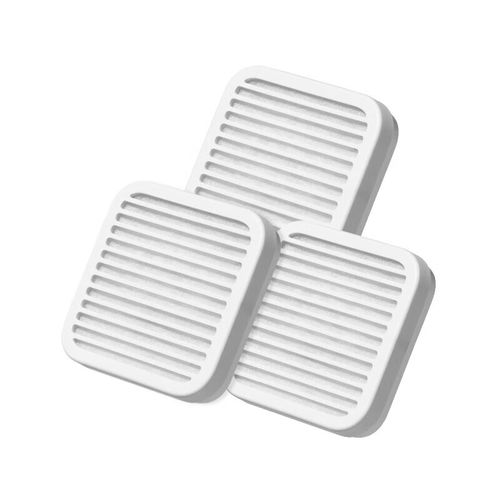
Celrith Feeder Desiccant Box is a replaceable moisture-control and odour-absorbing cartridge built into automatic dry-food pet feeders and storage bins. It draws free moisture out of the enclosed food chamber and holds internal humidity below 60%RH, while working on odours that develop around kibble. It is made for pet-appliance brands, feeder OEMs and private-label sellers who need a safe, custom-fit drying component behind their own product name.
Dry pet food is not as stable as it looks. Once a bag is opened and poured into a feeder hopper, kibble is repeatedly exposed to room air every time the lid opens or the dispenser cycles. That air carries water vapour, cooking and storage odours, and dust. Moisture is the most damaging of these: it softens kibble, accelerates fat oxidation, dulls aroma and creates conditions where mould and insect eggs can develop. The result is a hopper that smells stale, food that pets refuse, and complaints that land on the appliance brand rather than on the food.
Odour and airborne gases are the second front. Fats and oils in kibble release volatile compounds that accumulate in a closed hopper, and a sealed feeder gives them nowhere to go. Dust and fine crumbs add to the load, settling on surfaces and coating the dispenser mechanism. None of these problems announces itself; owners usually notice only when the food clumps, the smell changes or the pet stops eating.
The consequences reach the hardware. Damp kibble bridges and sticks, so augers, rotors and gravity chutes work harder and dispense uneven portions. Caked food can jam an outlet or leave a feeder running while nothing drops. Moisture also condenses on hopper walls and lids, and in the long run affects seals, sensors and electronics housed close to the food chamber. For the brand selling the feeder, every jam or stale-food review is a support cost and a trust cost.
There is also a hygiene load. Warm, humid, food-bearing air is exactly where mould and pests thrive. A feeder that is difficult to keep dry asks the owner to clean more often and to replace food sooner, which shortens the practical value of every bag of kibble.
The cartridge works on the cause rather than the symptom. Inside a food-contact-grade ABS housing sits a high-permeability PET non-woven layer that keeps the active media contained, and behind it a charge of food-grade colour-indicating silica gel or high-efficiency mineral desiccant granules. The media pulls free moisture from the air in the chamber and holds it, keeping internal humidity below 60%RH. Because the gel changes colour as it saturates, the owner can see when the cartridge is spent instead of guessing.
The drying action also limits the conditions mould and insect eggs need, and helps lock in the aroma and flavour of the kibble, so food stays palatable longer. In the feeder, the effect is a clear contrast: kibble that pours freely instead of bridging, a hopper that smells neutral instead of stale, and a dispensing mechanism that meets less resistance.
Fit is where Celrith does most of its engineering work. The box is tooled to your device dimensions, not adapted from a stock part. Lid-clip, screw-thread and drawer-style mounting structures are supported, so the end user simply opens the lid and swaps the cartridge. That keeps the drying function inside your product architecture and invisible to the pet.
| Item | Detail |
|---|---|
| Product name | Pet automatic feeder desiccant box / food storage bin dehumidifying box / anti-mould freshness-locking drying component |
| Core drying media | Food-grade colour-indicating silica gel or high-efficiency mineral desiccant granules |
| Housing construction | Food-contact-grade environmentally friendly ABS outer housing with an internal high-permeability PET non-woven anti-leak layer |
| Core protective performance | Absorbs free moisture from the air and keeps chamber humidity below 60%RH, preventing dampening, oxidative mould and insect growth in pet food |
| Recommended replacement interval | 30 days per change in normal conditions; 20–25 days in southern China plum-rain season or coastal high-humidity environments (can be paired with a smart APP reminder) |
| Dimensions and mounting customisation | Tooled 100% to the customer's device dimensions; supports top-lid clip, screw-thread and drawer-style mounting structures for easy open-and-replace use |
| Quality certification | Material non-toxicity and safety assured by a CNAS-accredited testing centre; company holds ISO 9001, ISO 14001 and IATF 16949 management system certification |
Celrith supplies this component to three main groups. The first is automatic feeder brands, including smart timed feeders and large-capacity hopper-style units, that want a built-in drying function without developing one internally. The second is pet-food and treat brands adding a storage or dispensing accessory to their range. The third is private-label and OEM/ODM sellers who need a custom cartridge matched to an existing housing, with their own logo, packaging and language on the label.
Across these buyers the requirement is the same: a drying component that is safe on food contact, works quietly in the background, and tells the owner when to replace it. Customisation covers housing shape and size, desiccant-to-carbon ratio, adsorption capacity, shell colour and material, logo printing, individual packaging, colour-box design, manuals and multilingual labels. With over 1,000 filtration solutions developed to date, the engineering team can propose a configuration from the feeder's internal cavity and expected use environment.
Pet products sit close to food, so compliance is the first question. Celrith products meet the REACH and RoHS environmental regulations and compliance documents can be supplied. The company holds ISO 9001, ISO 14001 and ISO 45001 certification, and added IATF 16949 automotive quality management certification in 2024.
Material safety is backed by the company's own laboratory, which is accredited by CNAS (China National Accreditation Service for Conformity Assessment) and can issue test reports. Manufacturing runs in a 50,000 m² plant in Zhongshan, Guangdong, which includes 6 cleanrooms totalling 20,000 m²; cartridges are filled and sealed in cleanroom conditions to keep dust out and preserve desiccant activity. IQC, IPQC and OQC checks follow each batch through adsorption performance, sealing and appearance. Multiple automated production lines support monthly output in the millions of pieces, and more than 20 years of export experience to Europe, the United States, Japan and South Korea underpins the supply side.
To quote accurately we need a few details: your feeder or vehicle model and device cavity dimensions or a drawing, the airflow or chamber volume involved if known, operating conditions such as humidity and temperature, and your target order quantity. Send them through our contact page and our team will respond with a matched configuration and next steps.
It removes free moisture from the air inside the feeder chamber, keeping internal humidity below 60%RH, and helps with the odours that build up around stored kibble. The food-grade colour-indicating silica gel or mineral desiccant granules trap water vapour before it can soften food, and limiting that moisture also reduces the conditions mould and insect eggs need.
By keeping kibble dry, the cartridge stops food from clumping and bridging, so augers, rotors and gravity chutes meet less resistance and dispense more evenly. Owners see fewer jams and less stale-smelling food, which reduces support calls tied to dispensing faults.
Yes. The box is tooled 100% to your device dimensions, with top-lid clip, screw-thread or drawer-style mounting structures available. Desiccant-to-carbon ratio, adsorption capacity, housing material and colour, logo, packaging and label languages can all be specified for OEM/ODM projects.
Yes. Share your device model, cavity dimensions or drawing, expected humidity conditions and target quantity through our contact page, and the team will propose a configuration and quote. Sampling and tooling timelines are confirmed against the agreed specification.
Standard configurations typically start at 3,000–5,000 PCS, while customised versions depend on the structure and tooling involved. Exact MOQ is confirmed with your quotation once the design is fixed.
Standard items usually ship in 15–25 days and customised versions in 25–40 days, with samples typically 3–5 working days for existing specifications and 7–15 working days for custom samples. Automated lines and stocked raw materials allow scheduling around promotional seasons.
In normal conditions replace it every 30 days; in plum-rain season or coastal high-humidity environments, every 20–25 days. The colour-indicating gel shows saturation, and replacement can be paired with a smart APP reminder.
Products meet REACH and RoHS requirements, and compliance files can be supplied. The company holds ISO 9001, ISO 14001, ISO 45001 and IATF 16949 certification, and its CNAS-accredited laboratory can issue test reports on the material and finished cartridge. Contact us with your market requirements to confirm the document set.