
AR

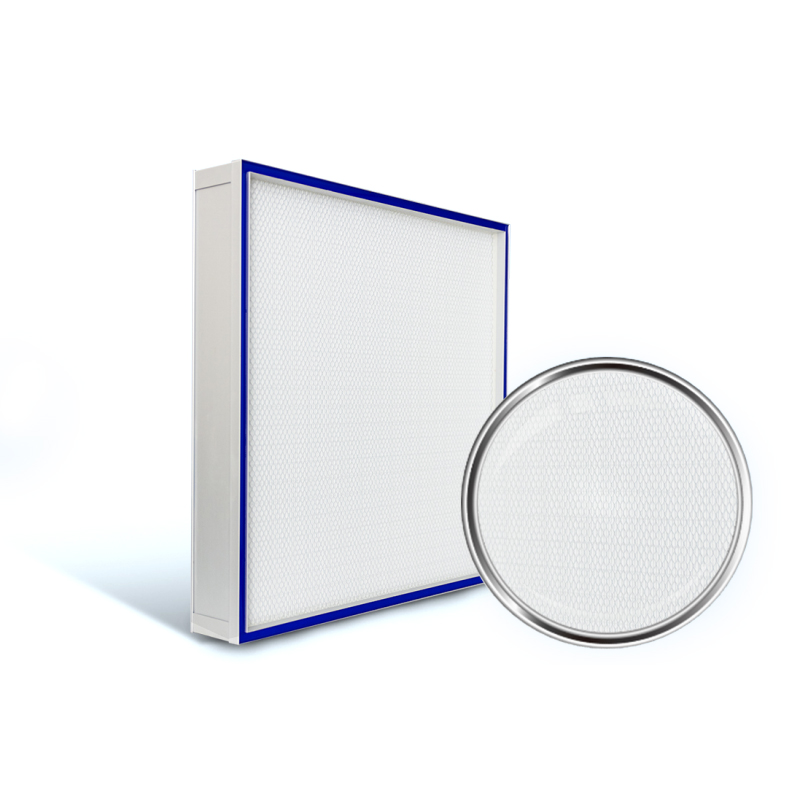
The Celrith gel seal HEPA & ULPA filter is a high-efficiency air filter designed to remove airborne particles, aerosols and microorganisms from cleanroom and critical ventilation systems. It is available in H12 to U15 efficiency grades and uses a continuous gel seal to prevent bypass leakage. It suits semiconductor fabs, pharmaceutical cleanrooms, hospital operating theatres, FFU units and high-standard paint lines where contaminant control directly affects product yield and process safety.
In critical environments, the enemy is small and persistent. Sub-micron particles, viable microorganisms, oil mist and fine dust are generated by people, processes, equipment and outdoor air. In semiconductor wafer fabrication, a single stray particle can bridge circuit lines and reduce die yield. In biopharmaceutical production, airborne bacteria and spores can contaminate sterile batches. In hospitals, pathogens in operating theatre air increase surgical site infection risk. In paint shops, overspray particles and dust create surface defects that require rework.
These contaminants do not stay where they are generated; they travel with air currents and settle on surfaces. The only reliable way to control them is to filter the air at the point of use with a high-efficiency barrier that captures particles down to the most penetrating particle size and holds them without shedding or bypass. That is the job of a HEPA or ULPA filter — and the seal around it is just as important as the filter media itself.
When filtration is inadequate, the load shifts to the rest of the system. Particles that pass through or around a filter deposit on heat exchanger coils, fan blades and ductwork, reducing heat transfer efficiency and increasing fan energy consumption. In cleanrooms, bypass leakage forces operators to raise air change rates to compensate, which increases energy use and may still fail cleanliness classification. In FFU arrays, a poor seal at the filter-to-housing interface can cause local contamination that is difficult to trace and expensive to remediate.
Moisture and waterborne impurities add another layer of stress. In humid climates or washdown areas, conventional glass fibre media can absorb moisture, leading to filter degradation, microbial growth and increased pressure drop. Over time, the system works harder to move the same volume of air, and filter change-outs become more frequent. The result is higher operating cost, unplanned downtime and greater risk of non-compliance during audits.
Celrith addresses both particle capture and seal integrity. The filter uses a high-throughput, water-resistant ultra-fine glass fibre media that maintains efficiency in humid conditions and resists moisture-induced degradation. The media is protected by an anodised aluminium alloy frame, and the entire filter-to-housing interface is sealed with a polyurethane gel sealant. This continuous gel seal eliminates bypass leakage along the filter perimeter, providing a reliable barrier without relying on compression gaskets alone.
The gel seal design comes in two mounting configurations: side gel seal and top gel seal. Side gel seal filters are commonly used in FFU units and ceiling grids where the filter slides into a channel; top gel seal filters suit housings where the filter is pressed down into a gel trough. Both options allow for straightforward replacement without special tools, reducing maintenance time and the risk of installation error. The filter is available in H12, H13, H14 and U15 grades, so you can match efficiency to the cleanliness class required — from ISO Class 5 to ISO Class 1 environments.
Compared with traditional knife-edge or gasket seals, the gel seal provides a continuous, void-free barrier that tolerates vibration and temperature variation. It also simplifies change-outs: the filter seats into the gel and forms a seal as it is installed, with no torque sequence or gasket compression to verify. This is particularly valuable in semiconductor FFU and DCC systems where any leakage can affect yield.
| Item | Detail |
|---|---|
| Product name | High-efficiency panel filter (gel seal type) / Gel Seal HEPA & ULPA Filter |
| Filter class (EN 1822) | H12 / H13 / H14 (HEPA) / U15 (ULPA) |
| Core filter media | High-throughput, water-resistant ultra-fine glass fibre |
| Frame and seal material | Anodised aluminium alloy profile + polyurethane gel sealant |
| Mounting configuration | Top gel seal / Side gel seal |
| Typical applications | Semiconductor wafer fab cleanrooms, biopharmaceutical GMP workshops, hospital Class 100 operating theatres, FFU purification equipment, high-standard paint lines |
| Standard sizes and rated airflow (W × H × D) | Side gel seal, 50 mm depth: 610×610×50 mm (1,000 m³/h); 1170×570×50 mm (1,800 m³/h) Top gel seal, 70 mm depth: 610×610×70 mm (750 m³/h); 1170×570×70 mm (1,300 m³/h) *Maximum supported airflow: 3,600 m³/h |
| Customisation (OEM/ODM) | Custom non-standard sizes, gel channel widths and airflow requirements supported. Company has a 50,000 m² plant and a CNAS-accredited testing centre, and is certified to ISO/IATF 16949. |
Celrith gel seal filters are specified across industries where air quality is critical to product quality, process reliability or patient safety. In semiconductor and microelectronics manufacturing, they protect wafer lithography, etch and deposition areas from particle contamination. In biopharmaceutical production, they help maintain GMP cleanrooms for sterile filling, aseptic processing and cell culture. Hospitals use them in operating theatres, isolation rooms and compounding pharmacies. Automotive and machinery manufacturers install them in paint booths and precision assembly areas. Data centres and energy storage facilities rely on them for particulate control in cooling air streams. Commercial HVAC systems in food processing and other sensitive environments also benefit from high-efficiency filtration with a dependable seal.
Celrith products are manufactured in a 50,000 m² facility in Zhongshan, Guangdong, China, which includes six cleanrooms totalling 20,000 m². The company operates an in-house laboratory accredited by CNAS (China National Accreditation Service for Conformity Assessment), capable of issuing test reports for filtration efficiency, dust holding capacity and pressure drop. Celrith holds ISO 9001, ISO 14001 and ISO 45001 certifications, and has been certified to IATF 16949 since 2024. Products comply with REACH and RoHS environmental regulations, and compliance documentation is available on request. With more than 20 years of filtration development and manufacturing experience, Celrith has supplied customers in Europe, the United States, Japan and South Korea, and supports OEM/ODM projects with custom sizes, structures, filter grades, frame materials, logos and packaging.
To recommend the right gel seal filter for your system, we need a few details: the device or vehicle model, the required size or a drawing, the airflow or water flow (if applicable), operating conditions (temperature, humidity, contaminant type) and the quantity you plan to order. Please contact our team with these details, and we will respond with a specification and quotation.
It removes airborne particles, aerosols and microorganisms down to the most penetrating particle size, with efficiency grades from H12 to U15. The water-resistant glass fibre media also resists moisture and waterborne impurities, making it suitable for humid or washdown environments. The gel seal prevents bypass leakage around the filter perimeter.
The H13 grade provides ≥99.95% efficiency for 0.3 μm particles, while H14 provides ≥99.995%. For ULPA requirements, the U15 grade offers even higher efficiency for sub-micron particles. All grades are tested according to EN 1822 and can be supplied with test reports from our CNAS-accredited laboratory.
Yes, we support OEM/ODM customisation of dimensions, frame thickness, gel channel width, filter grade and airflow. Standard sizes are listed in the specification table, but non-standard sizes can be produced to your drawing. Please provide your required dimensions and airflow for a tailored quotation.
Contact our sales team with your device or vehicle model, required size or drawing, airflow, operating conditions and quantity. We will confirm the specification and provide a quotation. Paid samples are available and are typically delivered within 7–10 days for your testing and validation.
For standard sizes, the MOQ is typically 10–50 units; for custom sizes, the MOQ is negotiated based on the specification. Standard lead time is 15–25 days, and large orders may take 30–45 days. Urgent orders can be expedited upon request.
Under normal conditions with G4 pre-filters and F8 medium filters upstream, the service life is typically 3–5 years. Replace the filter when the pressure drop reaches twice the initial resistance or the design final resistance (usually 450–600 Pa). Regular monitoring of pressure drop is the most reliable way to determine the right replacement time.
Yes. The polyurethane gel sealant forms a continuous, void-free barrier between the filter frame and the housing, eliminating the bypass paths that can occur with gaskets or knife-edge seals. This is especially important in semiconductor and pharmaceutical cleanrooms where any leakage can affect yield or sterility. The gel seal also tolerates vibration and temperature variation.
We can provide test reports for filtration efficiency, dust holding capacity and pressure drop from our CNAS-accredited laboratory. Our products comply with REACH and RoHS, and we hold ISO 9001, ISO 14001, ISO 45001 and IATF 16949 certifications. Please let us know your specific documentation requirements when you inquire.