
AR

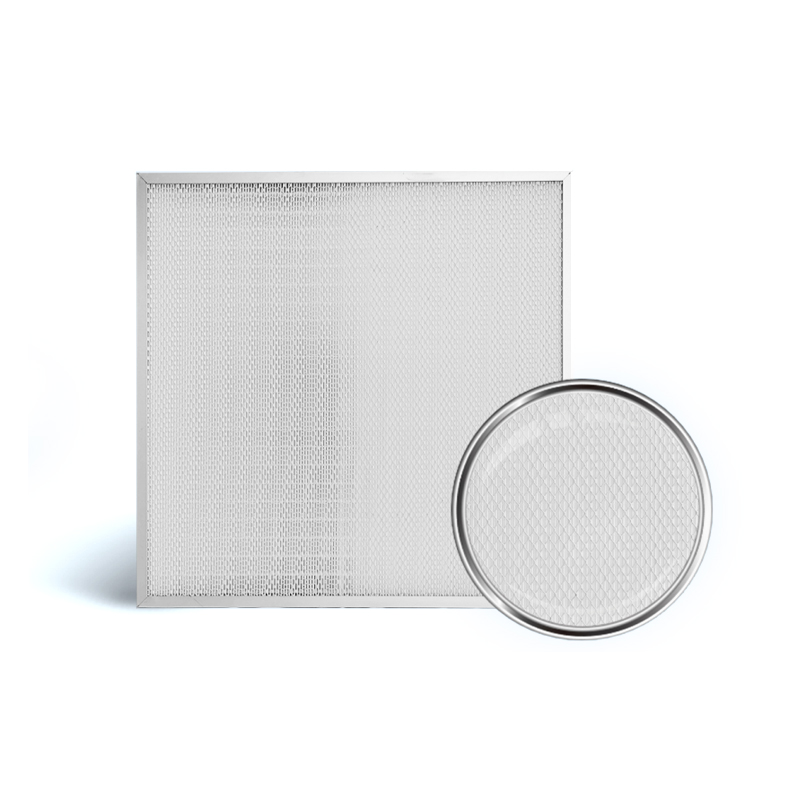
The Celrith panel high-efficiency filter is a pleated panel filter for clean air applications, built to capture fine airborne particles in cleanrooms, FFU units, laminar flow benches and commercial air handling systems. It filters particulate contamination down to 0.3 µm at H13 and H14 efficiency levels, with selected models reaching ULPA U15/U16. It is made for semiconductor and microelectronics fabs, pharmaceutical and food production, hospitals, data centres, energy and metal processing sites, and any facility that needs terminal filtration with documented efficiency.
Fine particles are the quiet problem in a clean space. Dust, smoke, lint, metal oxides, salt aerosols and biological debris stay suspended for long periods, and they settle on wafers, optics, product surfaces and interior ductwork. In semiconductor and microelectronics work, a single settling particle can damage a circuit feature; in pharmaceutical filling and food processing, airborne particles carry contamination toward open product; in data centres and commercial buildings, fine dust loads coils, fans and heat exchangers. Odours and gas-phase contaminants often travel with these particles, and waterborne impurities can carry dissolved solids into process air where humidity or condensation is present.
The cost is not only the failed batch. Contaminated air forces upstream filters to work harder, shortens the life of coils and fans, and drives more frequent cleaning. The purpose of a terminal high-efficiency filter is to stop that load at the last stage before air reaches the protected space.
When unfiltered air reaches a cleanroom or an air handling unit, the load shows up in several places. Heat exchange coils collect a dust blanket that reduces heat transfer and raises energy use. Fans and blowers run against higher static pressure. Duct interiors become reservoirs of settled dust that re-entrain during operation. Downstream HEPA stages see a heavier particle burden and reach their final resistance sooner. In process environments, that means more changeouts, more downtime and less predictable cleanroom classification.
Installing a high-efficiency panel filter at the terminal position reduces the number of particles reaching the protected zone and lowers the burden on pre-filters and equipment behind it. The filter acts as a controlled barrier: it holds particles in the pleat pack, keeps pressure drop within the design range, and allows maintenance to be scheduled rather than reactive.
Celrith builds the panel high-efficiency filter as a pleated pack in a rigid frame, with construction matched to the installation. Filter media can be glass fibre or PTFE; frames can be anodised aluminium, galvanised steel, stainless steel, MDF or plastic; separators can be hot-melt adhesive, aluminium foil or paper. The pleat geometry gives a large media area inside a shallow panel, so the filter holds dust without an excessive rise in resistance. Sealing and frame options are chosen to suit the housing on site, and non-standard sizes are built to customer drawings.
Each unit is assembled in a cleanroom environment to avoid contamination during production. Every filter passes efficiency testing, PAO/DOP scan leak testing and resistance testing at the company's CNAS-accredited laboratory before dispatch. The result is a terminal filter whose stated efficiency can be traced to a test report, not just a catalogue figure.
For facilities replacing panel filters downstream of existing pre-filters, the practical gain is a longer service interval at the final stage and steadier airflow. For new builds, the filter can be specified from the start with the frame and seal style that matches the FFU or ceiling grid, which avoids adapters and field modifications.
| Item | Detail |
|---|---|
| Product name | Panel High-Efficiency Filter |
| Brand | Celrith |
| Product category | High-efficiency filter (panel type) |
| Efficiency grades | H13 and H14 available; selected models reach ULPA U15/U16 |
| Particle efficiency | Up to 99.99% or higher for 0.3 µm particles |
| Typical applications | ISO Class 1–7 cleanrooms, FFU units, clean transfer windows, laminar flow benches |
| Frame materials | Aluminium alloy, galvanised steel, stainless steel, MDF or plastic — made to order |
| Filter media | Glass fibre or PTFE — made to order |
| Separators | Hot-melt adhesive, aluminium foil or paper — made to order |
| Dimensions | Custom sizes built to customer drawings; confirmed by sample |
| Sealing | Sealant type specified to order; confirmed by sample |
| Testing | Efficiency, PAO/DOP scan leak and resistance tests at the CNAS-accredited laboratory |
| Customisation | OEM/ODM: size, structure, media grade, frame material, logo and packaging |
Celrith supplies this filter to semiconductor wafer fabrication, lithography areas, chip packaging and microelectronics assembly, where ISO Class 1–7 cleanrooms depend on terminal filtration in FFU units, clean transfer windows and laminar flow benches. Pharmaceutical manufacturers and food processors use it in GMP areas where airborne particles must be controlled at the final stage. Hospitals specify it for operating theatres and clean wards. Data centres and AI computing facilities use panel high-efficiency filtration to protect cooling equipment and keep dust out of server rooms. Commercial HVAC systems, energy plants and metal processing operations use it where fine dust and fumes need to be held back.
Buyers range from facility engineers replacing filters on a maintenance schedule to OEM equipment builders who need a specified filter inside their own FFU or air handling product, and to distributors who need a stable supply of tested filters under their own brand.
Celrith products meet REACH and RoHS requirements, and compliance documents can be supplied with orders. The company holds ISO 9001, ISO 14001 and ISO 45001 certification, and in 2024 it added IATF 16949 automotive quality management certification. Testing is carried out at the company's own CNAS-accredited laboratory, which issues reports on filtration efficiency, dust holding capacity and resistance.
Production takes place in a 50,000 m² plant in Zhongshan, Guangdong, China, which includes six cleanrooms totalling 20,000 m². High-efficiency filters are assembled in these cleanrooms to prevent cross-contamination. Quality control covers incoming material inspection, in-process control, final inspection and outgoing inspection, and every high-efficiency filter is efficiency tested, scan leak tested and resistance tested before it leaves the plant. With more than 20 years of filter development and manufacturing, multiple automated production lines and a library of more than 1,000 filter solutions, Celrith supports OEM and ODM programmes including size, structure, media grade, frame material, logo and packaging customisation, and has exported to Europe, the United States, Japan and Korea for over two decades.
To get an accurate quotation for the Celrith panel high-efficiency filter, send us the device or vehicle model, the required size or a drawing, the airflow or water flow of the system, the operating conditions (temperature, humidity and contaminant type), and the quantity you need. If you are still at the design stage, our engineers can help match efficiency grade, frame and media to your housing. Contact our team and we will respond with a specification and price.
It captures fine airborne particles down to 0.3 µm, including dust, smoke, lint and biological debris, at efficiencies up to 99.99% or higher. It is specified for terminal filtration in cleanrooms, FFU units and air handling systems. Gas-phase and waterborne impurities are handled by the appropriate upstream or companion filtration stages.
Celrith supplies the panel high-efficiency filter in H13 and H14 grades, and selected models reach ULPA U15/U16. The 0.3 µm particle efficiency can reach 99.99% or higher. Each unit is efficiency tested at the company's CNAS-accredited laboratory before shipment.
Yes. Size, frame material, filter media, separator type and sealant can be specified to your drawing or operating conditions. Frame options include aluminium alloy, galvanised steel, stainless steel, MDF and plastic; media options include glass fibre and PTFE. OEM/ODM support covers logo and packaging as well, and final dimensions are confirmed by sample.
Send the device or vehicle model, size or drawing, airflow, operating conditions and quantity through the contact page. Our engineers will propose the efficiency grade and configuration, then confirm a sample and price. Sample orders for new customers can be arranged on flexible terms.
Standard sizes typically start at 50–100 pieces, while custom sizes usually start at 100–200 pieces depending on structural complexity. Standard items ship in 7–15 days; custom production usually takes 25–35 days. Multiple automated lines and material stock support urgent and long-term orders.
Service life is typically 1–3 years, depending on air cleanliness, face velocity, pre-filter configuration and daily operating hours. Replace the filter when resistance reaches twice the initial value or the design final resistance. A suitable pre-filter upstream will extend the life of the terminal high-efficiency stage.
Every unit undergoes efficiency testing, PAO/DOP scan leak testing and resistance testing at the CNAS-accredited laboratory. Reports on efficiency, dust holding capacity and resistance can be issued. REACH and RoHS compliance documents are also available on request.
Each filter is sealed in a PE bag with EPE corner protection, then packed in export-grade cartons or wooden cases to protect against vibration and dust in transit. Neutral packaging and customer-branded labels, manuals and cartons can be arranged. If you have specific questions about your application, <a href="/en/contact">contact us</a>.