
AR

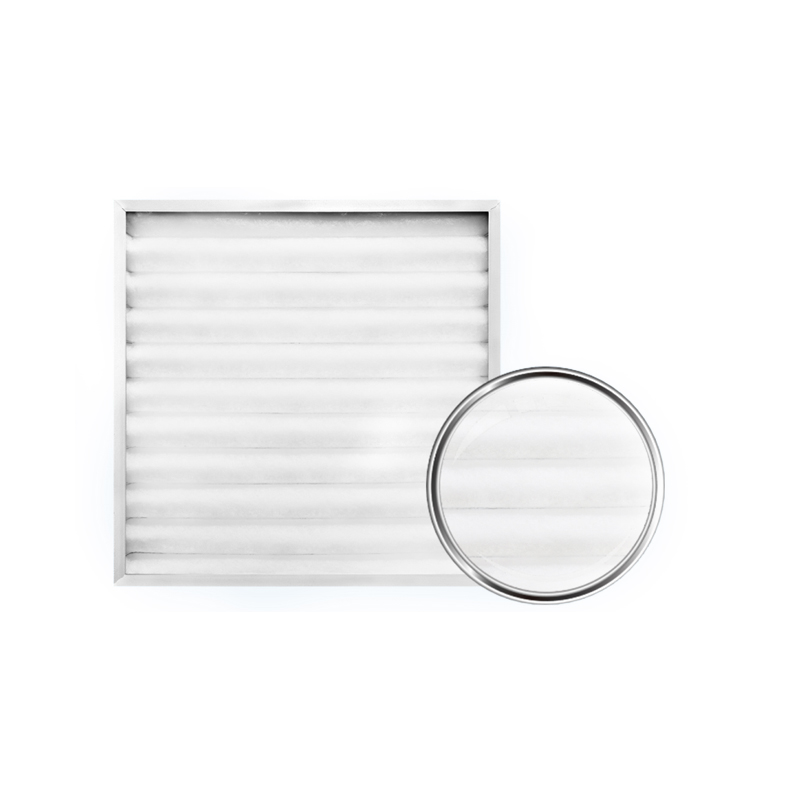
The Celrith Metal Frame Non-Woven Fabric Pre-Filter is a coarse-grade primary filter built for HVAC, fresh-air and exhaust systems that carry heavy dust, lint and fibrous debris. Its polyester fibre media traps large particles before they reach coils, ductwork and downstream higher-grade filters, and its aluminium, galvanised or plastic frame holds up to humid, high-wind-pressure duty. It is aimed at facility, maintenance and procurement teams in commercial buildings, food and pharmaceutical plants, automotive and machinery works, energy and metallurgy sites, data centres and semiconductor facilities.
Most air-handling systems do not fail because of fine particles alone. They fail because coarse contamination arrives first and arrives continuously: road dust and soil drawn in at fresh-air intakes, textile and paper lint in production halls, metal fines and soot near machining and smelting areas, and airborne grease or flour in food operations. These are the particles that settle on heat-exchange surfaces, block fins and clog the first stage of a filtration train.
Humidity makes the problem worse. In coastal plants, laundry and wet-process rooms, and exhaust lines running near saturation, conventional paper or low-grade media can soften, sag or support microbial growth. Once the first stage loses shape, the pressure drop climbs, airflow falls and the whole system works harder than it was designed to.
Every kilogram of dust stopped upstream is a kilogram that does not reach the coil, the fan or the downstream filter bank. When a primary filter is missing or overloaded, the consequences show up as measurable load: fouled coils that lose heat-transfer capacity, higher fan energy to hold airflow, more frequent cleaning shutdowns, and shorter service life for the medium and high-efficiency filters behind it. In data centres and cleanroom fresh-air systems, that load translates directly into risk to the equipment the air is meant to protect.
The practical answer is a first stage that is cheap to replace, dimensionally stable and able to survive the worst humidity and wind pressure the system can produce. That is the design brief Celrith worked to with this filter.
The filter uses a distinctive double-frame design in which the outer frame and the filter pack are separate. In practice this means the structural frame stays in the system and only the loaded media element is swapped, so maintenance teams are not paying for a new metal frame at every changeout. Over a multi-year service cycle this noticeably reduces consumable spend and waste volume.
The filter media is a high-toughness polyester fibre selected for humid environments. The assembly is rated for continuous operation up to 50 °C and up to 100% relative humidity, so it holds its shape in exhaust lines and wet-process areas where lesser primary filters collapse. The polyester construction is also flame-retardant, adding a margin of safety in ducted systems.
The metal frame gives the filter high resistance to wind pressure. It stays square under the airflow of large air-handling units, keeps a consistent seal at the frame edge, and protects the coils and downstream filter stages from bypass and deformation. Frame options cover aluminium profile, galvanised steel and plastic, so the specification can be matched to the corrosion environment and budget of each project.
| Item | Detail |
|---|---|
| Product name | Metal double-frame primary filter (Metal Frame Non-Woven Fabric Pre-Filter) |
| Core filter media | High-toughness polyester fibre, resistant to high humidity |
| Frame material options | Aluminium profile, galvanised steel or plastic |
| Operating limits | Maximum operating temperature 50 °C; maximum operating relative humidity 100% |
| Common thickness options | 46 mm / 69 mm / 96 mm (approximately 2 in, 3 in, 4 in) |
| Typical applications | Central air-conditioning pre-filtration in factory workshops, high-humidity exhaust environments, cleanroom fresh-air intake, air-handling units (AHU) |
| Standard size references (W × H × T, mm) | 594 × 289 × 46 / 69 / 96; 594 × 492 × 46 / 69 / 96; 594 × 594 × 46 / 69 / 96 |
| Customisation (OEM/ODM) | Non-standard sizes and frame thicknesses fully supported; manufacturer operates a 50,000 m² plant and a CNAS-accredited laboratory, with ISO/IATF 16949 certification |
The filter is a natural fit wherever maintenance teams want a reusable frame and a low-cost replaceable element, and wherever humidity or wind pressure rules out lightweight primary filters.
Celrith products are supplied with compliance documentation for REACH and RoHS, and the manufacturing system holds ISO 9001, ISO 14001 and ISO 45001 certification. The company added IATF 16949 automotive quality certification in 2024.
Testing is carried out in the company's own laboratory, which is accredited by CNAS and can issue reports on filtration efficiency, dust holding capacity and pressure drop. Production runs in a 50,000 m² plant in Zhongshan, Guangdong, China, including six cleanrooms totalling 20,000 m², with multiple automated lines and monthly capacity in the millions of pieces. Incoming, in-process and outgoing inspection cover every batch, and more than 20 years of export experience to Europe, the US, Japan and Korea supports OEM and ODM programmes covering size, structure, media grade, frame material, logo and packaging, with more than 1,000 filter solutions developed to date.
To get an accurate quote, please send us your device or vehicle model, the required size or a drawing, the airflow or water flow of the system, the operating conditions (temperature, humidity, contaminant type) and the quantity you expect to order. Our team will confirm the frame and media specification and respond with pricing and lead time. Contact us to start the conversation.
It is a coarse-grade primary filter that intercepts large dust, hair, fibre and lint particles before they reach coils, ducts and downstream filters. It is designed as the first stage ahead of medium and high-efficiency filters, so its job is to carry the coarse load and extend the life of the stages behind it.
The filter media is polyester fibre and the product is positioned as a G3/G4 coarse-grade primary filter for general ventilation and pre-filtration duty. It is not intended to replace fine or HEPA stages; it protects them. Please confirm the target efficiency for your project when you request a quote.
Yes. Celrith supports OEM and ODM supply covering non-standard dimensions and frame thicknesses, as well as aluminium, galvanised steel or plastic frame options. Standard references include 594 × 289, 594 × 492 and 594 × 594 mm in 46, 69 and 96 mm thickness, and custom builds follow your drawing or sample.
Yes. Send your size, drawing, airflow and operating conditions through the contact page and the team will confirm the specification and pricing. Sample arrangements are agreed per project, and CNAS-accredited laboratory reports on efficiency, dust holding capacity and pressure drop can support your evaluation.
MOQ is agreed per specification rather than fixed across the range. Standard sizes and custom builds are both quoted individually, so the quantity you plan to order should be included in your inquiry. This lets Celrith confirm the most practical production run for your project.
Lead time depends on whether the order is a standard size or a custom build and on current production scheduling. Provide your required quantity and delivery date in the inquiry and the team will confirm a schedule. Export shipments to Europe, the US, Japan and Korea are routine.
Replacement depends on the dust load, humidity and running hours at your site, so there is no single interval. Inspect the element regularly and change it when pressure drop rises or the media visibly loads; keeping the first stage clean is what protects the coils and the filters behind it.
Yes. The polyester media is rated for up to 50 °C and up to 100% relative humidity, and the metal frame resists wind pressure so the filter keeps its shape in large air-handling units. This makes it suitable for exhaust lines, wet-process rooms and coastal installations. Tell us your operating conditions and we will confirm the right frame and media specification for your system.