
AR

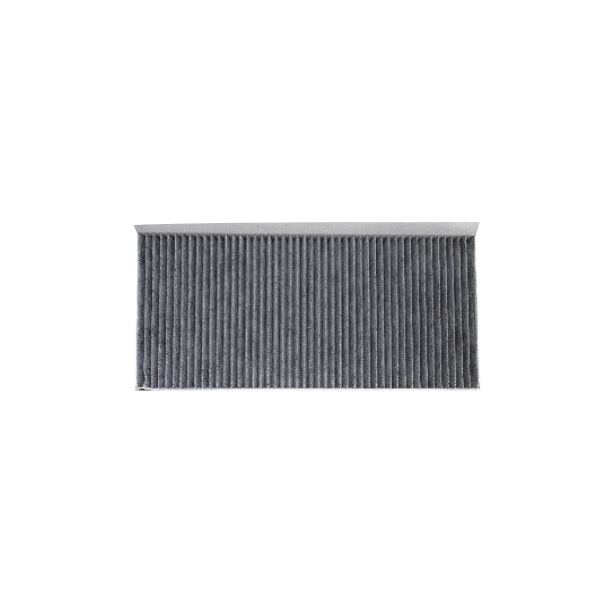
Celrith's washable activated carbon odor filter is a composite carbon fabric that captures cooking odors, formaldehyde, benzene, ammonia and coarse particles in one layer. It is designed for range hoods, integrated stoves, air purifiers, fresh-air systems and vehicle cabin air intakes. The filter combines a polyurethane sponge base with fixed activated carbon, so it traps grease and dust while adsorbing odorous gases.
Cooking generates more than visible smoke. Vapors carry hydrogen sulfide, ammonia and volatile organic compounds such as formaldehyde and benzene. These gases spread through the kitchen and adjacent rooms, and they cling to surfaces and fabrics. At the same time, fine dust, hair and grease particles load the ventilation path. If these contaminants reach the fan, motor or heat exchanger, they build up as sticky deposits that reduce airflow and increase energy use. In air purifiers and fresh-air units, the same gases shorten the life of downstream high-efficiency filters. The result is more frequent replacement, higher running costs and persistent odors that regular cleaning does not remove.
When a single filter must handle both particles and gases, each part of the system suffers. A standard grease filter stops some particles but lets odors pass. A separate carbon filter adds pressure drop and takes up space. In vehicle cabins, polluted air enters through the air intake and reaches the evaporator, where moisture and dust create a breeding ground for odors. In central air handling units, return-air grilles accumulate dust that migrates to coils and ducts. The cost appears as reduced airflow, more cleaning downtime and shorter intervals between filter changes. Relieving this load requires a filter that combines coarse particle capture with gas adsorption without creating excessive resistance.
Celrith fixes fine activated carbon powder or granules onto a polyurethane sponge using a special curing process. The resulting composite carbon fabric keeps the carbon accessible to passing air while the sponge structure provides low airflow resistance. The open-cell sponge also acts as a preliminary filter, catching hair, dust and larger particles before they reach the carbon. Because the material is flexible, it can be cut and shaped to fit curved or irregular spaces. The filter can be washed in warm water with a neutral detergent to remove surface grease and restore airflow. Washing helps extend service life, but adsorption capacity declines over time, so replacement remains necessary. For OEM projects, Celrith offers thicknesses from 3 mm to 50 mm, a range of pore densities (PPI) and stamped or die-cut shapes to match your housing.
| Item | Detail |
|---|---|
| Product name | Washable Activated Carbon Filter (Sponge Type) |
| Base material | Polyurethane sponge |
| Adsorbent | Selected powdered or fine granular activated carbon, fixed by a special curing process |
| Filtration performance | Coarse particle capture (hair, dust) plus adsorption of formaldehyde (HCHO), benzene, ammonia and other harmful gases |
| Physical features | Washable and reusable, very low airflow resistance, flexible and easy to cut, high air permeability |
| Typical applications | Air purifier pre-filter layer, fresh-air system pre-filter, vehicle cabin air filter, central air conditioning return-air grille, industrial vacuum cleaner |
| Customisation | OEM/ODM supported: thickness from 3 mm to 50 mm, pore density (PPI) and outer dimensions, with stamping and shaping services |
| Quality system | Produced in a 20,000 m² cleanroom; company certified to ISO 9001, ISO 14001 and IATF 16949 |
This filter suits appliance makers and system integrators that need an odour-control layer without adding a separate gas filter stage. Range hood and integrated stove manufacturers use it as a final odour filter behind the grease screen. Air purifier brands specify it as a pre-filter to protect HEPA cartridges and reduce odour complaints. Fresh-air ventilation suppliers place it in the intake path to limit outdoor gases and coarse dust. Automotive suppliers use die-cut pieces in cabin air systems. Central air conditioning contractors fit it at return-air grilles, and industrial vacuum cleaner makers use it to control exhaust odour. Because the material can be cut to shape, it also fits retrofit and aftermarket filter programmes.
Celrith products comply with REACH and RoHS requirements, and compliance documents can be supplied for your market. The company holds ISO 9001, ISO 14001 and ISO 45001 certifications, and added IATF 16949 automotive quality certification in 2024. Our own laboratory is CNAS-accredited and can issue test reports for filtration efficiency, dust holding capacity and airflow resistance. Production takes place in a 50,000 m² plant that includes 20,000 m² of cleanroom space across six cleanrooms. With more than 20 years of filter development and manufacturing experience, we have built over 1,000 filtration solutions and export to Europe, the United States, Japan and South Korea. Multiple automated lines support monthly output in the millions of pieces, and IQC, IPQC and OQC checks run throughout production. The company is based in Zhongshan, Guangdong, China.
To receive a quotation or a technical recommendation, please tell us the device or vehicle model, the size or a drawing, the airflow or water flow involved, the operating conditions (temperature, humidity, contaminant type) and the quantity you expect. Send these details through our contact page and our team will respond with a specification proposal and sample options.
It captures coarse particles such as hair and dust while adsorbing odorous and harmful gases including formaldehyde (HCHO), benzene and ammonia. The polyurethane sponge base provides initial particle filtration, and the fixed activated carbon handles gases. It is used in range hoods, air purifiers, fresh-air systems and vehicle cabin air intakes.
Replacement depends on contaminant load, but in normal household use the recommended service life is 6 to 12 months. Washing with warm water and a neutral detergent can restore airflow, but adsorption capacity declines gradually. Replace the filter when odour removal becomes noticeably weaker.
Yes, the filter is designed to be washed. The activated carbon is fixed to the sponge so it stays in place during gentle rinsing. Washing removes surface grease and dust and restores airflow, but it does not fully regenerate the carbon. Over time, the adsorption capacity decreases and replacement is still required.
Celrith offers OEM/ODM customisation for thickness, pore density (PPI) and outer dimensions. Thicknesses range from 3 mm to 50 mm, and the flexible material can be die-cut or stamped to match your housing. We can also customise packaging and labelling for your brand.
For standard specifications, the MOQ is typically 1,000 to 3,000 pieces depending on style and packaging. Custom OEM products usually start at 5,000 pieces. Standard lead time is 25 to 35 days, and large or custom orders are scheduled by agreement.
Yes, standard samples can be provided free of charge, with freight paid by the customer. Custom samples are quoted according to specification and typically take 7 to 15 days. Samples can be accompanied by CNAS laboratory test reports for performance verification.
Our composite carbon fabric achieves an initial odour removal efficiency of over 85% for cooking odours such as hydrogen sulfide, ammonia and cooking oil volatiles. Efficiency varies with airflow, contaminant concentration and filter thickness. Celrith's CNAS-accredited laboratory can provide customised test reports for your application.
Production runs in a 50,000 m² plant with 20,000 m² of cleanroom space, under ISO 9001, ISO 14001 and IATF 16949 systems. IQC, IPQC and OQC checks cover incoming materials, in-process control and final inspection. Key indicators such as carbon content, odour efficiency, airflow resistance and tear strength are tested to maintain batch consistency. For more details, please <a href="/en/contact">contact us</a>.