
AR

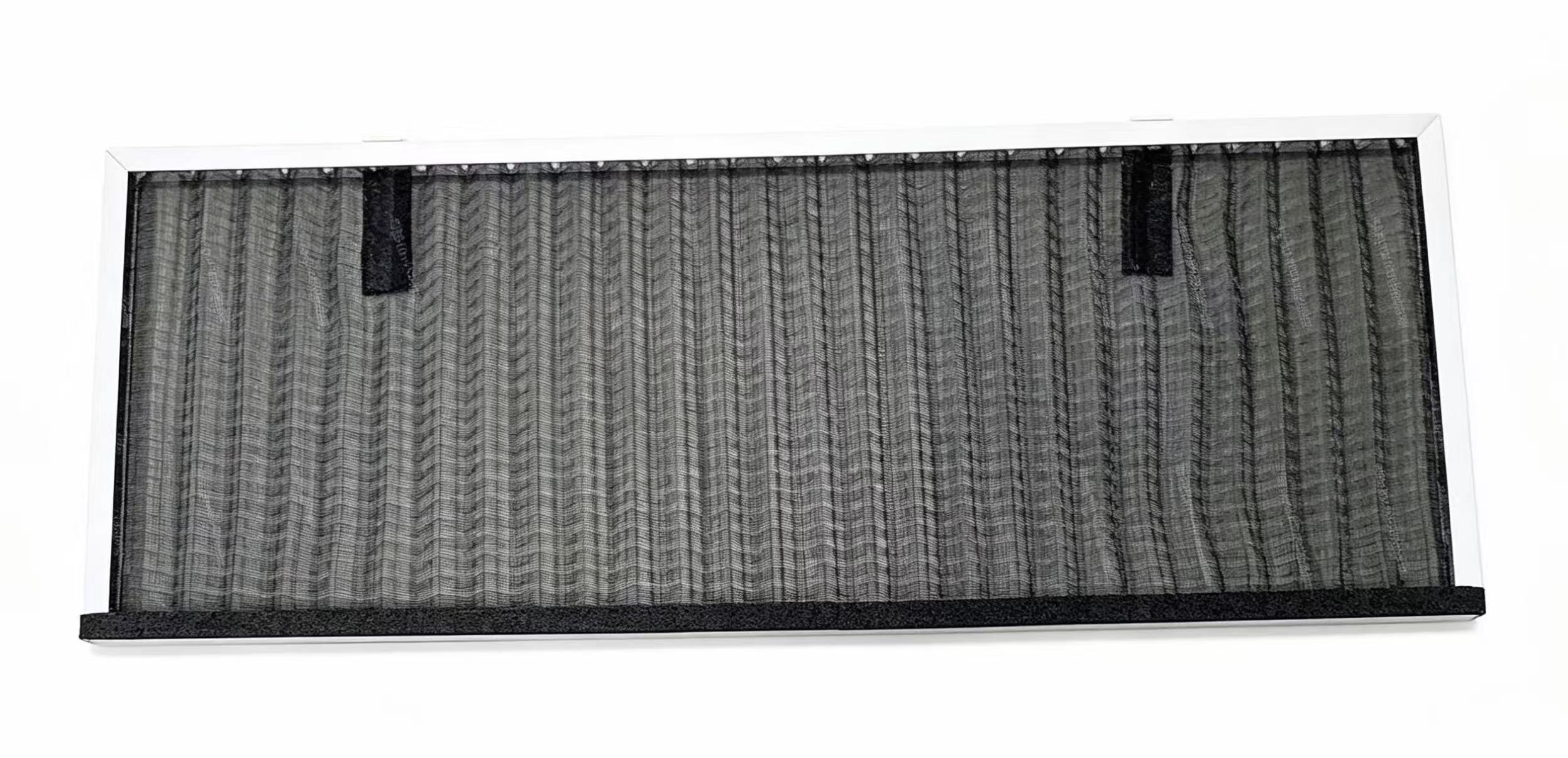
Celrith washable metal primary filter mesh is a reusable pre-filter made from expanded aluminium, stainless steel or galvanised wire mesh, designed to capture coarse particles, dust and fibrous debris before they reach coils, fans and ducts. It removes airborne contaminants down to 5 μm at G1–G2 efficiency, protecting equipment in residential and commercial air conditioners, ventilation systems and industrial enclosures. Facility managers, HVAC contractors and appliance OEMs choose it where disposable filters create recurring cost and waste.
Airborne debris is relentless. In urban and industrial settings, outdoor air carries pollen, road dust, lint, insects and oily smokes that accumulate on any unprotected surface. For air-conditioning equipment, the first point of contact is often the outdoor unit’s intake grille or the return-air opening of a ventilation system. Once these particles build up, they insulate heat-exchange surfaces, restrict airflow and create a breeding ground for odour-causing microbes.
The problem compounds in specific environments. Coastal installations face salt-laden air that accelerates corrosion. Heavy-oil workshops release sticky particulates that cling to conventional filters and resist cleaning. High-humidity regions encourage mould growth on organic filter media. In each case, the contaminant load shortens equipment life and drives up maintenance frequency. A primary filter that can be washed and reinstalled addresses the root of the problem by stopping particles at the boundary, not after they have entered the system.
When coarse particles are not intercepted, they impose a measurable load on downstream components. Heat exchangers lose thermal efficiency as dust coats fins; fan motors draw higher current to move the same volume of air; and ductwork accumulates sediment that eventually requires professional cleaning. The result is higher energy consumption, more frequent service calls and, in severe cases, premature failure of compressors or blowers.
The load is not only physical. Many disposable filters need replacement every few weeks in dusty seasons, generating a steady stream of waste and procurement paperwork. For original equipment manufacturers, specifying a filter that cannot be cleaned means designing in a consumable that adds cost and environmental burden over the product’s life. A washable metal mesh changes this equation by converting a recurring expense into a durable component that can be maintained with water and mild detergent.
Celrith’s filter is built around a multi-layer expanded metal core. Three to seven layers of corrugated or pleated mesh are stacked in an alternating pattern, creating a depth-loading structure that traps particles throughout the media rather than only on the surface. This design combines physical interception with a weak electrostatic effect that helps attract and hold finer dust without adding significant resistance to airflow.
The frame is available in aluminium alloy, galvanised steel or stainless steel, with a thickness of 1.0–2.0 mm and reinforced corners for structural integrity. The choice of material determines the filter’s best-fit environment: aviation-grade aluminium foil mesh for general use, 304 stainless steel mesh for coastal corrosion resistance, or galvanised wire mesh for cost-sensitive applications. This material flexibility allows the same product platform to serve both household air conditioners and heavy-duty industrial intakes.
Performance-wise, the filter operates across a temperature range of -20 °C to 250 °C, with a resistance of ≤50 Pa at a face velocity of 2 m/s. Airflow attenuation is kept below 5% over the filter’s service life, so the system’s energy demand remains stable. The low resistance directly addresses the energy penalty associated with clogged or overly dense filters; by maintaining ≤50 Pa, the filter helps reduce fan power consumption compared with higher-resistance alternatives. The washable design means the filter can be restored to near-original performance with low-pressure water and a neutral detergent, typically every one to three months, or monthly in dusty seasons.
Installation is straightforward thanks to clip-on or magnetic mounting options that ensure a tight seal and easy removal without tools. Standard sizes such as 500×500×10 mm are available, and custom dimensions can be produced to match specific equipment openings. This adaptability makes Celrith’s mesh suitable for retrofits as well as new builds, and for OEMs seeking a reliable primary filtration component that aligns with their own service schedules.
| Item | Detail |
|---|---|
| Core filtration material | Aviation-grade aluminium foil mesh (general use) / 304 stainless steel mesh (coastal corrosion resistance) / galvanised wire mesh (economical option) |
| Filtration class and efficiency | G1–G2 (primary filtration), high interception of particles ≥5 μm |
| Structure and frame | 3–7 layers of corrugated/pleated expanded mesh stacked alternately; aluminium alloy / galvanised / stainless steel frame (1.0–2.0 mm thick, reinforced corners) |
| Operating performance | Operating temperature: -20 °C to 250 °C | Resistance: ≤50 Pa (face velocity 2 m/s) | Airflow attenuation: <5% |
| Installation and maintenance | Clip-on / magnetic design for leak-free, easy removal. Recommended cleaning every 1–3 months (monthly in dusty seasons) with low-pressure water and neutral detergent. |
| Applications and sizes | Residential/commercial air-conditioner outdoor units, heavy-oil environments, high-humidity salt-spray areas. Standard sizes (e.g., 500×500×10 mm) and fully custom dimensions available. |
This filter serves three main groups. First, HVAC service companies and facility managers responsible for maintaining air-conditioning equipment in offices, retail spaces and light industrial buildings. They value the washable design because it reduces filter replacement costs and waste, and the low resistance helps keep energy bills in check. Second, appliance manufacturers and OEMs who need a durable primary filter for air-conditioner outdoor units or ventilation products; they can specify custom sizes, frame materials and mounting features to match their production line. Third, industrial operators in heavy-oil or coastal environments where standard filters fail quickly; the stainless steel variant offers corrosion resistance, while the multi-layer structure handles oily particulates that would clog disposable media.
In each case, the common thread is a need to protect equipment from coarse contaminants without adding significant airflow resistance or maintenance complexity. The filter’s ability to be cleaned and reused aligns with sustainability goals and reduces the total cost of ownership over the equipment’s life.
Celrith products are manufactured under a quality and environmental management system that holds ISO 9001, ISO 14001 and ISO 45001 certifications, and the company is REACH and RoHS compliant, with documentation available upon request. In 2024, the company also achieved IATF 16949 certification for automotive quality management, reflecting its commitment to rigorous process control.
The manufacturing base in Zhongshan, Guangdong, China, covers 50,000 m², including 20,000 m² of cleanroom space across six workshops. A CNAS-accredited laboratory supports filter efficiency, dust-holding capacity and resistance testing, providing data that customers can use for verification. With over 20 years of filtration experience and exports to Europe, the United States, Japan and South Korea, Celrith has developed more than 1,000 filtration solutions and supports OEM/ODM customisation for size, structure, filter grade, frame material, logo and packaging. Multiple automated production lines enable a monthly capacity of millions of pieces, and IQC, IPQC and OQC processes govern quality from incoming materials to final shipment.
To request a quotation or discuss a custom filter for your equipment, please provide the following details: the device or vehicle model, required dimensions or a drawing, airflow rate or water flow (if relevant), operating conditions (temperature, humidity, contaminant type) and estimated quantity. This information helps us recommend the most suitable mesh material, frame and mounting option. Contact our team to start the conversation.
It captures coarse particles ≥5 μm, including dust, pollen, lint, insects and fibrous debris. The multi-layer mesh also helps hold finer particulate through a weak electrostatic effect. It is rated G1–G2 for primary filtration.
At a face velocity of 2 m/s, resistance is ≤50 Pa, and airflow attenuation stays below 5% over the service life. This low resistance helps reduce fan energy consumption compared with denser filters. The washable design means performance can be restored by cleaning rather than replacement.
Yes. Celrith offers standard sizes such as 500×500×10 mm and fully custom dimensions. Frame material (aluminium, galvanised or stainless steel), mesh type, mounting (clip-on or magnetic) and logo/packaging can be tailored for OEM/ODM projects.
Cleaning is recommended every one to three months, or monthly in dusty seasons, using low-pressure water and a neutral detergent. The filter is reusable and does not require replacement unless damaged. Regular cleaning maintains low resistance and efficient particle capture.
MOQ and lead time depend on the specific configuration and order volume. Please contact us with your requirements for a precise quotation. We support both small and large orders and will confirm schedules based on production capacity.
Yes, samples are available for evaluation. Provide your target dimensions and operating conditions so we can supply a representative sample. Sample policy and costs are confirmed upon inquiry.
Celrith holds ISO 9001, ISO 14001, ISO 45001 and IATF 16949 certifications, and products comply with REACH and RoHS. Our CNAS-accredited laboratory can provide test reports for efficiency, dust-holding capacity and resistance. Compliance documents are available on request.
The 304 stainless steel mesh is designed for coastal and high-humidity salt-spray areas where corrosion resistance is critical. It offers the same multi-layer structure and low resistance as the aluminium version. For heavy-oil environments, the stainless steel option also simplifies cleaning.