
DE-DE

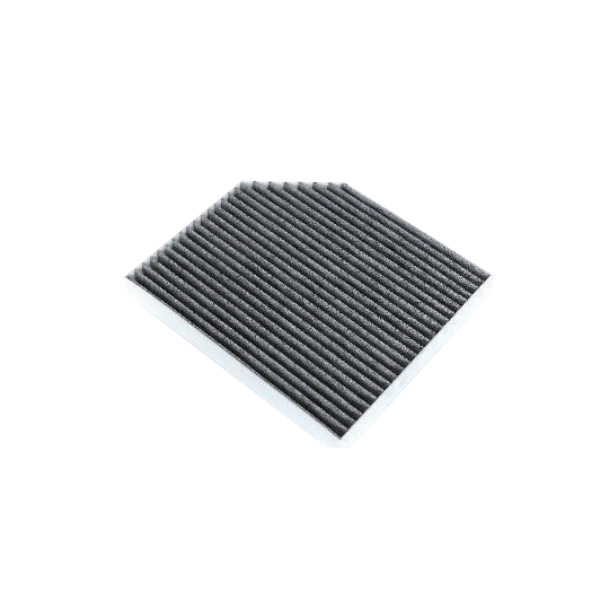
Celrith automotive cabin air filters combine high-efficiency HEPA media with high-iodine coconut-shell activated carbon to capture dust and PM2.5 particles while adsorbing odours, ammonia, sulphides and traffic-related VOCs from the air entering your vehicle cabin. They are designed for passenger cars, buses, trucks and construction machinery, and are available as full-range OEM/ODM customisations. Celrith manufactures these filters in Zhongshan, Guangdong, China.
Every time the cabin blower runs, it pulls in outside air loaded with particles and gases. Road dust, tyre and brake wear, pollen and fine particulate matter (PM2.5) are small enough to stay suspended and penetrate deep into the cabin. Exhaust fumes add nitrogen oxides, sulphur compounds and volatile organic compounds (VOCs) that create persistent odours. In heavy traffic, tunnels or congested city roads, these contaminants accumulate quickly. A standard dust filter captures some particles but offers little defence against gases and odours. The result is a cabin that feels stuffy, smells of traffic and may aggravate allergies or respiratory discomfort for drivers and passengers.
When particles and gases are not removed effectively, the load shifts to the vehicle's HVAC system and its occupants. Dust builds up on the evaporator core and blower motor, reducing heat exchange and airflow. Over time, this buildup can lead to musty odours, higher fan speeds and increased energy draw from the air-conditioning compressor. For fleet operators and commercial vehicles, frequent cabin filter changes and HVAC cleaning add maintenance cost and downtime. Drivers of buses, trucks and construction machinery face longer exposure to dust and exhaust, making cabin air quality a health and comfort issue as well as a maintenance one.
Choosing a filter that balances high particle capture with low airflow resistance helps relieve this load. A filter that is too restrictive can starve the blower and reduce cooling performance; one that is too open lets contaminants through. Celrith addresses both sides of this trade-off with a pleated composite design.
Celrith cabin filters use a dual-effect composite structure. The high-precision HEPA layer intercepts fine particles, including PM2.5 and dust, while the high-iodine coconut-shell granular activated carbon layer targets odour-causing gases such as ammonia, sulphides and traffic VOCs. The pleated construction provides a large filtration surface area within a compact frame, which supports high dust-holding capacity and a long service life. At the same time, the pleat geometry is engineered for low airflow resistance, so the cabin blower and air-conditioning system can deliver the intended airflow without working harder.
The contrast with a basic single-layer dust filter is clear: instead of only trapping visible dust, the Celrith filter also reduces the gases and odours that passengers notice most. For vehicles operating in polluted or odorous environments, this combined approach helps keep the cabin fresher and reduces the rate at which the HVAC system becomes fouled.
| Item | Detail |
|---|---|
| Product name | Automotive Cabin Air Filter / Car Air Filter (Dust Removal) |
| Core structure and materials | Dual-effect composite: high-precision HEPA filter media + high-iodine coconut-shell granular activated carbon |
| Core purification performance | High-efficiency interception of PM2.5 particles and dust + targeted adsorption of ammonia, sulphides and exhaust VOCs |
| Physical and flow characteristics | Good airflow characteristics, low operating resistance, very high dust-holding capacity and service life |
| Main application scenarios | Air-conditioning and ventilation systems of passenger cars (sedans, SUVs, MPVs, etc.), commercial buses, heavy trucks and construction machinery |
| Size and customisation | 100% support for OEM/ODM flexible customisation across vehicle models. Any length, width, thickness and pleat count can be customised to match original equipment HVAC duct requirements. |
| Quality certification system | Company operates a 50,000 m² plant, strictly follows the IATF 16949 automotive quality management system, and relies on a national-level CNAS testing centre to ensure automotive-grade outgoing quality. |
Celrith cabin air filters are specified for passenger cars including sedans, SUVs and MPVs, as well as commercial buses, heavy trucks and construction machinery. They suit vehicle owners who want cleaner cabin air in polluted cities, fleet managers responsible for driver comfort and HVAC maintenance, and aftermarket distributors looking for a reliable filter range with customisation options. Because the filters can be tailored to specific dimensions, thicknesses and pleat counts, they are also a fit for OEM and Tier 1 supply programmes that require precise fit and consistent quality. If you are unsure which specification matches your vehicle or equipment, the Celrith team can help identify the right reference.
Celrith products are manufactured under a management system that meets REACH and RoHS environmental compliance requirements, and the company holds ISO 14001 and ISO 45001 certifications. Quality data, including filtration efficiency, dust-holding capacity and resistance reports, is generated in the company's own CNAS-accredited laboratory. The 50,000 m² production base includes 20,000 m² of cleanroom space across six clean workshops, and the company was awarded IATF 16949 automotive quality management system certification in 2024. With more than 20 years of experience in filter development and manufacturing, Celrith has exported to Europe, the United States, Japan and South Korea, and has developed more than 1,000 filtration solutions. Multiple automated production lines support a monthly capacity of millions of pieces, and full IQC, IPQC and OQC process controls help maintain batch-to-batch consistency.
To receive a quotation or discuss a custom filter project, please share the following details with our team: the device or vehicle model, the required size or a drawing, the airflow or water flow (if applicable), the operating conditions, and the quantity you need. With these inputs, Celrith can recommend the most suitable configuration and provide a timely response. Contact us to start the conversation.
The Celrith cabin filter uses a dual-effect composite of HEPA media and high-iodine coconut-shell activated carbon. It captures PM2.5 particles and dust, and adsorbs odour-causing gases such as ammonia, sulphides and traffic-related VOCs. This helps reduce both particulate and gaseous contaminants entering the cabin.
Celrith cabin filters are designed for high-efficiency interception of PM2.5 particles and dust. The HEPA layer is combined with activated carbon to address gases and odours. For project-specific efficiency data, the company can provide test reports from its CNAS-accredited laboratory.
Yes. Celrith offers full OEM/ODM customisation for any length, width, thickness and pleat count to match original equipment HVAC duct requirements. Simply provide your vehicle model and dimensions or a drawing, and the team will develop a fitting solution.
MOQ for standard specifications is typically 1,000–2,000 pieces, while customised versions generally start at 5,000 pieces depending on tooling. Free samples of standard stock items are available (freight collect); custom samples may incur a small development fee, which can be credited against the first order.
Standard products ship in 15–25 days, and customised products in 30–45 days including tooling. With a 50,000 m² production base and automated lines, Celrith can support large-volume orders and has extensive export experience to Europe, the US, Japan and South Korea.
Under normal driving conditions, Celrith recommends replacement every 10,000–15,000 km or 6–12 months, whichever comes first. In dusty or heavily polluted areas, shorten the interval. The filter is designed with high dust-holding capacity to maintain low airflow resistance throughout its service life.
Yes. The pleated design provides low airflow resistance while maintaining high dust-holding capacity. This helps the blower and air-conditioning system deliver the intended airflow without working harder, which can reduce energy draw and help avoid premature HVAC fouling.
Absolutely. Please share your device or vehicle model, required size or drawing, airflow or water flow (if applicable), operating conditions and quantity. <a href="/en/contact">Contact us</a> with these details, and the Celrith team will respond with a tailored quotation.