
EN

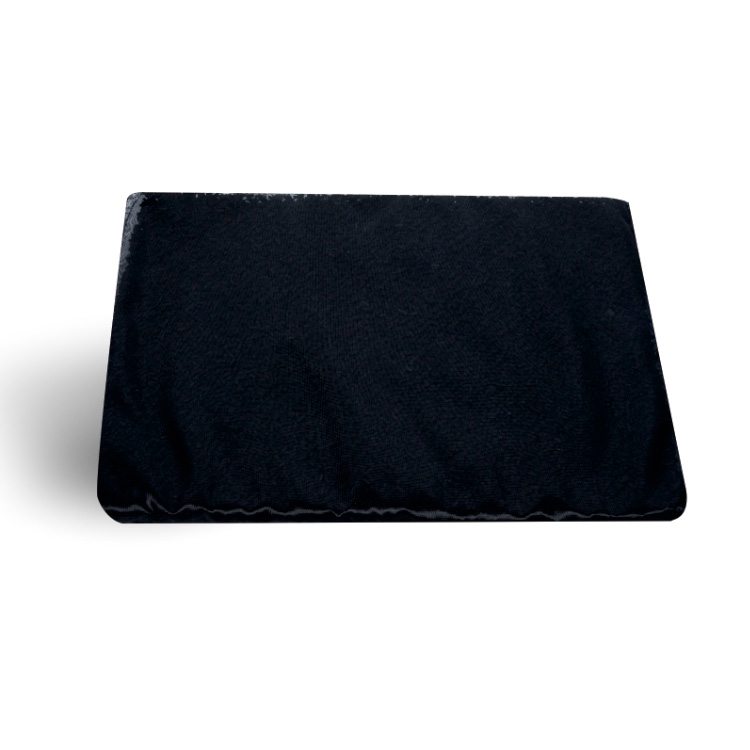
Celrith adhesive carbon filter mesh is an activated carbon filter that removes formaldehyde, benzene, ammonia, volatile organic compounds (VOCs) and odours from air. It is made by bonding high-iodine-value activated carbon particles onto an eco-friendly substrate. It is designed for air purifiers, range hoods, air fryers, commercial HVAC and ventilation systems, pet products, and other equipment where gas-phase contaminants must be controlled. Celrith is a brand of the manufacturer based in Zhongshan, Guangdong, China.
Airborne contaminants are not all the same. Particles such as dust and smoke can be trapped mechanically, but gases and odours pass straight through conventional filters. Formaldehyde from furniture and building materials, benzene from paints and solvents, ammonia from cleaning products and pets, and the complex mixture of VOCs and grease vapours from cooking all circulate indoors. These gases are often invisible and can persist long after the source has gone. In appliances, they cause odour complaints, reduce perceived air quality, and can degrade sensitive components over time.
When gas-phase contaminants are not removed, the load shifts to the rest of the system. Air purifiers recirculate odours instead of eliminating them, forcing users to replace HEPA filters more often than necessary. Range hoods and integrated stoves release cooking smells and grease aerosols into the kitchen and beyond. Commercial ventilation systems spread odours between zones and can build up oily deposits on fans and ductwork. In vehicles, cabin air carries exhaust fumes and VOCs that affect driver comfort. The result is higher maintenance frequency, reduced equipment lifespan, and a poorer experience for the end user.
Celrith adhesive carbon filter mesh targets these problems at the source. High-iodine-value activated carbon particles are evenly fixed onto a substrate using an adhesive carbon process. This structure provides a large adsorption surface for gases and odours while keeping airflow resistance low. The low-resistance design helps reduce energy consumption in fans and blowers, which is important for appliances that run continuously. Unlike loose carbon granules, the bonded carbon stays in place, so the filter maintains consistent performance and is easier to handle and replace. The mesh can be customised in size, shape and frame material to fit specific equipment, and it can be combined with other filter media for combined particle and gas removal.
| Item | Detail |
|---|---|
| Filter material | High-quality high-iodine-value activated carbon particles on eco-friendly substrate (adhesive carbon process) |
| Dimensions | Customised to order (various sizes, shapes and frame materials available) |
| Core performance | Efficient removal of formaldehyde (HCHO), benzene, ammonia and other VOCs and odours |
| Applications | Household and commercial air purifiers, fresh air systems, automotive air filters, central air conditioning, vacuum cleaner filters, etc. |
| Manufacturer | Zhongshan company (Celrith brand), Guangdong, China |
Celrith adhesive carbon filter mesh is used across many air-handling products. In household air purifiers, it removes odours and VOCs that pass through the particle filter. In range hoods and integrated stoves, it tackles cooking smells and grease vapours. In air fryers and deep fryers, it reduces lingering food odours. In commercial air conditioning and ventilation systems, it helps maintain acceptable indoor air quality by adsorbing gases and odours from outdoor and recirculated air. In pet products such as cat litter boxes, it controls ammonia and other odours. In vehicle cabins, it improves air quality by removing exhaust fumes and VOCs. The mesh is also suitable for vacuum cleaner filters and other appliances where gas-phase filtration is needed.
Celrith products are manufactured under a quality and environmental management system that holds ISO 9001, ISO 14001 and ISO 45001 certifications. The products comply with REACH and RoHS environmental regulations, and compliance documents can be provided. The manufacturer operates a 50,000 m² production plant, including six cleanrooms totalling 20,000 m², which help control dust and ensure filter cleanliness. The company has been awarded IATF 16949 automotive quality management system certification in 2024. An in-house laboratory accredited by CNAS (China National Accreditation Service for Conformity Assessment) can issue test reports for filtration efficiency, dust holding capacity and resistance. With more than 20 years of experience in filtration product development and manufacturing, and continuous exports to Europe, the United States, Japan and South Korea for over 20 years, the company supports OEM/ODM projects with customised size, structure, filter grade, frame material, logo and packaging. More than 1,000 filtration solutions have been developed, and multiple automated production lines enable monthly capacity of millions of pieces. Quality control covers IQC, IPQC and OQC throughout the process.
To receive a tailored quotation, please provide the following details: the device or vehicle model, the required size or a drawing, the airflow or water flow (if applicable), the operating conditions (such as temperature, humidity and contaminant concentration), and the estimated quantity. Our team will respond with a specification and price proposal. Contact us to discuss your project.
Celrith adhesive carbon filter mesh removes formaldehyde (HCHO), benzene, ammonia and other volatile organic compounds (VOCs), as well as odours. These gases are commonly found in indoor air from building materials, furniture, cleaning products, cooking and pets. The high-iodine-value activated carbon adsorbs them effectively, helping to improve indoor air quality.
The filter uses high-iodine-value activated carbon particles bonded to a substrate, providing a large adsorption surface. While efficiency depends on the specific gas, concentration and airflow, the design targets efficient removal of formaldehyde, benzene, ammonia and other VOCs. For project-specific efficiency data, our CNAS-accredited laboratory can perform tests according to your requirements.
Yes, Celrith adhesive carbon filter mesh is fully customisable. We can adjust the size, shape (such as square, circular, honeycomb or pleated) and frame material (paper, plastic or metal) to match your device. We also support OEM/ODM projects with custom carbon types, gram weights and branding. Provide your specifications or a drawing, and our team will develop a solution.
The MOQ for standard specifications is typically 1,000 to 3,000 pieces, depending on the product. For customised products, the MOQ is generally 3,000 to 5,000 pieces. We can discuss your specific requirements to find a suitable arrangement.
For standard products in stock, lead time is 7 to 15 days. For customised orders, sampling takes 7 to 10 working days, and mass production takes 25 to 35 days. With a 50,000 m² plant and multiple automated lines, we can handle large volumes and urgent replenishment.
The replacement interval depends on the operating environment and contaminant load. In typical household use (8 hours per day), we recommend replacing the filter every 6 to 8 months. In commercial high-load environments, 3 to 6 months may be appropriate. Our CNAS lab can perform accelerated ageing tests to provide a more precise estimate for your specific application.
Yes, we welcome sample requests. For standard specifications, we can provide free samples (you cover the courier cost). For customised samples, a sampling fee may apply, which can be refunded against a mass production order. Samples come with relevant test data from our CNAS-accredited laboratory.
Adhesive carbon technology offers lower weight and lower airflow resistance, which helps reduce energy consumption. It is also more flexible in structure, allowing thin and pleated designs that fit various devices. The carbon particles are evenly distributed for a larger adsorption area and higher initial efficiency, and the process can be combined with other filter media for integrated solutions.