
EN

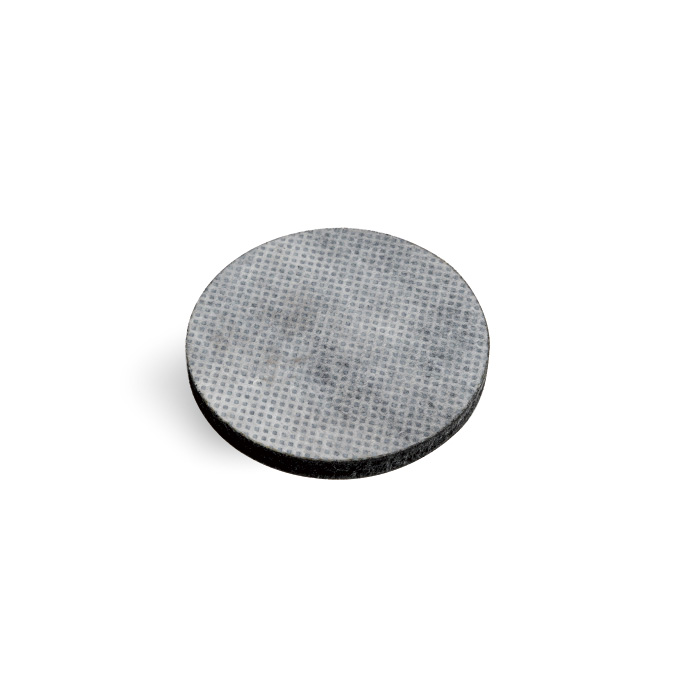
Celrith's disc-shaped activated carbon filter cartridge is a compact, drop-in water filter for sports water bottles and similar portable drinking vessels. It is built around food-grade coconut-shell activated carbon held between food-grade non-woven fabric and an ABS/PP housing, and it targets the contaminants that most affect tap water in daily use: residual chlorine, odour and taste compounds, organic matter and some heavy metals. It is made for outdoor, hiking and travel users, and for brands and retailers who want a private-label bottle filter produced to their own sizing and packaging. Celrith manufactures it in Zhongshan, Guangdong, China, and supplies it as a standard item or as a customised OEM/ODM build.
Water that leaves a municipal treatment plant is not the water that reaches a bottle. Residual chlorine, added to keep distribution networks safe, carries through to the tap and reacts with naturally occurring organics to produce the familiar swimming-pool taste and smell. Those organics, plus trace industrial and agricultural residues, are what make refilled bottle water taste flat or stale after a few hours in a warm pack or a vehicle.
Portable drinking vessels make the problem worse in a specific way. A bottle is filled, capped, carried, warmed by the sun and drunk from over hours, so any chlorine or odour left in the water is concentrated in a small, enclosed headspace. Users notice taste long before they notice anything else, and a bottle that tastes poor is a bottle that gets left behind. The practical answer is adsorption at the point of drinking: a filter small enough to sit in the bottle and effective enough to strip chlorine and odour on the way through.
Celrith's disc cartridge is designed around that constraint. It is a flat, round element rather than a long candle, so it fits the neck and base geometry of portable bottles and delivers a short, low-resistance water path at the flow rates a person actually drinks at.
Untreated water puts load on three things in a bottle system: the water itself, the vessel and the user's experience. Inside the bottle, chlorine and dissolved organics sit against the wall and the cap seal for hours; the result is odour that transfers to the plastic and returns with the next fill. Where water is hard, mineral scale can also build on the inner surfaces, and once scale is established it traps residue and is difficult to remove by rinsing.
For a brand owner, the load is commercial. A bottle filter that clogs early, channels water around the media, or releases fine carbon dust into the drink generates returns and reviews that no packaging can offset. Consistency of carbon weight, housing fit and rinse behaviour from batch to batch matters more than any single headline figure, because the customer experience is repeated every time the bottle is filled.
Filtration relieves this load at the earliest point: the water is treated as it leaves the bottle, before taste, odour or fine sediment reach the drinker. The cartridge also keeps particulate matter out of the water path, so the drink stays clear rather than carrying the fine black specks that poorly consolidated carbon media can shed.
The cartridge uses food-grade coconut-shell activated carbon as the core medium, selected for its adsorption capacity and its low dust release. The carbon is contained by food-grade non-woven fabric and a food-grade ABS/PP housing, so every wetted part is specified for contact with drinking water. In testing at Celrith's CNAS-accredited laboratory, the cartridge has shown residual chlorine removal above 95%, and the same construction reduces odour and taste compounds, organic matter and some heavy metals while leaving the beneficial minerals in the water.
The disc format is the engineering decision that does most of the work here. A flat element gives a wide face area in a shallow package, which means the water meets the carbon across a broad surface instead of being forced through a long, narrow path. The result is a lower pressure drop and a filter that works by gravity or gentle squeezing, as a sports bottle requires, rather than needing line pressure to perform.
Because the cartridge is small and its housing is moulded, it is also easy to adapt. Celrith can change the diameter and thickness, the carbon weight and formulation, the housing colour and material, the printed logo and the retail packaging. That matters when one bottle platform needs a different media weight for a different market, or when a retailer wants a cartridge that only fits its own bottle.
A standard cartridge is rated for roughly 100–200 L of effective filtration, which in normal use corresponds to about one to three months, depending on water quality and how often the bottle is filled. Celrith can tune the carbon weight and rated capacity to the bottle volume, the target market's water quality and the intended retail position.
| Item | Detail |
|---|---|
| Product name | Sports water bottle activated carbon filter cartridge (disc shape) |
| Brand | Celrith |
| Category | Water jug filter |
| Filter medium | Food-grade coconut-shell activated carbon |
| Construction | Food-grade non-woven fabric with food-grade ABS/PP housing |
| Contaminants targeted | Residual chlorine, odour and taste compounds, organic matter, some heavy metals |
| Residual chlorine removal | Above 95%, based on testing at Celrith's CNAS-accredited laboratory |
| Rated filtration volume | Generally 100–200 L for the standard version (about 1–3 months of use, depending on water quality and frequency of use) |
| Intended use | Portable drinking water for outdoor sports, hiking, travel and everyday bottle use |
| Customisation | Diameter and thickness, carbon weight and formulation, housing colour and material, logo printing, retail packaging and instructions, to be confirmed by sample |
| Quality systems | ISO 9001, ISO 14001, ISO 45001; IATF 16949 (obtained 2024) |
| Manufacturing location | Zhongshan, Guangdong, China |
Celrith supplies this cartridge to three broad groups. The first is outdoor and travel brands whose bottles are sold for hiking, camping, commuting and gym use, where the filter is the product's main claim and taste is the deciding factor for repeat purchase. The second is housewares and retail chains that add a filter cartridge to an existing bottle line and need a private-label part with their own logo and packaging. The third is OEM customers who have a bottle platform already in production and need a cartridge engineered to its internal dimensions.
The cartridge also suits drinking bottles used in offices, schools and vehicles, where water is refilled from a tap or a cooler and left standing. In each case the requirement is the same: remove the chlorine and odour that make refilled water unpalatable, keep the minerals, and do it in a form factor that fits the bottle and does not release carbon fines into the drink.
Celrith's products are designed to meet the REACH and RoHS environmental regulations, and compliance documents can be provided on request. The company holds ISO 9001, ISO 14001 and ISO 45001 system certification, and obtained IATF 16949 automotive quality management certification in 2024. The manufacturing site in Zhongshan, Guangdong covers 50,000 m², including six cleanrooms with a combined area of 20,000 m², where cartridge assembly and packing take place. Celrith operates its own CNAS-accredited laboratory, which can issue test reports on filtration efficiency, dust-holding capacity and resistance. Quality control runs through IQC, IPQC and OQC across the production flow, and multiple automated lines give monthly capacity in the millions of pieces. Celrith has more than 20 years of filtration development and manufacturing experience, has developed over 1,000 filtration solutions, and has exported to Europe, the United States, Japan and Korea for more than 20 years.
To get an accurate quote, tell us the device or bottle model the cartridge is intended for, the size you need or a drawing, the flow or daily volume the bottle is expected to deliver, the operating conditions such as water source and typical temperature, and the quantity you plan to order. If you are still at the design stage, send the bottle neck and internal dimensions and our engineers will propose a disc diameter and carbon weight. Start the conversation through our contact page.
It targets residual chlorine, odour and taste compounds, organic matter and some heavy metals, using food-grade coconut-shell activated carbon held in food-grade non-woven fabric and an ABS/PP housing. In testing at Celrith's CNAS-accredited laboratory, residual chlorine removal was above 95%. It leaves the beneficial minerals in the water.
The standard cartridge is rated for roughly 100–200 L, which corresponds to about one to three months of typical use. The right interval depends on the chlorine level and quality of the local water and how often the bottle is filled. Celrith can tune the carbon weight and rated volume for a specific market or bottle size.
Yes. Celrith supports OEM/ODM work covering diameter and thickness, carbon weight and formulation, housing colour and material, logo printing, and retail packaging with instructions. Send the bottle's internal dimensions or a drawing, and our engineering team will propose a fit and confirm it with a sample.
Samples are available before a bulk order. Standard samples can be supplied free of charge with freight paid by the customer; customised samples carry a tooling or development charge that is credited against the bulk order. Quotes are prepared once we know the bottle model, size or drawing, flow requirement, operating conditions and quantity.
The MOQ is generally 1,000–2,000 pieces, depending on the specification and packaging. For customised models, an MOQ of 5,000 pieces is recommended. Share your target volume and packaging plan and we will confirm the applicable MOQ for your configuration.
Standard items in stock ship within 7–15 days. Mass production for OEM customised orders typically takes 25–35 days. Celrith manufactures in its own plant in Zhongshan, Guangdong, which allows flexible scheduling, and long-term customers can arrange scheduled or split deliveries.
The carbon is contained by food-grade non-woven fabric and a moulded ABS/PP housing, which keeps the media in place during use. The disc format also gives a broad, shallow water path with low resistance, so the cartridge works under gravity or gentle squeezing in a sports bottle rather than relying on line pressure.
Celrith has exported to Europe, the United States, Japan and Korea for more than 20 years. Products are designed to meet REACH and RoHS requirements, and compliance documents can be provided. The company holds ISO 9001, ISO 14001 and ISO 45001 certification and obtained IATF 16949 in 2024. Tell us your target market through our <a href="/en/contact">contact page</a> and we will advise on the documentation you need.