
EN

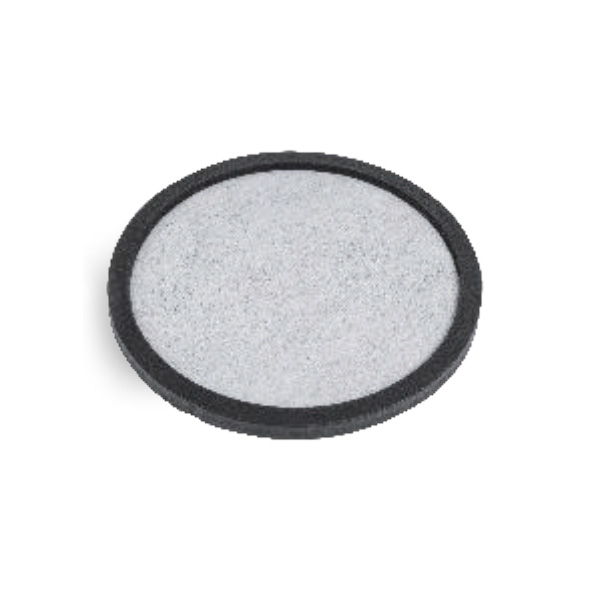
Celrith coffee machine filter cartridges are three-stage water purifying cartridges compatible with MR.COFFEE machines. They reduce chlorine, odour, sediment and hardness minerals that build up in the water path of automatic and drip coffee machines. The cartridge is built for coffee machine and drinking-water appliance makers, brand owners and distributors who need a stable replacement filter with OEM and ODM flexibility, from Celrith in Zhongshan, Guangdong, China.
Water is the largest ingredient in every cup, and it carries more than most users expect. Municipal supply can contain residual chlorine, organic odour compounds, suspended sediment and dissolved metals. In hard-water areas, calcium and magnesium ions are present in higher concentrations. Each of these affects taste, but the bigger issue is what they do inside the machine.
Chlorine and organic compounds flatten the aroma of coffee. Sediment and fine particles pass through the water circuit and settle in valves and small passages. Hardness minerals precipitate as scale when water is heated, coating the thermoblock, boiler and shower screen. The visible result is a cup that tastes duller than the coffee should, and the hidden result is an appliance that works harder with each brewing cycle.
Scale is the main mechanical burden. As mineral deposits thicken on heated surfaces, heat transfer becomes less efficient, so the element runs longer to reach brewing temperature. Flow narrows through scaled passages, dosing and temperature stability drift, and descaling becomes a routine chore rather than an occasional one. In commercial settings, every extra descaling cycle is downtime.
Sediment adds a second load. Particles that bypass treatment lodge in pumps, solenoid valves and small orifices, where they can cause uneven flow or blockages. Chlorine and odour compounds, meanwhile, are a quality problem rather than a mechanical one: they mask the flavour profile that a roaster has worked to build. Treated water reduces all three loads at once, which is why the cartridge sits upstream of the brewing circuit rather than downstream.
The cartridge uses a three-stage fine filtration system. Water first passes a high-density microporous fibre outer layer, which intercepts sediment and suspended particles and traps harmful heavy-metal ions such as lead and mercury. The second stage is high-iodine-value coconut shell activated carbon, chosen for strong adsorption of residual chlorine, odours and organic compounds so the coffee's original flavour and aroma come through. The third stage is food-grade ion exchange resin, which softens the water by exchanging hardness minerals, reducing the scale that would otherwise form in the machine.
The sequence matters. Removing sediment first protects the carbon bed and the resin from fouling; softening last keeps the water stable as it leaves the cartridge. The result is a clear contrast with untreated water: less scale on heated surfaces, fewer particles in the water path, and a cleaner cup.
Celrith also supports full-size OEM customisation. Housing shape, connector and clip style, and the internal filter-material mix can be tooled to a customer's appliance requirements. Rather than adapting the machine to a standard cartridge, brand owners can specify a cartridge that fits the appliance they have designed.
| Item | Detail |
|---|---|
| Product name | Coffee machine water purifying filter cartridge / drinking-water dispenser filter |
| Filtration principle and structure | Three-stage fine filtration: first, fibrous outer layer; second, coconut shell activated carbon; third, ion exchange resin |
| Core filtration materials | Food-grade ion exchange resin, high-quality coconut shell activated carbon, high-density fibre |
| Core performance | Scale prevention and water softening; strong adsorption of residual chlorine and odour; interception of sediment and harmful heavy-metal ions such as lead and mercury |
| Main end applications | Automatic and semi-automatic espresso machines, American-style drip coffee machines, high-end drinking-water dispensers, ice makers, sports water filter bottles |
| Specification and size customisation | 100% OEM support: housing shape, connector and clip style, and internal filter-material ratio can be tooled to the customer's appliance requirements |
| Quality certification | The company's 50,000 m² plant is certified to ISO 9001 and IATF 16949; filter materials meet water-contact safety standards and are backed by a CNAS-accredited testing centre |
The cartridge is compatible with MR.COFFEE machines and is used across automatic and semi-automatic espresso machines, American-style drip coffee machines, high-end drinking-water dispensers, ice makers and sports water filter bottles. Typical customers are appliance brands that want a replacement cartridge under their own name, distributors serving the replacement-filter aftermarket, and coffee service operators who need consistent water quality across many machines.
For brand owners, the value is in fit and formulation: a cartridge matched to the machine's connector and flow requirements, with a filter-material mix tuned to the water conditions in the target market. For distributors, the value is a single reliable source for a consumable that customers replace on a schedule.
Celrith products comply with REACH and RoHS environmental requirements, and compliance documents can be supplied. The company holds ISO 9001, ISO 14001 and ISO 45001 certification, and the plant was certified to IATF 16949 in 2024. Filter materials are tested at a CNAS-accredited laboratory that can issue reports on filtration efficiency, dust-holding capacity and resistance.
The production base covers 50,000 m², including six cleanrooms totalling 20,000 m², and quality control runs through IQC, IPQC and OQC at every stage. With more than 20 years of filtration product development and manufacturing, Celrith has developed over 1,000 filtration solutions and has exported to Europe, the United States, Japan and South Korea for more than 20 years. The company is based in Zhongshan, Guangdong, China.
To move an inquiry forward quickly, send us the device or vehicle model, the cartridge size or a drawing, the required water flow, your operating conditions (water hardness and temperature, for example), and the quantity you expect to order. We will respond with a specification and quotation. Contact Celrith to discuss your coffee machine filter cartridge project.
The cartridge uses a three-stage system: a fibrous outer layer that intercepts sediment and heavy-metal ions such as lead and mercury; coconut shell activated carbon that adsorbs residual chlorine, odours and organic compounds; and food-grade ion exchange resin that softens water by reducing hardness minerals. Together these stages address taste, particles and scale in one cartridge.
The ion exchange resin exchanges calcium and magnesium ions, the minerals that form scale when water is heated. Less scale on the thermoblock, boiler and shower screen means more efficient heat transfer and more stable flow, so descaling is needed less often. Sediment is captured upstream in the fibre layer, which keeps particles out of pumps and valves.
The cartridge is developed and produced to MR.COFFEE original specifications, with dimensions, connectors and flow parameters compatible with the original for direct replacement. Celrith also offers ODM development: from a sample or drawing, we can develop cartridges adapted to other coffee machine brands, typically within 15–30 days.
Yes. Stock models can be supplied as 1–3 free samples for testing and evaluation; the customer covers international express charges only, and tooling costs for custom samples can be credited against later bulk orders. Send the device model, size or drawing, water flow and expected quantity to receive a quotation.
Standard models typically have an MOQ of 1,000–2,000 pieces. For custom projects, the MOQ is agreed according to the specific specification and packaging requirements. Private-label packaging, including logo printing, multilingual instructions, barcodes and UPC codes, is available.
Standard model orders usually ship in 25–35 days, and custom orders in 35–45 days, depending on order quantity and specification. Celrith has exported to Europe, the United States, Japan and South Korea for more than 20 years and can quote FOB, CIF or DDP terms.
The standard service life is 2 months or 60 gallons (about 227 litres) of water, whichever comes first. The formulation can be adjusted for local water conditions, so replacement intervals can be tuned to the market where the cartridge is sold.
Materials come from long-term strategic suppliers, with a COA report for each batch of carbon and resin; automated filling equipment controls filter-material weight and density; and the CNAS-accredited laboratory checks flow and filtration performance on each production batch, with retained samples kept for 3 years for traceability. Contact us to discuss your requirements.