
EN

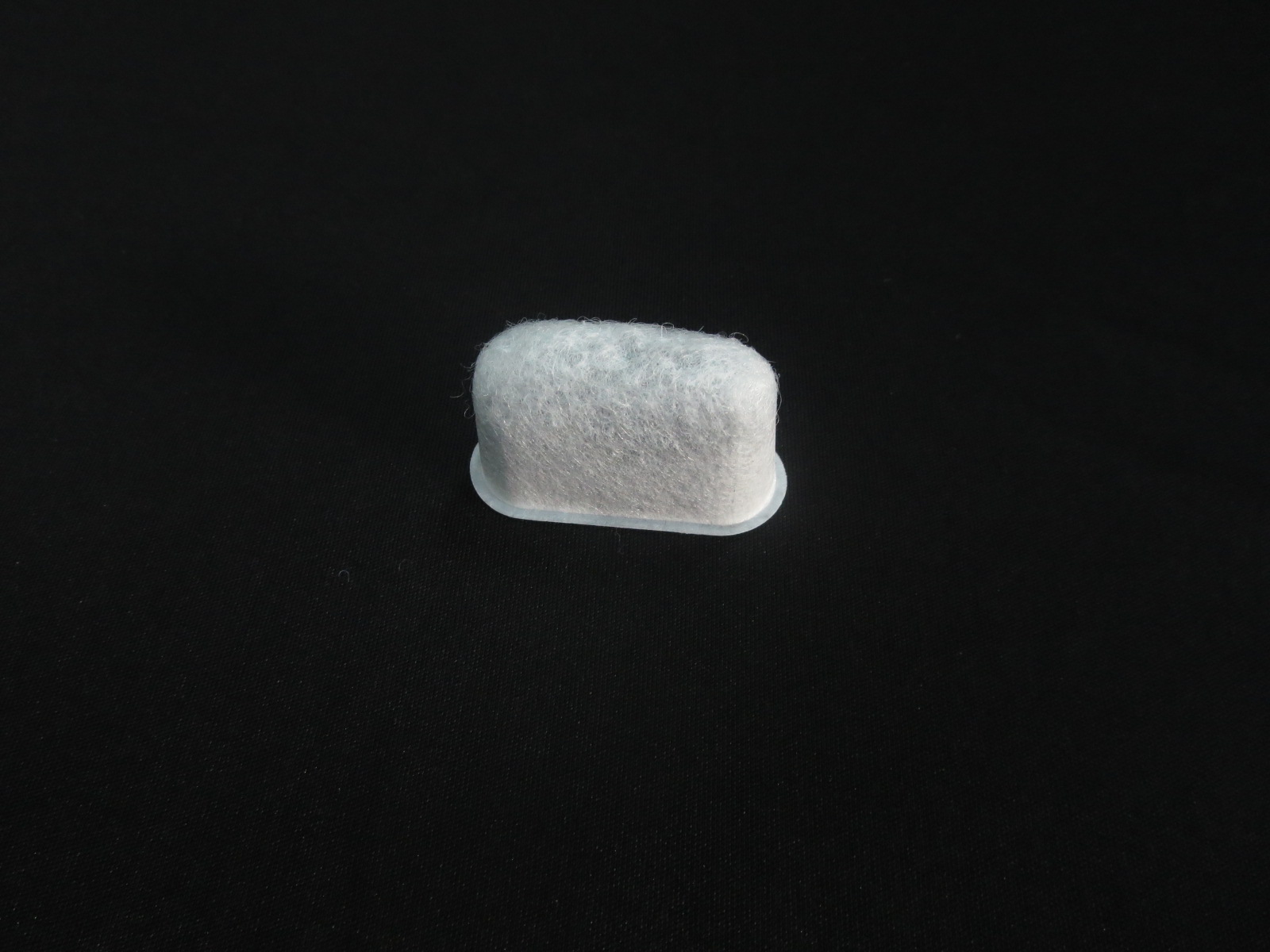
Celrith coffee machine water filters are designed to reduce chlorine, scale, and other impurities in tap water before they reach your espresso or drip brewer. Using a combination of coconut-shell activated carbon and food-grade ion exchange resin, they protect both the flavour of your coffee and the internals of your machine. This filter is a direct replacement for Cuisinart coffee makers and is aimed at households, cafés, and OEM buyers who need reliable water treatment in a compact cartridge.
Municipal water carries more than you might expect. Residual chlorine, used to disinfect supply, reacts with organic compounds and leaves a flat, medicinal taste in the cup. Dissolved calcium and magnesium, the minerals behind hardness, precipitate as limescale when water is heated inside the boiler and brew path. Fine sediment, rust particles from ageing pipes, and trace metals such as lead and copper can also be present. Each of these affects coffee quality, but the bigger cost is the load they place on the machine itself.
When scale forms on heating elements and thermoblocks, heat transfer drops. The machine works harder, draws more energy, and brews at inconsistent temperatures, which shows up as uneven extraction and bitter or sour notes. Scale also narrows flow paths, raising pressure and forcing pumps and valves to labour. Chlorine and sediment accelerate wear in seals and small orifices. Over months, this leads to descaling downtime, shortened component life, and in commercial settings, service calls that eat into margins. Filtration removes the feed for these problems before they start.
Celrith takes a two-stage approach. Coconut-shell activated carbon provides a highly porous surface that adsorbs chlorine, odours, and organic compounds, improving taste and aroma. Food-grade ion exchange resin then targets hardness minerals, exchanging calcium and magnesium for ions that stay soluble and do not form scale on hot surfaces. The media are held in a fine microporous structure that intercepts sediment and rust particles, protecting the cartridge and the machine downstream.
The result is water that brews cleanly and equipment that stays closer to its design performance between services. The cartridge works at pressures from 20 to 120 psi and at temperatures between 2°C and 38°C, so it suits cold-water feed lines on domestic and commercial coffee machines. Rated life is approximately 250 litres or 2–3 months, depending on local water quality and usage frequency. For higher-volume cafés, more frequent replacement keeps performance consistent.
| Item | Detail |
|---|---|
| Filtration media | Coconut-shell activated carbon with food-grade ion exchange resin |
| Micron rating | Fine microporous interception of sediment, rust, and large particles |
| Filter life | Approximately 250 litres or 2–3 months, depending on water quality and usage |
| Operating pressure | 20–120 psi (approximately 1.4–8.3 bar) |
| Operating temperature | 2°C–38°C (cold water filtration only) |
| Applications | Automatic and semi-automatic espresso machines, commercial coffee machine softening, OEM water filter cartridges |
| Quality systems | Manufactured under ISO 9001, ISO 14001, IATF 16949, and medical supplies GMP standards; CNAS national laboratory testing |
Home users with Cuisinart drip or espresso machines value the plug-in replacement format and the visible difference in taste. Cafés and small chains use the cartridge to protect steam boilers and reduce descaling intervals. OEM and ODM buyers source Celrith filters for private-label coffee machines or aftermarket programmes, taking advantage of customisable dimensions, connector designs, and media blends. The filter is also suited to office coffee stations and hospitality settings where water hardness varies.
Celrith products are manufactured in Zhongshan, Guangdong, China, at a 50,000 m² facility that includes 20,000 m² of cleanrooms across six rooms. Production follows ISO 9001, ISO 14001, and ISO 45001 systems, and the site holds IATF 16949 certification, achieved in 2024. Products comply with REACH and RoHS environmental regulations, and compliance documentation is available on request. Testing is carried out in our CNAS-accredited laboratory, which issues reports on filtration efficiency, dust holding capacity, and resistance. With more than 20 years of filtration experience and exports to Europe, the United States, Japan, and South Korea, we support OEM/ODM projects covering size, structure, media grade, logo, and packaging. More than 1,000 filtration solutions have been developed, and automated lines support monthly output in the millions of pieces.
To receive a tailored quotation for Celrith coffee machine filters, please share your device or vehicle model, required size or drawing, target airflow or water flow, operating conditions, and estimated quantity. Our team will respond with lead times, sample options, and pricing. Contact us to start the conversation.
The filter uses coconut-shell activated carbon to adsorb chlorine, odours, and organic compounds, and food-grade ion exchange resin to reduce hardness minerals that cause scale. Its fine microporous structure also intercepts sediment, rust, and large particles. Together, these actions protect both coffee flavour and machine components.
Replace the cartridge after approximately 250 litres of water or every 2–3 months, whichever comes first. Actual life depends on local water quality and usage frequency. In hard-water areas or high-volume cafés, more frequent changes help maintain flow and scale control.
Celrith filters are designed as direct replacements for mainstream Cuisinart coffee makers, matching the original dimensions and connector design so no modification is needed. We can provide a detailed compatibility list for your target market. If you need filters for other brands, we also develop custom solutions.
Yes. We provide 1–3 standard samples free of charge; you only cover international shipping. Custom samples for private label or special specifications may incur a sample fee, which is credited against your first order. Samples are usually dispatched within 3–5 working days.
The MOQ for standard compatible models is 5,000 pieces, with lead times of 15–20 days for stock or small batch orders. For OEM customisation, we recommend an MOQ of 10,000 pieces, and production including tooling or packaging development takes about 25–30 days.
The cartridge operates at pressures from 20 to 120 psi (approximately 1.4–8.3 bar) and is designed to maintain adequate flow for coffee machine feed lines. As with any filter, flow may decrease if the cartridge is overdue for replacement. Regular changes keep performance consistent.
Production follows ISO 9001, ISO 14001, and ISO 45001 systems, and the site holds IATF 16949 certification achieved in 2024. Products comply with REACH and RoHS, and testing is performed in our CNAS-accredited laboratory. Compliance documents are available upon request.
Please provide your device or vehicle model, required size or drawing, target water flow, operating conditions, and estimated quantity through our contact page. Our team will respond with pricing, lead times, and sample options. <a href="/en/contact">Contact us</a> to get started.