
EN

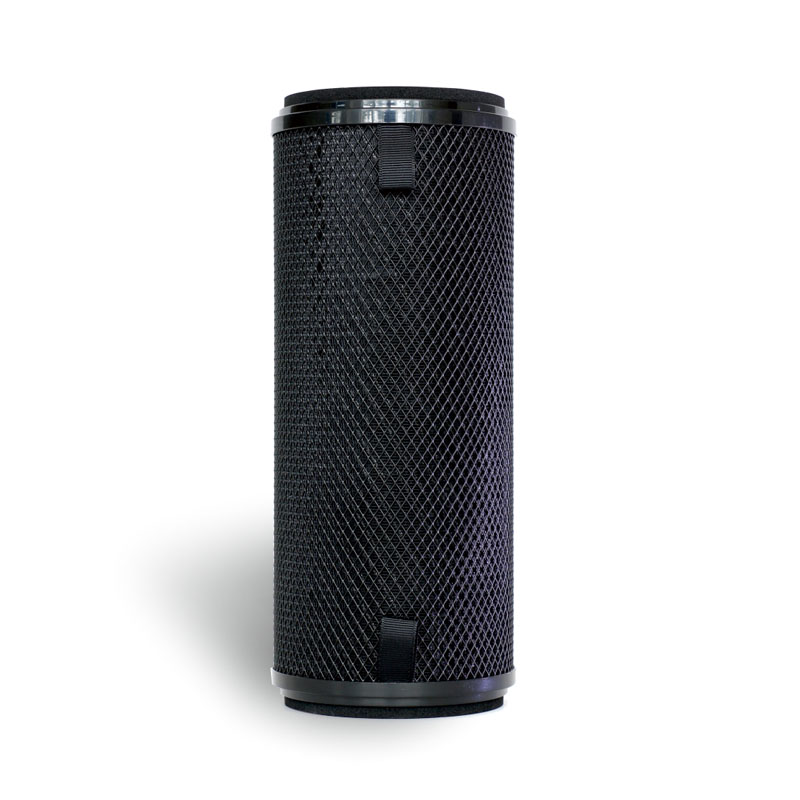
The Celrith cylindrical activated carbon filter is a radial-flow carbon cartridge that adsorbs formaldehyde, benzene, ammonia, TVOC and the odour compounds behind most indoor air complaints. It is wound as a cylinder so air passes through a deep bed of high-iodine-value activated carbon rather than a thin flat pad. It suits air purifier makers, fresh-air ventilation systems, automotive cabin air units, central air handling equipment and industrial odour-control housings, and it is made by Celrith in Zhongshan, Guangdong, China, to your drawing or specification.
Odour and gas-phase contamination are rarely a single substance. In a home it is a mix of formaldehyde from board and adhesives, benzene and TVOC from coatings and furnishings, ammonia from cleaning products, and the daily smell load from cooking, pets and occupants. In a fresh-air system, the incoming air carries vehicle exhaust, sulphur compounds and seasonal odours from outside. In industrial settings the stream may include solvents or process gases before odour abatement.
These contaminants are not visible, so they are often noticed late: a stale smell returning to a room, eyes and throat irritation in a closed office, or complaints from building occupants. A dust filter alone will not remove them. Gas-phase molecules are far smaller than particles and pass straight through ordinary media, which is why odour persists even when a purifier or ventilation unit is running at full speed.
Gas-phase contaminants also place a load on the equipment itself. Odour compounds and volatile organic chemicals can be drawn into heat exchangers, fans and duct linings, where they settle and re-release over time. In recirculating air handling systems, that means smells spreading from one zone to another. In automotive HVAC units, cabin odours return through the vents long after the source has gone.
When a gas-stage filter is undersized or quickly saturated, the system compensates with higher airflow or longer run times, and the air quality still does not improve. The practical result is a unit that works harder, consumes more energy and still fails the smell test. The filter is doing too little of the job that matters most.
Celrith builds this filter around high-iodine-value activated carbon, chosen for its adsorption capacity rather than its price per kilogram. The cylindrical format gives the air a long, deep path through the carbon bed, so contact time is longer than in a thin flat panel of the same footprint. That is what allows the cartridge to hold formaldehyde, benzene, ammonia, TVOC and general odours instead of letting them slip through.
The format is also a low-resistance one. Air enters the outer face and exits through the core, spreading the flow across a large surface, so the pressure drop stays low and the fan or blower in your unit does not have to work against a dense pad. Lower resistance supports the energy efficiency of the finished appliance.
Because housings differ, the filter is fully customisable: the inner diameter, outer diameter and height can follow your drawing or requirements, and the carbon type can be matched to the gases you need to control. This is a made-to-fit component, not a one-size compromise.
| Item | Detail |
|---|---|
| Core filtration material | High-iodine-value quality activated carbon |
| Shape / specification | Cylindrical; fully customisable to customer drawings or requirements |
| Main purification performance | Efficient adsorption and removal of formaldehyde, benzene, ammonia, TVOC and various odours |
| Core applications | Air purifiers, fresh-air system pre-filtration, automotive cabin air filters, central air-conditioning systems, industrial exhaust odour control |
| Manufacturer brand | Celrith, Zhongshan, Guangdong, China |
Air purifier brands specify this cartridge when the product needs a gas-removal stage in a compact round housing. Fresh-air ventilation suppliers use it as an odour stage ahead of or alongside particulate filtration, so incoming outdoor air arrives without the smell of traffic or neighbouring kitchens. Automotive and commercial vehicle programmes use cylindrical carbon filters in cabin air paths, where space is tight and the flow is steady.
Central air-conditioning systems and industrial exhaust odour-control housings use the same construction at larger sizes to reduce nuisance odours before discharge. Across all of these, the common requirement is a filter that fits the housing, handles the specific gas mix and does not choke the fan. Celrith has developed more than 1,000 filtration solutions over 20-plus years, so matching a new housing is routine work rather than a new project.
Celrith products meet REACH and RoHS environmental requirements, and compliance documents can be supplied for your market. The company holds ISO 9001, ISO 14001 and ISO 45001 certification, and added IATF 16949 automotive quality management certification in 2024, alongside medical-device GMP certification.
Its own laboratory is CNAS-accredited and issues test reports covering filtration efficiency, dust holding capacity and resistance. Production runs in a 50,000 m² plant that includes 6 cleanrooms totalling 20,000 m², supported by multiple automated lines with monthly capacity in the millions of pieces. IQC, IPQC and OQC checks cover incoming materials, in-process production and outgoing goods. The company has exported to Europe, the US, Japan and Korea for more than 20 years, and offers OEM/ODM customisation of size, structure, filter grade, frame material, logo and packaging.
To quote accurately, send your device or vehicle model, the size or a drawing, the airflow or water flow involved, your operating conditions and the quantity you need. If the housing is still being designed, tell us the target gases and the space available and our team will propose a carbon grade and cartridge geometry. Contact Celrith with your requirements.
It adsorbs formaldehyde, benzene, ammonia, TVOC and various odours. The carbon medium is high-iodine-value activated carbon, and the carbon type can be matched to the gas mix in your application. It is a gas-phase stage, not a particulate filter.
Air enters the outer face and exits through the core, giving a long, deep path through the carbon bed. This longer contact time supports adsorption, while the large surface area keeps resistance low so the fan does not have to work against a dense pad.
Yes. The filter is fully customisable to customer drawings or requirements, including inner diameter, outer diameter and height. Celrith offers OEM/ODM customisation covering size, structure, filter grade, frame material, logo and packaging.
Replacement depends on the contaminant concentration and airflow in your application, which is why Celrith quotes life against your operating conditions rather than a single number. Share your conditions and the team will advise on a change interval for your unit.
Yes. Send the device or vehicle model, size or drawing, airflow or water flow, operating conditions and quantity, and Celrith will quote. Sample arrangements are agreed with the technical team so the sample matches the intended production part.
These are set per product according to structure and customisation, so confirm them with the team when you request your quote. Your quantity, size and drawing details let Celrith give a precise MOQ and delivery schedule.
Celrith products meet REACH and RoHS environmental requirements, and compliance documents can be supplied. The company holds ISO 9001, ISO 14001 and ISO 45001 certification and added IATF 16949 certification in 2024. CNAS-accredited laboratory test reports are also available.
Air purifiers, fresh-air system pre-filtration, automotive cabin air filters, central air-conditioning systems and industrial exhaust odour control. If your application is different, describe the gas stream and housing and Celrith will advise on suitability. Contact us to start the discussion.