
EN

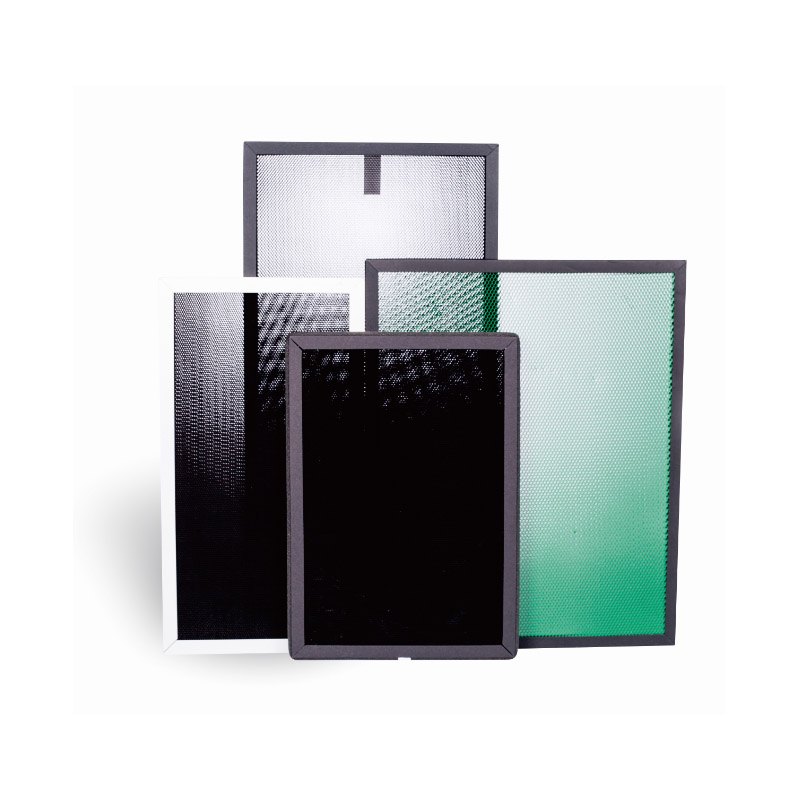
Celrith ozone removal filters are catalytic honeycomb elements that convert ozone in airstreams into oxygen, designed for air purifiers, laser printers, copiers, ozone sterilizers and medical equipment exhausts. They help bring indoor ozone concentrations below 0.16 mg/m³ (China standard) and meet the UL867 requirement of ≤0.1 mg/m³. This filter is aimed at appliance and HVAC manufacturers who need reliable ozone control in their products. Celrith is a brand of Zhongshan-based filter manufacturer with over 20 years of experience.
Ozone is a reactive gas that can irritate the respiratory system and damage materials. It is generated by high-voltage equipment such as electrostatic precipitators, laser printers, copiers, and ozone sterilizers. Even at low concentrations, ozone can cause odour and discomfort, and in enclosed spaces it may accumulate to levels that exceed safety guidelines. The challenge is to remove ozone from the air without introducing significant pressure drop or requiring frequent replacement.
When ozone is not controlled, it places a burden on the entire system. For air purifiers and ventilation systems, ozone can degrade other filter media, such as activated carbon, and reduce their effectiveness. In printers and copiers, ozone can corrode internal components and contribute to unpleasant odours in the office environment. For medical equipment, ozone in the exhaust must be managed to protect users and comply with regulations. Additionally, high concentrations of ozone can accelerate the aging of seals and electronic parts, leading to higher maintenance costs.
Celrith ozone removal filters use an aluminum honeycomb substrate coated with a proprietary catalyst. The honeycomb structure provides a large surface area for catalytic decomposition of ozone while maintaining low airflow resistance. The catalyst is protected by a national invention patent (ZL200710026260.6), ensuring reliable performance. The filter can be customised to fit specific equipment dimensions, with options for aluminum frames or sponge/EVA sealing edges to ensure a tight fit and prevent bypass. The filter is designed for easy integration into new or existing systems.
| Item | Detail |
|---|---|
| Product name | Ozone Removal Filter / Ozone Decomposition Catalytic Filter |
| Core structure and material | Aluminum honeycomb carrier with proprietary ozone-removal catalyst coating |
| Patent | National invention patent ZL200710026260.6 |
| Ozone treatment standard | Treated indoor ozone concentration below China standard 0.16 mg/m³; meets UL867 requirement of ≤0.1 mg/m³ |
| Main applications | High-voltage electrostatic air purifiers, large laser printers, commercial copiers, ozone sterilizer exhaust, medical device exhaust |
| Frame and size customisation | 100% customised to customer equipment dimensions; aluminum honeycomb cut to various thicknesses; optional aluminum alloy frame, sponge/EVA sealing edge strip to ensure airtight installation |
| Quality system certification | Manufactured in 50,000 m² plant with CNAS-accredited testing centre; ISO 9001, ISO 14001, IATF 16949 certified |
Celrith ozone removal filters are used by manufacturers of air purifiers, printers, copiers, ozone sterilizers, and medical devices. They are also suitable for HVAC systems where ozone control is required. The filters can be integrated into new product designs or used as replacement elements in existing equipment. With custom sizes and frame options, they fit a wide range of equipment models.
Celrith is committed to quality and compliance. Our products meet REACH and RoHS environmental regulations, and we can provide compliance documents. We hold ISO 9001, ISO 14001, and ISO 45001 certifications, and our in-house CNAS-accredited laboratory provides filtration efficiency, dust holding capacity, and pressure drop test reports. With a 50,000 m² production facility, including 20,000 m² of cleanrooms across six workshops, and IATF 16949 certification (2024), we ensure consistent quality. Our automated production lines achieve monthly capacity of millions of pieces, and we have over 20 years of experience exporting to Europe, the US, Japan, and Korea.
To discuss your ozone removal requirements, please provide the following details: your device or vehicle model, required size or drawing, airflow rate, operating conditions (ozone concentration, temperature, humidity), and estimated quantity. Our team will respond promptly with a tailored solution. Contact us to start the conversation.
Celrith ozone removal filters are designed to remove ozone from airstreams by catalytic decomposition, converting ozone into oxygen. They do not remove particulate matter or VOCs unless combined with other filters. The catalyst is effective against ozone generated by printers, copiers, air purifiers, and sterilizers.
Replacement interval depends on ozone concentration, airflow, and operating conditions. Under typical conditions, the filter can last 12–18 months, but we recommend monitoring performance and replacing when ozone removal efficiency drops below required levels. Our CNAS lab can provide testing to help determine optimal replacement schedules.
Yes, we offer 100% customisation of dimensions, honeycomb thickness, and frame options (aluminum alloy, sponge/EVA sealing edges) to match your equipment. Provide a drawing or sample, and we will design a filter that ensures airtight installation and optimal performance.
For standard sizes, the MOQ is typically 500–1000 pieces. For custom sizes, the MOQ is generally 1000 pieces or more, depending on specifications. Please contact us with your requirements for a precise quote.
Standard products ship within 7–10 days. Custom orders require 10–15 days for sample development and 25–35 days for mass production. We can arrange safety stock for long-term customers to shorten delivery times.
Yes, we provide samples for testing. Standard samples are usually free (freight collect). Custom samples may incur a fee, which is refundable upon bulk order. Our CNAS lab can also assist with performance testing to support your evaluation.
Yes, Celrith ozone removal filters are tested to meet UL867 (≤0.1 mg/m³) and help achieve indoor ozone levels below the Chinese standard of 0.16 mg/m³. Our CNAS-accredited lab provides test reports for verification.
Under standard test conditions (0.1 ppm ozone, 1.0 m/s face velocity), removal efficiency exceeds 95%. Actual performance may vary with conditions, but our catalyst is designed for high efficiency and long life. Contact us for detailed test data.