
EN

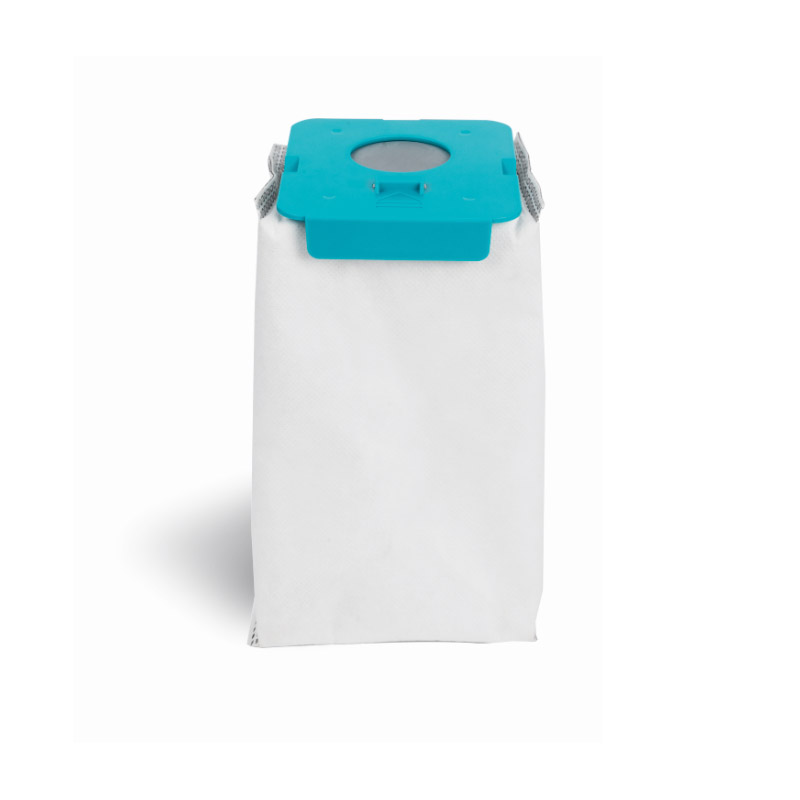
Celrith dust collection bags with plastic cover plates are designed to capture fine dust, allergens and odours before they can recirculate into your home or clog your vacuum system. Using multilayer composite PP meltblown media, these bags trap PM2.5 particles, dust mites, pollen and pet hair while maintaining strong airflow. They are built for robot vacuum auto-empty bases, handheld vacuums and commercial vacuum bins, and are available for OEM customisation to fit your specific device.
When you vacuum, the dust you see is only part of the story. Fine particulates such as PM2.5, dust mite debris, pollen and pet dander are small enough to pass through standard bags and back into the room air. Over time, these contaminants settle on surfaces, trigger allergies and reduce indoor air quality. In robot vacuums and handheld models, the problem is compounded by the emptying process: without proper containment, dust plumes release back into the environment.
Celrith bags are engineered to lock these contaminants away. The multilayer PP meltblown media provides high-efficiency filtration, capturing more than 99% of PM2.5 particles. This means fewer allergens in your breathing zone and less dust settling on your furniture. For users with sensitivities, the difference is noticeable.
Every vacuum system relies on airflow to pick up debris. When a bag becomes clogged or its media is too dense, airflow drops, the motor works harder and suction weakens. This not only reduces cleaning performance but can also shorten the life of the vacuum. In robot vacuum auto-empty bases, a blocked bag can cause the base to overheat or fail to empty the robot's bin properly.
Celrith bags address this with a high-porosity, low-airflow-resistance design. The media allows air to pass through easily while still capturing fine particles, so your vacuum maintains strong suction throughout the bag's life. The large dust capacity means fewer bag changes and less frequent maintenance. For commercial vacuum bins, this translates to longer intervals between replacements and reduced downtime.
At the core of each Celrith bag is a multilayer composite of polypropylene nonwoven and meltblown fabric, optionally combined with antibacterial filter cotton. This structure creates a gradient of filtration: larger particles are caught on the outer layers, while the meltblown inner layers trap microscopic contaminants. The result is high filtration efficiency without sacrificing airflow.
The plastic cover plate is designed for a secure fit and easy handling. A sliding handle automatically seals the bag when you remove it, so you never touch the dust. This is especially important for allergy sufferers and in commercial settings where hygiene is critical. The cover plate can be customised to match your device's docking mechanism, and we offer both hard cardboard and eco-friendly plastic injection-moulded options. For odour control, we can incorporate an activated carbon layer to neutralise smells from pet waste, food scraps and other sources.
Celrith bags are available in a range of sizes and configurations to fit most major robot vacuum brands and handheld models. Our engineering team can develop custom solutions based on your device's dimensions, airflow requirements and filtration needs.
| Item | Detail |
|---|---|
| Product name | Dust bag for handheld vacuums / auto-empty base for robot vacuums |
| Core material | Multilayer high-precision composite PP (polypropylene nonwoven + meltblown fabric) / antibacterial filter cotton |
| Filtration function | High-precision interception of fine dust (PM2.5), dust mites, pollen, hair and other household allergens; prevents secondary contamination from exhaust |
| Airflow characteristics | High-porosity breathable design, very low operating airflow resistance, high dust capacity, does not compromise motor suction |
| Main applications | Auto-empty bases for smart robot vacuums, handheld cordless vacuums, commercial vacuum bins |
| Size and cover plate customisation | 100% customised to device dimensions. Options include hard cardboard or eco-friendly plastic injection-moulded cover plates, sliding auto-seal design, and activated carbon composite odour-control version. |
| Company certifications | 50,000 m² modern clean production plant and a national CNAS testing centre. Strictly implements ISO 9001, ISO 14001 and IATF 16949 quality management systems. |
Celrith dust bags are used by homeowners with robot vacuums or handheld vacuums who want to reduce allergens and simplify maintenance. They are also specified by commercial cleaning services, hospitality businesses and facility managers who need reliable dust containment in vacuum bins. OEM and ODM customers integrate our bags into their own vacuum systems, benefiting from our customisation capabilities and consistent quality.
Celrith is manufactured in a 50,000 m² production facility in Zhongshan, Guangdong, China, which includes 20,000 m² of cleanrooms across six workshops. Our quality management system is certified to ISO 9001, ISO 14001 and ISO 45001, and in 2024 we added IATF 16949 certification for automotive quality. Our products comply with REACH and RoHS environmental regulations, and we can provide compliance documentation for your market entry needs. Our CNAS-accredited laboratory conducts filtration efficiency, dust capacity and airflow resistance testing, and we follow IQC, IPQC and OQC protocols to ensure batch-to-batch consistency.
To discuss your dust bag requirements, please provide your device or vehicle model, the size or a drawing, the required airflow or water flow, operating conditions, and your estimated quantity. Our team will respond with a tailored solution. Contact us to start the conversation.
Celrith dust bags capture fine dust (PM2.5), dust mites, pollen, pet hair and other common household allergens. The multilayer PP meltblown media provides over 99% filtration efficiency for PM2.5 particles. An optional activated carbon layer can also neutralise odours.
The plastic cover plate features a sliding handle that automatically seals the bag opening when you remove it. This ensures no dust escapes and you never touch the collected debris. The design is especially beneficial for allergy sufferers and in commercial settings.
Yes, we offer full OEM/ODM customisation. You can specify the cover plate dimensions, structure and opening position, filtration media and efficiency, cover plate colour and logo, and packaging. Our engineering team can develop a solution based on your device's specifications.
MOQ is typically 5,000–10,000 pieces for standard specifications; customised orders are negotiable based on complexity. Lead time is about 7–15 days for stock items and 30–45 days for customised orders, including tooling. Please confirm details with our sales team.
Yes, we can provide samples for your evaluation. For standard models, samples are usually available within a few days. For custom designs, sampling takes approximately 2–3 weeks after receiving your specifications or sample device. Contact us to discuss your sample requirements.
Replacement frequency depends on usage and dust load. For typical household use, we recommend replacing the bag every 1–2 months or when it reaches about two-thirds full. For commercial use, more frequent changes may be needed. The high dust capacity design helps extend the interval between replacements.
Our manufacturing facility is certified to ISO 9001, ISO 14001, ISO 45001 and IATF 16949. The bag materials comply with REACH and RoHS regulations, and we can provide compliance documentation. Our CNAS-accredited lab tests filtration efficiency, dust capacity and airflow resistance.
We have developed bags compatible with iRobot Roomba (i, j and s9+ series), Shark, Roborock, Ecovacs, Xiaomi, Dreame and other popular robot vacuum models. As an OEM/ODM supplier, we can provide a compatibility list and develop solutions for new models. Please contact us for details.