
EN

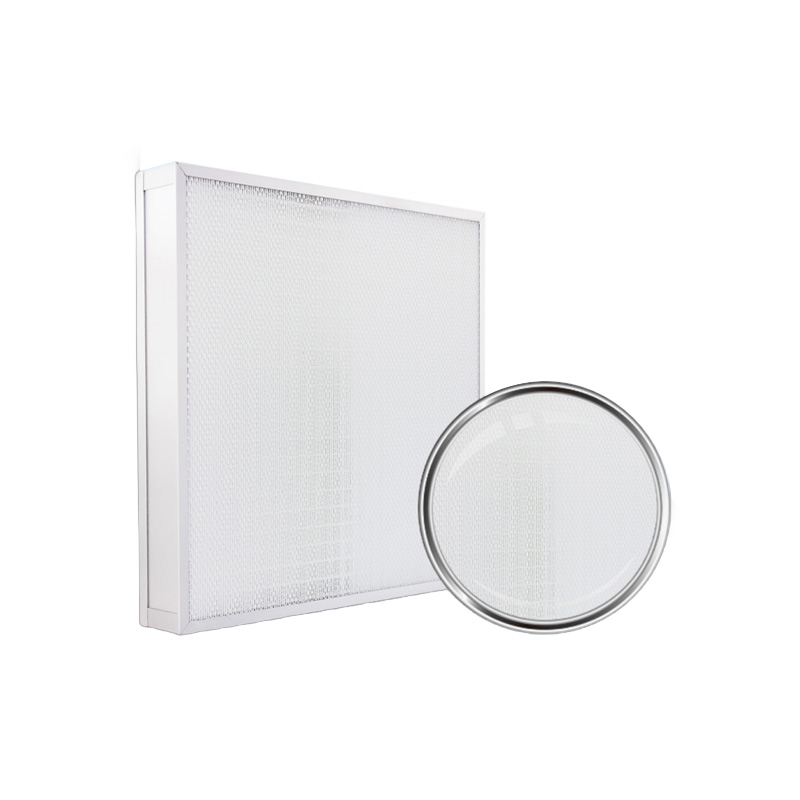
Celrith high-efficiency mini-pleat filters are partitionless panel filters that capture fine particles, odours, gases, and waterborne impurities from air and water streams, protecting equipment and processes in semiconductor, pharmaceutical, healthcare, automotive, energy, data centre, commercial HVAC, and food processing environments. They are designed for facility engineers, OEMs, and cleanroom operators who need reliable filtration from M6 up to U16 efficiency in compact, low-resistance formats.
Contaminants are rarely a single substance. In cleanrooms, sub-micron particles from people, processes, and outdoor air infiltrate; volatile organic compounds and odours off-gas from materials and chemicals; and in liquid circuits, waterborne impurities and suspended solids foul sensitive components. Each type imposes its own burden: particles deposit on wafers and lenses, odours and gases corrode or taint products, and waterborne impurities scale or clog downstream equipment.
Left unchecked, these contaminants do not just reduce yield; they accelerate wear, raise maintenance frequency, and force energy-intensive over-filtration. The challenge is to remove them at the point of use without creating excessive pressure drop or consuming valuable space. Celrith addresses this by combining micro-fine glass fibre or PTFE media with a partitionless mini-pleat design that maximises media area in a thin frame.
Every contaminant that passes a filter becomes a load on the next component. In HVAC and FFU systems, particulate loading on coils, fans, and ductwork reduces heat-transfer efficiency and increases fan power. In semiconductor fab tools, particle deposition on masks and wafers causes defects and unscheduled downtime. In pharmaceutical cleanrooms, airborne microbes and particles threaten product sterility and regulatory compliance.
Odours and gases add a chemical load: they can corrode electronics, degrade sensitive materials, and create unpleasant or unsafe working conditions. Waterborne impurities in cooling or process water cause scaling, biofouling, and corrosion in heat exchangers and pipework. The cumulative effect is higher energy consumption, shorter equipment life, and more frequent maintenance interventions. Selecting a filter that removes these contaminants at the right efficiency and with low resistance is therefore a direct way to relieve the load on the entire system.
Celrith high-efficiency filters use a partitionless mini-pleat construction: high-quality glass fibre or PTFE media are pleated and separated by hot-melt adhesive instead of aluminium separators. This design packs a large filtration area into a slim 50 mm or 70 mm frame, reducing face velocity and pressure drop while maintaining high efficiency. The result is strong energy savings and compact installation, even in retrofit projects where space is tight.
The anodised aluminium alloy or stainless steel frame provides structural rigidity and corrosion resistance. The absence of separators eliminates potential leak paths and reduces the risk of media damage during handling. For odour and gas removal, optional impregnated media or separate gas-phase stages can be specified; for waterborne impurities, complementary liquid filtration elements are available. Celrith filters are available in efficiency classes from M6 to U16, covering medium-efficiency pre-filtration through ultra-high-efficiency terminal filtration.
By matching the filter grade to the contaminant profile, users can avoid over-specifying and reduce total cost of ownership. Low initial resistance and a high dust-holding capacity mean longer service intervals and less frequent changeouts, which directly lowers maintenance load and downtime.
| Item | Detail |
|---|---|
| Product type | High-efficiency partitionless panel filter (mini-pleat panel filter) |
| Core media | High-quality glass fibre / PTFE |
| Frame material | Anodised aluminium alloy profile / stainless steel |
| Separator | High-quality hot-melt adhesive |
| Efficiency class | M6 – U16 (covering medium to ultra-high efficiency) |
| Typical applications | Microelectronics and semiconductor cleanrooms, pharmaceutical GMP workshops, hospital operating theatres, high-end commercial building HVAC systems, FFU units |
| Standard sizes and airflow reference (W × H × D) | • 305 × 610 × 50 mm (rated airflow 350 CMH) • 610 × 610 × 50 mm (rated airflow 750 CMH) • 1170 × 570 × 50 mm (rated airflow 1300 CMH) • 1170 × 1170 × 70 mm (rated airflow 3600 CMH) *More sizes available with 50 mm or 70 mm thickness options |
| Customisation | Based on our 20,000 m² cleanroom and CNAS national testing centre, we provide non-standard size customisation and OEM services according to customer requirements. |
Celrith high-efficiency filters are specified across industries where contaminant control is critical. In semiconductor and microelectronics manufacturing, they protect FFU units, clean booths, and Class 10 to Class 10000 cleanrooms, as well as lithography tools, wafer fabs, and packaging and testing workshops. Pharmaceutical manufacturers use them in GMP workshops to maintain sterility and comply with regulatory standards. Hospitals rely on them in operating theatres and isolation rooms to reduce airborne infection risks.
In commercial buildings, they upgrade HVAC systems to improve indoor air quality and protect occupants. Automotive and mechanical manufacturing plants use them in paint booths and precision assembly areas. Energy and metal smelting facilities deploy them to control emissions and protect equipment. Battery energy storage and AI data centres use them to safeguard sensitive electronics from particulate and gaseous contamination. Food processing plants apply them to maintain hygiene and extend product shelf life.
Celrith products are manufactured under a quality and environmental management system certified to ISO 9001, ISO 14001, and ISO 45001. We also hold IATF 16949 certification for the automotive sector, obtained in 2024. Our products comply with REACH and RoHS environmental regulations, and we can provide the relevant compliance documentation.
Our in-house laboratory is accredited by CNAS (China National Accreditation Service for Conformity Assessment) and can issue test reports for filtration efficiency, dust-holding capacity, and resistance. The manufacturing base covers 50,000 m², including six cleanrooms totalling 20,000 m². With more than 20 years of experience in filtration R&D and manufacturing, we have exported to Europe, the United States, Japan, and South Korea for over two decades. We support OEM/ODM projects with customised dimensions, structures, media grades, frame materials, logos, and packaging, and have developed more than 1,000 filtration solutions. Multiple automated production lines provide monthly capacity in the millions of pieces, and IQC, IPQC, and OQC controls run throughout the process.
To recommend the right Celrith filter for your application, please share the following details with our team: your device or vehicle model, required size or drawing, airflow or water flow rate, operating conditions (temperature, humidity, contaminant type), and estimated quantity. This information allows us to confirm the appropriate efficiency class, frame material, and media, and to provide a quotation and lead time. Contact us to start the conversation.
Celrith high-efficiency filters capture fine particles, including sub-micron particles, from air streams. With appropriate media options, they can also help reduce odours and gases, and complementary liquid filtration elements address waterborne impurities. The exact removal performance depends on the selected efficiency class from M6 to U16.
The range covers M6 to U16, corresponding to medium through ultra-high efficiency. For H13 and H14 classes, filtration efficiency for 0.3 μm particles can reach 99.95% to 99.9995%, depending on the model. All filters are tested for efficiency and leak integrity before shipment.
Yes. We offer non-standard sizes, frame materials (anodised aluminium alloy or stainless steel), media types, and efficiency grades to match your specifications. Simply provide a drawing or detailed dimensions, and our engineering team will propose a suitable configuration.
Contact us with your required specifications, including size, efficiency, airflow, and quantity. We will review your request and provide a quotation, typically within 1–2 business days. Sample orders can be arranged; please mention your sample requirements when you inquire.
For standard sizes, the MOQ is generally 50–100 pieces. Customised sizes typically require 100–200 pieces, depending on structural complexity. We can be flexible for new customers and sample orders.
Standard products ship in 7–15 days, while customised orders usually take 20–30 days, depending on quantity and specifications. Our 50,000 m² plant and six cleanrooms provide ample capacity for large orders, and urgent requests can be discussed for expedited scheduling.
Under normal operating conditions with G4 pre-filtration and F8 secondary filtration, the service life is typically 3–5 years. Actual life depends on dust concentration, airflow, and final resistance setpoint. We can provide resistance and airflow curves to help you plan replacement intervals.
Yes. Our products comply with REACH and RoHS regulations, and our management systems are certified to ISO 9001, ISO 14001, and ISO 45001. We also hold IATF 16949 certification for automotive applications and can provide compliance documentation upon request.