
EN

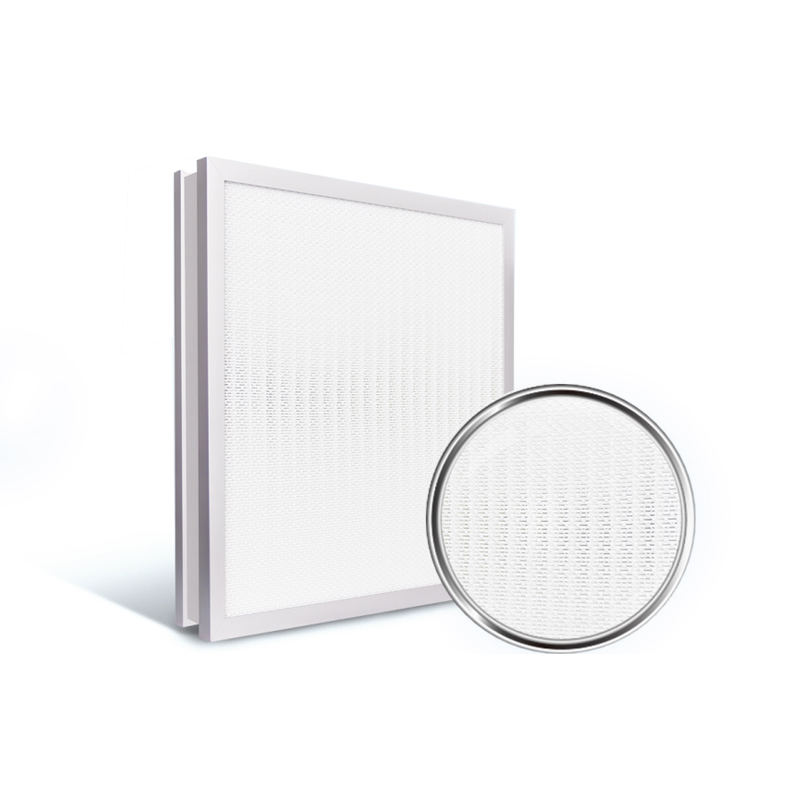
The Celrith single/double flange high-efficiency filter is a panel filter built to remove fine particulate and microbial contaminants from supply air in cleanrooms, hospitals, and HVAC systems. It uses high-performance glass fibre media to achieve E11 or E12 efficiency (EN 1822), and its anodized aluminium frame with single or double flange sealing keeps unfiltered air from bypassing the filter. It is designed for facility engineers, HVAC contractors, and OEMs who need reliable particle control in semiconductor, pharmaceutical, healthcare, and commercial ventilation applications.
In any controlled environment, the air carries particles that are too small to see but large enough to damage processes and products. These include dust, smoke, bacteria, and viruses, as well as fine powders generated by manufacturing. In semiconductor fabs, a single particle can short a circuit; in hospitals, airborne microbes threaten surgical sites; in food and pharmaceutical production, contamination can spoil batches. Gaseous and odour contaminants may also be present, but the first line of defence is often particle removal. The Celrith filter targets these airborne particles at the point where clean air is needed, reducing the load on downstream systems.
When particles are not removed early, they accumulate on coils, fans, and ductwork, lowering heat-exchange efficiency and increasing energy consumption. In cleanrooms, they can settle on critical surfaces, forcing more frequent cleaning and risking product rejects. In HVAC systems, dirty filters cause pressure drop to rise, which makes fans work harder and can shorten motor life. Over time, the entire air-handling chain becomes less efficient and more costly to maintain. By capturing contaminants at the filter, Celrith reduces this burden, helping to maintain airflow and protect downstream components.
The Celrith filter uses a high-throughput ultra-fine glass fibre media that provides high particle capture with relatively low resistance. The media is pleated to increase surface area, allowing a compact filter to handle large air volumes. The anodized aluminium alloy frame is lightweight and corrosion-resistant, and the single or double flange design creates a tight seal against the mounting frame, preventing air bypass. Double-flange models are suited to applications requiring sealing on both sides, such as ducted systems or high-pressure differentials. The filter is available in E11 (sub-high efficiency) and E12 (high efficiency) grades, with rated airflows from 500 m³/h to 2000 m³/h depending on size and grade.
| Item | Detail |
|---|---|
| Product name | Single/Double Flange Medium & HEPA Filter |
| Filter class (EN 1822) | E11 (sub-high efficiency) / E12 (high efficiency) |
| Core filter media | High-throughput ultra-fine glass fibre filter paper |
| Frame material | Anodized aluminium alloy profile |
| Core applications | Pharmaceutical and electronics cleanrooms, hospital operating rooms, HVAC terminal filtration, FFU (fan filter units) |
| Standard sizes and rated airflow (W × H × D) | • 287 × 592 × 88 mm (E11: 1000 m³/h; E12: 500 m³/h) • 592 × 592 × 88 mm (E11: 2000 m³/h; E12: 1000 m³/h) |
| Customisation (OEM/ODM) | The company has a CNAS-accredited testing centre and is certified to ISO 9001 and IATF 16949. It supports custom production of flange dimensions, non-standard airflows, and special sizes. |
Celrith filters are used in semiconductor and microelectronics manufacturing, including wafer fabs and cleanrooms for flat-panel display production. They are also found in hospital operating theatres, pharmaceutical cleanrooms, and food processing facilities where microbial and particle control is critical. HVAC contractors specify them for commercial air-handling units, and OEMs integrate them into fan filter units (FFUs) and other air purification equipment. The filters are also used in energy storage facilities, data centres, and automotive manufacturing plants that require clean air for sensitive processes.
Celrith products comply with REACH and RoHS environmental regulations, and compliance documents are available on request. The company holds ISO 9001, ISO 14001, and ISO 45001 certifications, and in 2024 it added IATF 16949 certification for automotive quality management. The manufacturing base covers 50,000 m², including six cleanrooms totalling 20,000 m², where filters are assembled and packaged to avoid secondary contamination. A CNAS-accredited laboratory provides test reports for filtration efficiency, dust holding capacity, and resistance. With more than 20 years of experience in filter development and manufacturing, Celrith has supplied customers in Europe, the United States, Japan, and Korea, and offers OEM/ODM services with over 1,000 custom filter solutions developed.
To receive a quotation or technical recommendation, please provide the following details: your device or vehicle model (if applicable), required filter size or a drawing, airflow or water flow rate, operating conditions (temperature, humidity, contaminants), and estimated quantity. Our team will respond with a tailored solution. Contact us to discuss your requirements.
The Celrith single/double flange high-efficiency filter is designed to capture airborne particles such as dust, smoke, bacteria, and viruses. It uses glass fibre media rated E11 or E12 (EN 1822), making it suitable for cleanrooms, hospitals, and HVAC systems where fine particle control is required. It does not target gaseous contaminants, which typically require a separate carbon or chemical filter stage.
Replacement intervals depend on the operating environment and pre-filtration. In typical cleanroom applications, the filter should be replaced when the pressure drop reaches twice the initial resistance, or according to your maintenance schedule. Under normal conditions with proper pre-filtration, a service life of one to three years is common, but always monitor pressure drop to determine the actual replacement point.
Yes. Celrith offers OEM/ODM customisation for flange dimensions, non-standard airflows, and special sizes. The company has a CNAS-accredited testing centre and ISO 9001 and IATF 16949 certifications, and can produce filters to match your drawings or specifications. Custom orders typically require a minimum order quantity and a sample approval process.
MOQ for standard sizes is typically 50–100 units. For custom sizes, MOQ is generally 100–200 units depending on complexity. Celrith can be flexible for new customers and sample orders. Please contact us with your specific requirements to confirm.
Standard sizes are usually shipped within 7–15 days. Custom orders typically require 25–35 days for production. Celrith maintains multiple automated production lines and sufficient raw material stock to support urgent orders and long-term supply agreements. Lead times may vary based on order quantity and specifications.
Yes. For standard sizes, Celrith offers free samples (freight collect). For custom samples, a tooling and sampling fee applies, which can be credited against bulk orders. Sampling time is typically 7–15 working days, and samples are provided with test reports from the CNAS-accredited laboratory.
Celrith holds ISO 9001, ISO 14001, and ISO 45001 certifications, and added IATF 16949 in 2024. Products comply with REACH and RoHS, and compliance documents are available. The company’s CNAS-accredited lab provides test reports for filtration efficiency, dust holding capacity, and resistance.
Single flange is suitable for standard FFU or ceiling grid mounting where a seal on one side is sufficient. Double flange provides sealing on both sides, which is preferable for ducted connections or applications with higher pressure differentials. If you are unsure, share your installation details and our team can recommend the appropriate configuration.