
EN

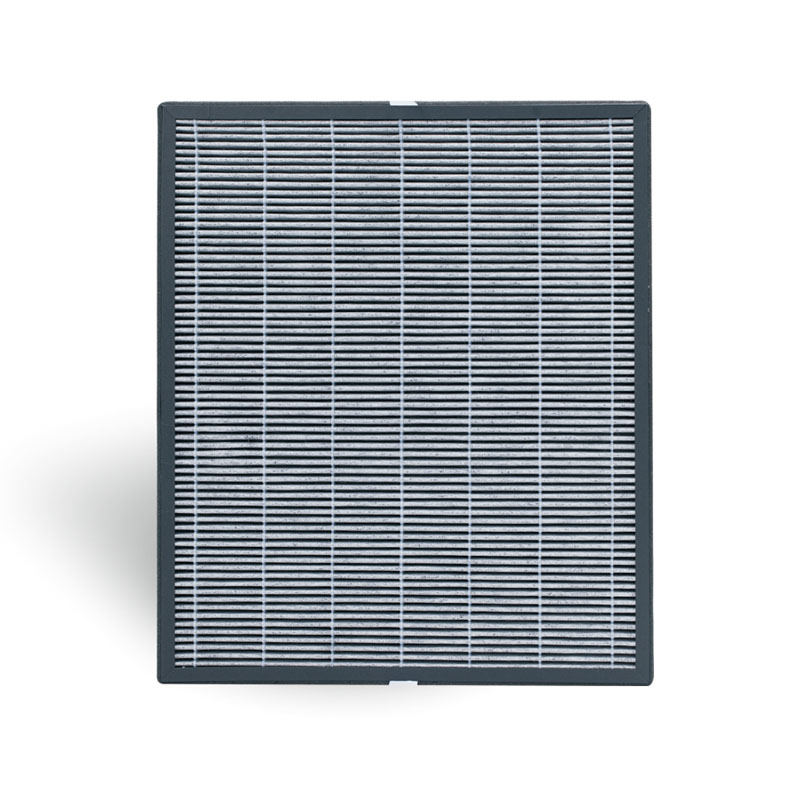
The Celrith plate activated carbon cloth filter is a flat composite filter that combines high-iodine-value honeycomb activated carbon with a formaldehyde-removal catalyst to adsorb and break down harmful gases such as formaldehyde (HCHO), benzene compounds, and TVOC. It is designed for air purifiers, fresh-air systems, vehicle cabin filters, and commercial or industrial odour-control equipment. Facility managers, appliance OEMs, and HVAC engineers use it to reduce gas-phase contaminants and the load they place on downstream components. Celrith manufactures this filter in Zhongshan, Guangdong, China, with customization options for size, frame, and carbon media.
Indoor and process air carries more than visible dust. Formaldehyde off-gasses from furniture and building materials; benzene and TVOC come from paints, adhesives, and cleaning agents; and odorous gases such as ammonia or hydrogen sulfide arise in commercial kitchens, waste-handling areas, and industrial processes. These gases are often present at low concentrations but over long periods, and they are not reliably captured by particle-only filters. When they pass through a system untreated, they reach occupants, accumulate in recirculated air, and deposit on surfaces. The Celrith plate activated carbon cloth filter targets these gas-phase contaminants directly, using a high-iodine-value honeycomb carbon layer to adsorb them and a catalyst composite to decompose formaldehyde rather than merely trap it.
Gas-phase contaminants add hidden load to air-handling equipment. Adsorbed organics can foul heat-exchange coils, reduce the effective life of downstream HEPA stages, and cause odour carry-over in fresh-air units. In vehicle cabins, volatile organic compounds from interior materials recirculate unless a dedicated carbon stage is present. For industrial odour-control systems, a saturated or poorly matched carbon media leads to frequent change-outs and unstable outlet quality. By placing a dedicated carbon cloth stage ahead of or alongside particle filtration, the Celrith filter reduces the burden on subsequent components, helping maintain airflow and extending service intervals for the overall system. The plate format also allows a slim profile that fits existing panel slots without major rework.
Celrith builds the filter around a high-iodine-value honeycomb activated carbon core. The honeycomb structure provides a high surface area for adsorption while keeping pressure drop manageable. A proprietary formaldehyde-removal catalyst composite is combined with the carbon to catalyse the breakdown of formaldehyde and other harmful gases. The product is available in three structural forms: flat composite, honeycomb-filled, and sintered carbon block, and custom shapes can be produced. This flexibility lets designers match the filter to specific housing geometries and contaminant profiles. For different target gases, the carbon type and loading can be adjusted during customization, and Celrith's technical team can recommend a configuration based on the contaminants of concern.
| Item | Detail |
|---|---|
| Core materials | High-iodine-value honeycomb activated carbon; proprietary formaldehyde-removal catalyst composite |
| Main performance | Efficient adsorption and catalytic decomposition of harmful gases including formaldehyde (HCHO), benzene compounds, and TVOC |
| Structural options | Flat composite, honeycomb-filled, sintered carbon block; custom shapes available |
| Core applications | Residential: air purifiers, fresh-air system pre-filters and high-efficiency filtration, vehicle cabin filters. Commercial/industrial: hospital cleanrooms, industrial exhaust treatment, odour-control equipment |
| Quality and compliance | Tested in a CNAS-accredited laboratory; compliant with RoHS; manufactured in an IATF 16949-certified factory |
This filter serves both consumer and professional markets. In residential settings, it is used in portable air purifiers, fresh-air ventilation units, and vehicle cabin air systems where odours and formaldehyde are a concern. In commercial and industrial settings, it is specified for hospital cleanrooms, industrial exhaust treatment, and odour-control equipment in facilities such as painting booths and laboratories. Appliance manufacturers and HVAC system integrators source the filter as an OEM component, taking advantage of Celrith's customization capabilities to match dimensions, frame materials, and carbon specifications to their product platforms.
Celrith operates a 50,000 m² manufacturing plant in Zhongshan, Guangdong, China, which includes six cleanrooms totalling 20,000 m². The company holds ISO 9001, ISO 14001, and ISO 45001 certifications, and its products comply with REACH and RoHS regulations, with compliance documentation available. In 2024, the plant was certified to IATF 16949, the automotive quality management standard. Celrith's in-house laboratory is CNAS-accredited and can issue test reports for filtration efficiency, dust-holding capacity, and resistance. With more than 20 years of filtration experience, the company supports OEM/ODM projects and has developed over 1,000 filtration solutions. Multiple automated production lines provide monthly capacity in the millions of pieces, and IQC, IPQC, and OQC processes are applied throughout production.
To receive a tailored quotation or technical recommendation, please provide the following details: your device or vehicle model, the required filter size or a drawing, the airflow or water flow (if applicable), the operating conditions (temperature, humidity, target contaminants), and the estimated quantity. Our team will respond with a specification proposal and pricing. Contact Celrith to start the conversation.
The filter adsorbs and catalytically decomposes formaldehyde (HCHO), benzene compounds, TVOC, and other harmful gases. It is designed for gas-phase contaminants that particle filters do not capture. For specific target gases, Celrith can adjust the carbon type during customization.
The filter uses a high-iodine-value honeycomb activated carbon and a formaldehyde-removal catalyst. Celrith's CNAS-accredited laboratory can provide test reports for filtration efficiency, dust-holding capacity, and resistance for each batch. Actual efficiency depends on gas type, concentration, and airflow.
Yes. Celrith offers flat composite, honeycomb-filled, and sintered carbon block forms, and supports custom shapes, dimensions, frame materials, and carbon specifications. Provide a drawing or sample and our team will propose a configuration. OEM/ODM projects are welcome.
Standard specifications typically have an MOQ of 500–1,000 pieces; custom products are quoted based on tooling and material requirements. Free samples are available for qualified customers (freight collect), with standard samples dispatched within 3 working days and custom samples in 7–15 days.
Regular orders are delivered in 15–25 days; large-volume orders typically take 30–45 days. Urgent orders can be arranged by agreement. The 50,000 m² plant with multiple automated lines supports reliable scheduling.
Under normal operating conditions, the filter has a service life of 6–12 months. Replacement frequency should be adjusted based on contaminant concentration and usage intensity. For critical applications, Celrith recommends monitoring pressure drop or scheduling periodic replacement.
Yes. The product complies with RoHS and REACH regulations, and Celrith can provide compliance documentation. The manufacturing facility is certified to ISO 9001, ISO 14001, ISO 45001, and IATF 16949.
Please contact Celrith through the inquiry form or email with your device/vehicle model, required size or drawing, airflow, operating conditions, and quantity. Our team will respond promptly with a tailored proposal. <a href="/en/contact">Contact us</a> to discuss your application.