
EN

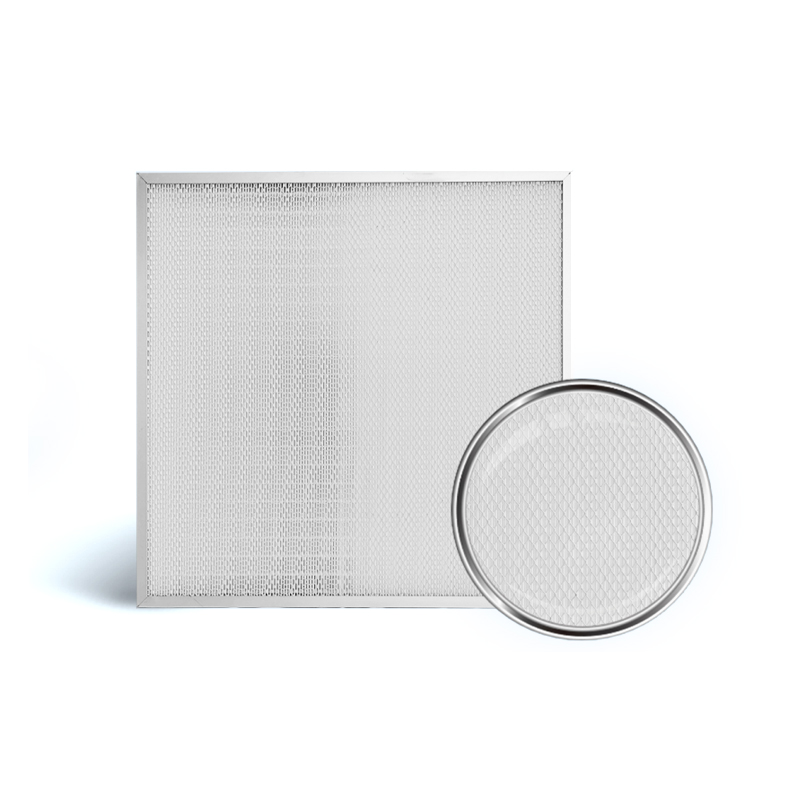
The Celrith Ultra High-Efficiency Filter is a mini-pleat panel filter that removes micron- and submicron-sized particles from the air before they can settle on equipment or enter clean spaces. It is rated U15 to U17 and is used in microelectronics cleanrooms, pharmaceutical GMP areas, hospital operating rooms, high-end commercial HVAC systems and FFU units. If your process is sensitive to fine dust, this filter is designed to take that load off your systems.
In clean manufacturing and critical ventilation, the contaminant that matters is often the particle you cannot see. Fine dust, smoke and aerosols in the submicron range stay airborne longer, travel further through ductwork and are harder to capture with lower-grade filters. Once they reach a cleanroom or a sensitive production zone, they can deposit on wafers, components, surfaces and products.
The Celrith filter addresses this by using glass fiber or PTFE media in a mini-pleat configuration. The pleats create a large media area in a thin panel, so the filter can capture particles at high efficiency without becoming a heavy obstruction to airflow. For odour, gases and waterborne impurities, this filter is not the treatment step; its role is particle removal. It is typically installed as the final stage after coarser prefilters that handle the bulk of the dust load.
When particles are not removed early, the load shows up downstream. Heat exchangers, fans, coils and duct surfaces collect dust, which reduces heat transfer and increases the frequency of cleaning. In semiconductor and microelectronics production, a single particle can affect a critical dimension. In pharmaceutical cleanrooms and hospital operating rooms, airborne particles are a contamination risk that must be managed continuously.
Lower-grade filters also put a load on the air-handling system itself: as they load up, resistance rises, fan energy use increases and airflow can fall out of balance. The Celrith filter is engineered for low resistance, which helps keep fan energy demand in check while still delivering high particle capture. The ultra-thin frame also saves space in constrained ceiling grids and FFU units, where depth is limited.
Celrith builds the filter around a rigid frame in anodized aluminum or stainless steel, with hot-melt adhesive as the pleat separator. The mini-pleat pack is bonded into the frame to maintain a stable pleat geometry under airflow. The filter is available in U15, U16 and U17 efficiency grades, covering medium to ultra-high efficiency levels for different cleanroom classes and equipment protection needs.
The design is a panel format with 50 mm or 70 mm depth options. Standard sizes include 305 × 610 × 50 mm (rated airflow 350 CMH), 610 × 610 × 50 mm (750 CMH), 1170 × 570 × 50 mm (1300 CMH) and 1170 × 1170 × 70 mm (3600 CMH). More sizes and non-standard dimensions can be produced on request. The combination of glass fiber or PTFE media and a thin frame gives specifiers a filter that fits tight spaces while providing a high-efficiency barrier against submicron particles.
| Item | Detail |
|---|---|
| Product type | High-efficiency panel filter, separatorless mini-pleat design |
| Core media | Glass fiber or PTFE |
| Frame material | Anodized aluminum profile or stainless steel |
| Separator | Hot-melt adhesive |
| Efficiency grade | U15 to U17 (covers medium to ultra-high efficiency levels) |
| Typical applications | Microelectronics and semiconductor cleanrooms, pharmaceutical GMP workshops, hospital operating rooms, high-end commercial HVAC systems, FFU units |
| Standard sizes and airflow (W × H × D) | 305 × 610 × 50 mm (rated airflow 350 CMH); 610 × 610 × 50 mm (750 CMH); 1170 × 570 × 50 mm (1300 CMH); 1170 × 1170 × 70 mm (3600 CMH). More sizes available with 50 mm or 70 mm depth options. |
| Customization | Non-standard sizes and OEM service are available, supported by the company’s 20,000 m² cleanroom workshops and CNAS-accredited testing center. |
This filter is specified where airborne particles are a direct risk to product quality or process stability. In semiconductor and microelectronics fabs, it is used in cleanroom recirculation and FFU systems. In pharmaceutical manufacturing, it supports GMP workshop air quality. Hospitals use it in operating room ventilation. High-end commercial buildings use it in HVAC systems where fine particle control is required. It is also used in lithium battery material production, photovoltaic cell manufacturing, nuclear power ventilation and rare metal refining, where the operating conditions may call for specific frame or media choices.
Because the filter is available in multiple efficiency grades and frame materials, it can be matched to the cleanroom class and the constraints of the installation. For projects with non-standard ceiling grids or equipment interfaces, Celrith can produce filters to drawing.
Celrith manufactures in Zhongshan, Guangdong, China, with a 50,000 m² production site that includes 20,000 m² of cleanroom workshops across six cleanrooms. Products comply with REACH and RoHS environmental regulations, and compliance documents can be provided. The company holds ISO 9001, ISO 14001 and ISO 45001 certifications, and obtained IATF 16949 automotive quality management certification in 2024.
Testing is carried out in the company’s own CNAS-accredited laboratory, which can issue reports on filtration efficiency, dust holding capacity and resistance. Each ULPA filter is scanned and tested according to EN 1822 and shipped with a uniquely numbered test report. With more than 20 years of filter development and manufacturing experience and ongoing exports to Europe, the United States, Japan and South Korea, Celrith supports OEM/ODM projects covering size, structure, media grade, frame material, logo and packaging.
To get an accurate recommendation for your application, please share the following details: your device or vehicle model (if the filter is for a specific unit), the required size or a drawing, the airflow or water flow (if relevant), the operating conditions such as temperature, humidity and corrosive gases, and the quantity you plan to order. With these details, Celrith can confirm the suitable efficiency grade, frame material and options, and provide a quotation. Contact us to start the conversation.
It removes airborne particles in the submicron range, including fine dust, smoke and aerosols that can affect cleanroom surfaces and products. It is rated U15 to U17, so it captures particles at high efficiency. It is not designed for odour, gas or waterborne impurity removal; those require separate treatment steps.
The filter is available in U15, U16 and U17 grades, covering medium to ultra-high efficiency levels. The right grade depends on your cleanroom class, the particle sensitivity of your process and the prefilter configuration. Celrith can help you select the grade based on your operating conditions and requirements.
Yes. Celrith offers non-standard sizes and OEM service, with customization of dimensions, frame material (anodized aluminum or stainless steel) and other options. The company’s 20,000 m² cleanroom workshops and CNAS-accredited testing center support custom production. Share your drawing or size requirements for evaluation.
Contact Celrith through the inquiry form with your device or vehicle model, size or drawing, airflow or water flow, operating conditions and required quantity. The team will confirm the suitable configuration and provide a quotation. Sample orders can be discussed based on the specifications.
For standard specifications, the MOQ is generally 50–100 pieces. Custom specifications typically start at 100–200 pieces, depending on structural complexity. Standard products ship in 7–15 days; custom orders usually take 25–35 days for bulk production.
Under normal conditions, the service life is typically 3–5 years, depending on prefilter configuration and airborne dust concentration. Replace when the final resistance reaches 2–2.5 times the initial resistance, and verify with periodic DOP/PAO leak testing. A three-stage filtration setup (G4 prefilter + F8/F9 medium filter + U15/U16 final filter) can extend ULPA life.
Each ULPA filter is scanned and tested according to EN 1822 and shipped with a uniquely numbered test report. Testing is performed in Celrith’s CNAS-accredited laboratory, which can issue reports on efficiency, dust holding capacity and resistance. Compliance documents for REACH and RoHS can also be provided.
Celrith provides a 12-month warranty as standard, which can be negotiated for specific operating conditions. If a quality issue is confirmed, the company offers free replacement or return. The CNAS testing center can assist with performance re-testing and issue a report.