
EN

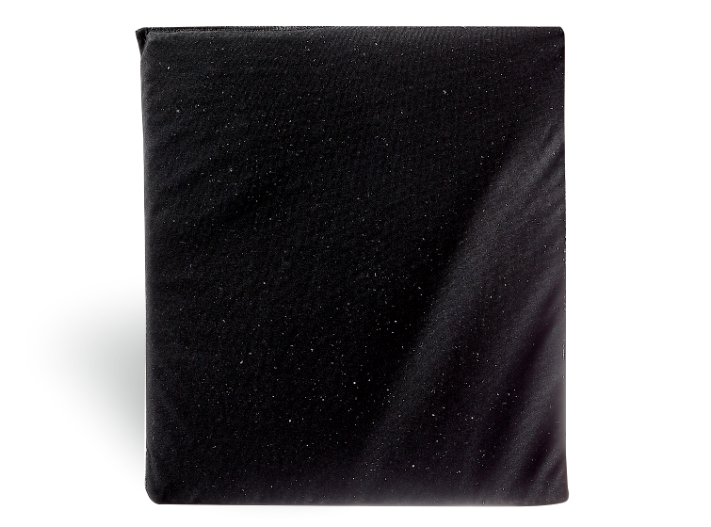
Celrith washable activated carbon odor filter (adhesive carbon type) is a reusable filter that combines coarse particle capture with strong adsorption of formaldehyde, benzene, ammonia and other odorous gases. It is made by bonding fine activated carbon particles onto a flexible polyurethane sponge, creating a low-resistance, washable medium for range hoods, integrated stoves and other air-handling equipment. It is designed for appliance makers, HVAC suppliers and industrial users who need a customizable, long-life odor control layer.
Cooking generates more than grease. Every time oil reaches its smoke point, it releases fine particles and a complex mixture of volatile organic compounds (VOCs), including formaldehyde, benzene and ammonia. These gases are the reason a kitchen can smell long after the visible smoke has cleared. In the same way, air in living spaces can carry odours from furnishings, cleaning products and everyday activities, while vehicle cabins and ventilation systems pull in exhaust and ambient pollutants.
For equipment, the problem is not only odour. Airborne particles settle on fan blades, heat exchangers and duct walls, forming a sticky film that traps more dust and reduces heat transfer. Over time, this buildup increases the load on motors and blowers, and can become a source of unpleasant smells itself. The result is lower airflow, higher energy use and more frequent maintenance.
A range hood or integrated stove relies on a steady airflow path. When the filter ahead of the fan becomes clogged with grease and dust, the motor has to work harder to move the same volume of air. That extra effort shows up as noise, heat and wear on bearings. In ventilation systems, a loaded pre-filter can cause pressure drop to rise, forcing fans to run longer and consume more energy.
Odour is a separate load. Standard mechanical filters capture particles but do not remove gases. Without an adsorption stage, those gases pass through the system and can recirculate into the room, or be exhausted into neighbouring spaces. For appliance manufacturers, this creates a customer experience problem: the product may look clean yet still leave lingering smells. For end users, it means repeated purchases of disposable filters that add cost and waste.
Celrith addresses both loads with a single structure. The base is a high-polymer polyurethane sponge with open cells that allow air to pass at low resistance. Fine powdered or granular activated carbon is fixed to the sponge surface using a special curing process. This adhesive carbon layer gives the filter its dual function: the sponge traps larger particles such as hair and dust as a preliminary filter, while the carbon adsorbs odorous gases including formaldehyde, benzene and ammonia.
The material is flexible and can be cut into almost any shape, so it fits tight spaces and irregular housings without the need for a rigid frame. It is also washable. Rinsing with water removes accumulated dust and grease from the sponge, and the bonded carbon remains in place, allowing repeated use. This contrasts with disposable carbon pads that are thrown away after a short period. The low airflow resistance means the filter can be added upstream of a fan without significantly reducing system performance.
Because the filter is available in thicknesses from 3 mm to 50 mm and in a range of pore densities (PPI), it can be tuned to the specific balance of airflow and contact time required by each application. Celrith supplies the material in sheet form or as stamped parts, supporting OEM and ODM projects from initial sample to mass production.
| Item | Detail |
|---|---|
| Product name | Washable activated carbon filter (sponge type) |
| Core substrate | Polyurethane sponge |
| Adsorption material | Fine powdered or granular activated carbon, fixed by a special curing process |
| Filtration function | Coarse particle capture (hair, dust) plus adsorption of formaldehyde (HCHO), benzene, ammonia and other harmful gases |
| Physical features | Washable and reusable; very low airflow resistance; flexible and easy to cut; good air permeability |
| Typical applications | Air purifier pre-filter layer; fresh air ventilation pre-filter; car air conditioning filter; central air conditioning return air inlet; industrial vacuum cleaner |
| Customisation | OEM/ODM supported. Thickness from 3 mm to 50 mm, various pore densities (PPI) and outer dimensions; stamping and forming services |
| Quality system | Produced in 20,000 m² of cleanrooms; company certified to ISO 9001, ISO 14001 and IATF 16949 |
Appliance manufacturers integrate this filter as a pre-filter layer in air purifiers, where it captures coarse dust before the main HEPA stage and adds odour control. Fresh air ventilation systems use it to reduce incoming odours and gases, protecting downstream filters and improving indoor air quality. Automotive suppliers specify it for car air conditioning filters, benefiting from the flexible sponge that conforms to irregular housings.
In commercial buildings, the filter is fitted at central air conditioning return air inlets to capture dust and odours before air is recirculated. Industrial vacuum cleaner makers use it as a final odour stage, particularly where fine dust carries unpleasant smells. Across these applications, the common requirement is a filter that can be washed and reused, reducing consumable costs and maintenance frequency.
Celrith products comply with REACH and RoHS environmental regulations, and compliance documents are available on request. The company holds ISO 9001, ISO 14001 and ISO 45001 certifications, and added IATF 16949 automotive quality management certification in 2024. These systems cover environmental management and occupational health and safety as well as quality.
Our own laboratory is accredited by CNAS (China National Accreditation Service for Conformity Assessment) and can issue test reports for filtration efficiency, dust holding capacity and airflow resistance. Production takes place in a 50,000 m² manufacturing facility, which includes six cleanrooms totalling 20,000 m². With more than 20 years of experience in filter development and manufacturing, we have supplied customers in Europe, the United States, Japan and South Korea for over two decades, and have developed more than 1,000 filter solutions. Multiple automated production lines support monthly output in the millions of pieces. The company is based in Zhongshan, Guangdong, China.
To receive a tailored quotation, please tell us the device or vehicle model, the required size or a drawing, the airflow or water flow (if relevant), the operating conditions, and your estimated quantity. Our team will confirm the appropriate thickness, pore density and carbon grade, and provide samples for evaluation. Contact us to start the conversation.
The filter captures coarse particles such as hair and dust through its polyurethane sponge, and adsorbs odorous gases including formaldehyde (HCHO), benzene and ammonia through the bonded activated carbon. This dual action makes it suitable for kitchen odours, vehicle cabin air and ventilation pre-filtration. For specific removal efficiency data, our CNAS-accredited laboratory can provide test reports.
Under normal household use, the filter can be washed with water and reused for 12 to 18 months. Washing removes accumulated dust and grease from the sponge while the bonded carbon remains in place. Replacement is recommended when odour control noticeably declines or the sponge shows permanent deformation. Actual life depends on contaminant load and washing frequency.
Yes. We offer OEM and ODM customisation, including thickness from 3 mm to 50 mm, various pore densities (PPI), and outer dimensions. The flexible sponge can be stamped or cut into circular, square or irregular shapes to fit specific housings. Logo printing and packaging options are also available.
For this product, standard specifications typically have an MOQ of 1,000 to 2,000 pieces, while customised items may require 3,000 to 5,000 pieces depending on tooling. Standard stock items ship in 3 to 7 days; custom orders generally take 25 to 35 days after sample and order confirmation. We can discuss flexible arrangements based on your project.
Yes. We provide standard samples free of charge (you cover international courier costs) and custom samples for a development fee, which is usually refundable or deductible against a bulk order. Standard samples are dispatched in 1 to 3 working days, custom samples in 7 to 15 working days. Each sample comes with a technical specification sheet and, where applicable, a CNAS test report.
Because the filter can be rinsed and reused, it replaces repeated purchases of disposable carbon pads. The bonded carbon is designed to stay in place during washing, so performance is restored without replacing the whole filter. Over the 12 to 18 month service life, this lowers consumable cost and reduces waste.
The product meets REACH and RoHS requirements, and compliance documents can be provided. The manufacturing site holds ISO 9001, ISO 14001 and ISO 45001 certifications, and IATF 16949 was added in 2024. Our CNAS-accredited laboratory can issue test reports for filtration efficiency, dust holding capacity and airflow resistance.
Please provide the device or vehicle model, required size or drawing, airflow or water flow (if applicable), operating conditions and estimated quantity. With these details, we can recommend the right thickness, pore density and carbon grade and send a formal quotation. Visit our <a href="/en/contact">contact page</a> to submit your request.