
EN

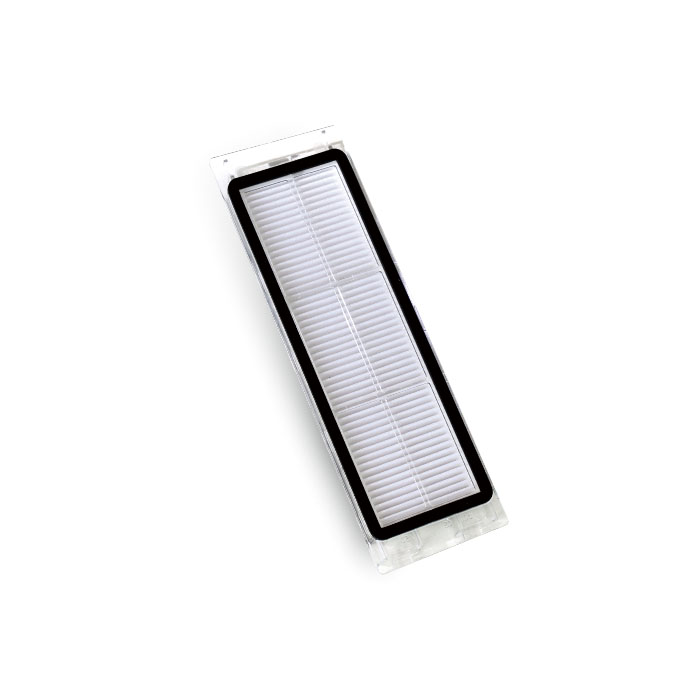
Celrith's washable dust box filter (integrated) is a drop-in filter for robot vacuum cleaners and handheld vacuums, built to trap PM2.5, fine dust, dust mites, pollen and pet dander before they return to the room. It filters the exhaust stream of the machine so captured debris stays in the dust box instead of being blown back into the air. It is made for vacuum OEMs, appliance brands and aftermarket suppliers who need a washable, low-resistance filter that can be tooled to their own dust box dimensions.
A vacuum cleaner does two jobs at once. It lifts debris from the floor, and it pushes air back out through the exhaust. The second job is where most of the trouble hides. Fine dust that escapes the filter does not disappear; it settles again on floors, bedding and surfaces, and it carries the allergens that make a cleaned room feel less clean. Dust mites, pollen and pet dander are small enough to pass through coarse screens and stay suspended for hours.
This is the problem Celrith addresses. The filter uses a high-precision PTFE microporous membrane or a composite PP meltblown medium, both treated against moisture and bacterial growth, to intercept particles at the dust box outlet. The contaminants of concern are the ones users notice: PM2.5, fine dust, dust mites, pollen and pet dander. Holding them inside the dust box stops the secondary contamination that turns a working vacuum into a dust redistributor.
A clogged or poorly matched filter places the load on the motor, not on the dust. As pores fill, resistance climbs, airflow drops and the motor works harder for less suction. Runtime falls, the battery drains sooner, and the user responds by running the machine longer or replacing filters more often. In handheld vacuums the effect is immediate: suction fades within minutes on a loaded filter.
The load also lands on the supply chain. A filter that is too thick or badly sized for the dust box leaks at the edges, so particles bypass the medium entirely. A filter that is not washable turns a reusable appliance part into a consumable, adding cost for the end user and packaging volume for the brand.
Celrith's approach is to lower the resistance while keeping the interception high. The medium is a high-porosity, breathable construction, so operating airflow resistance stays low and the motor keeps its suction instead of straining against a blocked path. In practice this supports battery runtime in cordless vacuums, where every unit of pressure drop is paid for in charge cycles.
The second contrast is durability. The filter is built for repeated washing, with a reinforced structure and materials chosen to resist dirt loading. Edge sealing is handled with an injection-moulded frame and a wrapped rubber seal, so the filter sits against the dust box and air passes through the medium rather than around it. For buyers, the integrated washable format means one part serves the life of the appliance rather than a short replacement cycle.
The third contrast is fit. Celrith does not ask buyers to design around a fixed catalogue size. The filter is tooled 100% to the dust box dimensions of the target device, with the frame, seal and medium grade selected for that machine. PTFE membrane versions are available for volume production runs where washability and moisture resistance matter most.
| Item | Detail |
|---|---|
| Product name | Robot vacuum cleaner / handheld vacuum filter |
| Core filtration material | High-precision PTFE (polytetrafluoroethylene microporous membrane) / composite PP (polypropylene meltblown) and other moisture-resistant, antibacterial media |
| Core purification function | Strong interception of PM2.5, fine dust, dust mites, pollen and pet dander inside the vacuum, preventing secondary exhaust contamination |
| Physical fluid characteristics | High-porosity breathable design with very low operating airflow resistance; does not waste motor suction and supports device battery runtime |
| Main end applications | Smart robot vacuum cleaners, handheld cordless vacuums, bed mite-removal devices, compact car vacuum devices, wet-dry floor cleaners |
| Frame and size customisation | 100% customised to the device dust box dimensions. Eco-friendly injection-moulded frames and wrapped rubber edge sealing; volume OEM production of washable PTFE membrane versions |
| Company certification system | 50,000 m² modern production base and a CNAS-accredited testing centre; ISO 9001, ISO 14001 and IATF 16949 quality management systems |
Celrith supplies this filter to vacuum OEMs building robot cleaners, handheld cordless vacuums, bed mite-removal devices, compact car vacuums and wet-dry floor cleaners. It is also used by appliance brands and aftermarket suppliers who need a washable replacement filter matched to an existing dust box rather than a generic cut-to-size pad.
Typical buyers arrive with a device model, a dust box drawing and an airflow target. From there Celrith agrees the medium grade, frame geometry, seal and packaging, then produces samples for fit and performance testing before volume runs.
Celrith products are designed to meet REACH and RoHS environmental requirements, and compliance documents can be provided for buyer audits. The company holds ISO 9001, ISO 14001 and ISO 45001 system certifications, and since 2024 has also been certified to the IATF 16949 automotive quality management standard.
Testing is handled at the company's own CNAS-accredited laboratory, which can issue reports on filtration efficiency, dust holding capacity and resistance. Production runs in a 50,000 m² plant that includes 6 cleanrooms totalling 20,000 m², keeping filter media protected from secondary contamination during manufacturing. Quality control covers IQC, IPQC and OQC across the process, and multiple automated lines support monthly output in the millions of pieces. Celrith has more than 20 years of filtration development and manufacturing experience, has developed over 1,000 filtration solutions, and has exported to Europe, the United States, Japan and South Korea for more than 20 years. The company is based in Zhongshan, Guangdong, China.
To quote this filter accurately, tell us the device or vehicle model it fits, the dust box size or a drawing, the airflow the machine is designed for, the operating conditions (dry dust, pet hair, bedding or car use), and the quantity you plan to order. With those details Celrith can confirm the medium grade, frame and seal, and return a costed proposal. Send your requirements through the contact page and our team will respond.
The filter intercepts PM2.5, fine dust, dust mites, pollen and pet dander from the vacuum exhaust stream. Its PTFE microporous membrane or composite PP meltblown medium is treated to resist moisture and bacterial growth. Holding these particles in the dust box prevents the secondary contamination that occurs when fine dust is blown back into the room.
The medium uses a high-porosity, breathable construction with very low operating airflow resistance. Because the motor is not working against a blocked path, suction is preserved and cordless vacuums can use more of their charge on cleaning. This matters most in handheld models, where airflow loss is felt within minutes on a loaded filter.
Yes. Celrith tools the filter 100% to the dust box dimensions of the target device, with injection-moulded frames, wrapped rubber edge sealing and a medium grade selected for that machine. Buyers can specify size, structure, media grade, frame material, logo and packaging. Washable PTFE membrane versions are available for volume production.
Yes. Share the device or vehicle model, dust box size or drawing, airflow target, operating conditions and planned quantity, and Celrith will confirm the configuration and provide a costed quote. Samples can then be produced for fit and performance testing before a volume order is placed. Start via the contact page.
Minimum order quantity depends on whether the filter is a standard size or a custom tooling project, and on the media and frame specified. Because each configuration is quoted individually, Celrith confirms MOQ together with price once the device model and drawing are reviewed. Include your expected annual volume in the inquiry for the most useful answer.
Lead time depends on the configuration, tooling requirements and order volume, and is confirmed in the quotation. Multiple automated production lines support monthly output in the millions of pieces, which helps absorb repeat and high-volume orders. Your confirmed order schedule will state the delivery date.
The filter is designed for repeated washing, so replacement depends on how heavily the machine is used and the dust load it sees. Users should wash it when suction fades or the dust box indicator suggests reduced airflow, and inspect the frame and seal at the same time. Celrith does not quote a fixed replacement interval; device makers can set one based on their own testing.
Celrith products are designed to meet REACH and RoHS requirements, and compliance documents can be supplied. The company holds ISO 9001, ISO 14001 and ISO 45001 certifications and has been IATF 16949 certified since 2024. Filtration efficiency, dust holding capacity and resistance can be tested at the company's CNAS-accredited laboratory. Contact us with your compliance checklist.