
EN

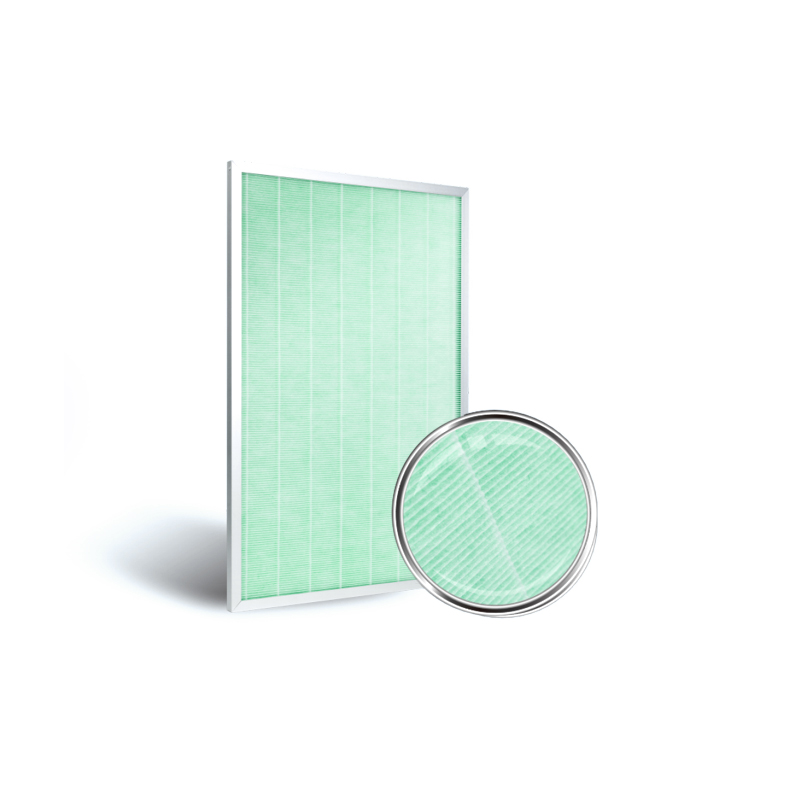
The Celrith washable primary efficiency filter is a reusable pre-filter that captures coarse dust, hair, fibres and insects before they reach coils, fans and downstream filters. It is built around a tough PET (polyester) media in a corrosion-resistant aluminium frame, available in G3, G4 and M5 efficiencies. It suits facility teams, OEMs and contractors running commercial HVAC, industrial ventilation, cleanroom pre-stages and high-dust production areas. Celrith makes it in Zhongshan, Guangdong, China, for buyers who want to cut filter waste without losing protection.
Most air-handling problems start small. Coarse dust, lint, hair and insect debris enter through outdoor-air intakes and return grilles, then settle on heat-exchange surfaces and in ductwork. In heavy-dust workshops the load is constant; in humid exhaust streams fibres clump and stick. Once that layer builds, it does two things: it restricts airflow and it feeds the next filtration stage with a burden it was never sized to take.
Waterborne impurities bring a parallel problem in washable systems. A filter that is rinsed and reinstalled must survive repeated wetting without the media swelling, fraying or losing its shape. Cheap media degrade quickly under that cycle, so the filter becomes a disposable item in disguise. The Celrith design addresses both the contaminant load and the cleaning load, which is why the media and frame are specified together rather than separately.
When pre-filtration is weak, the cost moves downstream. Coils foul, fan energy rises, and medium or high-efficiency filters downstream load up faster and need replacing sooner. In data centres, energy-storage rooms and semiconductor facilities, that chain reaction is expensive because every downstream change means downtime and validated procedures.
There is also a waste load. Disposable pre-filters are changed frequently, stored, transported and discarded. A washable primary filter shifts that pattern: the same frame and media stay in service across multiple cleaning cycles, so consumable volume drops. The trade-off is that the filter must be robust enough to justify cleaning, which is where the PET media and aluminium frame matter.
Celrith uses a high-throughput, wear-resistant PET (polyester) filter mesh. PET holds its structure when wet, so the media can be washed repeatedly without the fraying that shortens the life of weaker synthetics. The frame is aluminium, chosen for corrosion resistance and rigidity: it resists pressure and holds its shape so air does not bypass the media at the edges. That combination is what allows the filter to be rinsed and reinstalled rather than thrown away.
The filter is rated for a nominal operating face velocity of 2.5 m/s, a figure chosen for high-airflow industrial fresh-air systems. At that velocity the open structure keeps resistance low while still intercepting coarse contaminants. Efficiency grades G3, G4 and M5 let you match the pre-filter to the downstream stage: G3 and G4 for general coarse protection, M5 where a finer pre-filter is needed ahead of higher-efficiency final filters.
The practical contrast is simple. A disposable pre-filter is replaced on a schedule; a Celrith washable filter is cleaned on a pressure-drop schedule. When resistance rises to roughly twice the initial value (commonly around 250 Pa), the filter is rinsed from the clean-air side with water or a mild neutral detergent at no more than 40°C, dried fully, and reinstalled. High-pressure jets should not be aimed directly at the media.
| Item | Detail |
|---|---|
| Product name | Washable primary / medium-efficiency air filter |
| Efficiency grades | G3, G4, M5 |
| Media | High-throughput, wear-resistant PET (polyester) filter mesh |
| Frame | Corrosion-resistant aluminium frame |
| Nominal operating face velocity | 2.5 m/s (optimised for high-airflow industrial fresh-air systems) |
| Typical applications | Industrial plant HVAC, high-humidity exhaust environments, heavy-dust workshop pre-filtration, commercial building central air-handling intakes |
| Standard sizes (W × H × D) | 12×24×2 in (289 × 594 × 46 mm); 16×20×2 in (390 × 492 × 46 mm); 20×20×2 in (492 × 492 × 46 mm); 20×24×2 in (492 × 594 × 46 mm); 24×24×2 in (594 × 594 × 46 mm) |
| Customisation (OEM/ODM) | Non-standard sizes, thicknesses and efficiencies supported; plant of 50,000 m² and CNAS laboratory; ISO/IATF16949 certified |
Celrith supplies this filter across several sectors where pre-filtration carries real operational weight. Commercial HVAC and ventilation systems use it at central air-handling intakes and in fresh-air units. Pharmaceutical and food-processing facilities place it upstream of higher-efficiency stages. Automotive and machinery plants, energy and metal-smelting operations, and heavy-dust workshops use it where fibrous and coarse particulate loads are high. It also appears in energy-storage installations, AI-computing and data-centre air systems, semiconductor and microelectronics facilities, and medical and cleanroom environments as a front-end protective stage.
The common thread is a system that needs coarse protection with low resistance and a maintenance routine built around cleaning rather than disposal. Facilities with high humidity or washdown conditions benefit most, because the aluminium frame and PET media are chosen to tolerate moisture.
Celrith products comply with REACH and RoHS environmental regulations, and compliance documentation can be supplied. The company holds ISO 9001, ISO 14001 and ISO 45001 certifications, and added IATF 16949 automotive quality management certification in 2024.
Testing is carried out in the company's own CNAS-accredited laboratory, which can issue reports on filtration efficiency, dust-holding capacity and resistance. Production runs in a 50,000 m² plant that includes six cleanrooms totalling 20,000 m². Multiple automated production lines support high monthly output, and quality control follows IQC, IPQC and OQC stages through the process. Celrith has more than 20 years of filtration development and manufacturing experience, exports to Europe, the United States, Japan and South Korea, and has developed over 1,000 filtration solutions. OEM/ODM work covers dimensions, structure, media grade, frame material, logo and packaging.
To quote accurately, please send the device or vehicle model, the size you need or a drawing, the airflow or water flow, the operating conditions (temperature, humidity and contaminant type), and the quantity you expect to order. Share these details through the contact page and the Celrith team will respond with a specification and price.
It intercepts coarse dust, hair, fibres and insects before they reach coils, fans or downstream filters. It is a pre-filter, so it is designed to protect the stages behind it rather than to serve as a final filter. Efficiency grades G3, G4 and M5 let you match the level of protection to the system.
The Celrith washable primary filter is available in G3, G4 and M5 grades. G3 and G4 handle general coarse pre-filtration, while M5 gives a finer pre-filter ahead of higher-efficiency final stages. The right grade depends on the dust load and the downstream filter specification.
It is cleaned rather than replaced on a fixed calendar. Clean it when resistance rises to about twice the initial value, commonly around 250 Pa. Rinse from the clean-air side with water or a mild neutral detergent at no more than 40°C, dry fully, then reinstall.
Yes. Celrith supports OEM/ODM work covering non-standard sizes, thicknesses and efficiencies. Send a drawing or the dimensions you need, along with the airflow and operating conditions, and the team will confirm feasibility. Standard sizes are also listed in the specification table.
Samples can be arranged for evaluation before an order. Share the device or vehicle model, size or drawing, airflow, operating conditions and expected quantity through the contact page. The Celrith team will then provide a quote and sample arrangement.
Minimum order quantity and lead time are confirmed per project based on size, grade and quantity. Because the filter is offered in standard sizes and custom builds, the commercial terms differ between them. Send your requirement and the team will state both clearly.
The PET media and aluminium frame are chosen to tolerate repeated wetting and cleaning. That makes the filter a fit for high-humidity exhaust environments and facilities with regular washdown routines. Correct drying before reinstallation is part of keeping it in service.
Celrith products meet REACH and RoHS requirements and compliance documents can be provided. The company holds ISO 9001, ISO 14001, ISO 45001 and, since 2024, IATF 16949 certification. Testing is carried out in the company's CNAS-accredited laboratory. Contact us to discuss the documents your project needs.