
HI-IN

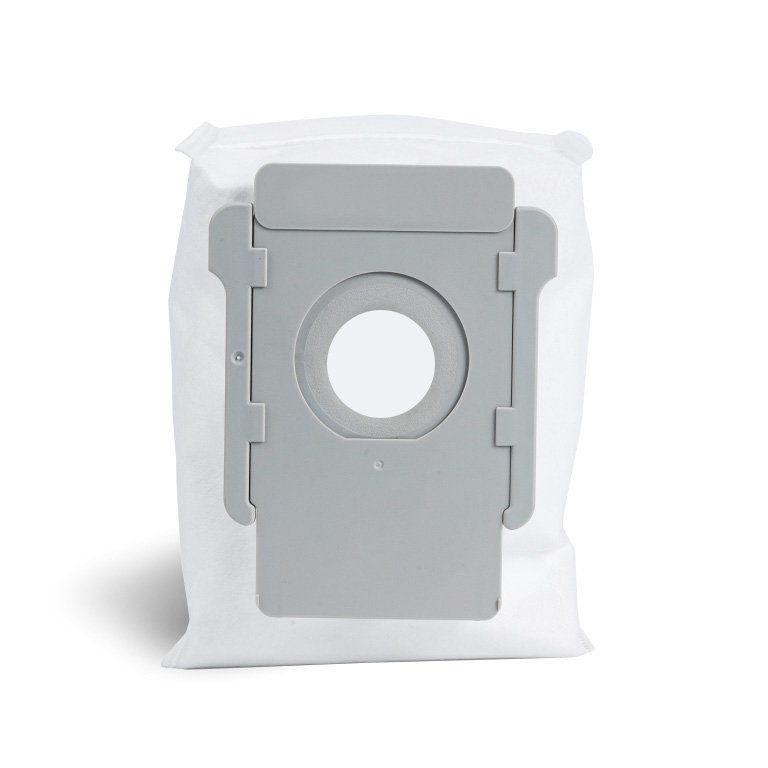
Celrith dust bags with interchangeable covers are disposable filtration bags for robot vacuum auto-empty docking stations, cordless stick vacuums and commercial vacuum bins. They capture fine dust (PM2.5), dust mites, pollen and hair in a multi-layer composite PP (polypropylene nonwoven plus meltblown) construction, so particles stay in the bag instead of returning to the room through the exhaust. They are made for appliance brands, vacuum OEMs, distributors and private-label programmes that need a bag matched to a specific dock or bin.
A vacuum cleaner does not remove dust so much as move it. Every pass lifts fine particles, pollen, mite debris and hair from floors and textiles into the airstream, and the bag is the last barrier before that airstream goes back into the room. When the bag is a single thin layer, the smallest fraction passes through and settles again on surfaces within minutes.
There is an odour side to the same problem. Dust held in a bin or a loose bag keeps decomposing, and the exhaust carries that smell back into the living space. Celrith addresses both: a multi-layer composite PP meltblown medium traps fine particles and allergens, and an optional activated-carbon composite version adds odour and gas control for households with pets or enclosed docking areas.
Contaminants also load the machine itself. A bag that clogs quickly raises resistance across the air path, and the motor works harder for less suction. Users notice it as declining pickup long before the bag looks full. A bag that seals poorly leaks dust back at the docking station, which is exactly where a robot returns after every cleaning run.
Emptying is the other load point. Loose debris tipped from a bin into a bin bag releases a dust cloud at close range. The Celrith design uses a sliding handle that seals the bag automatically as it is withdrawn, so the contents are closed off before the bag leaves the dock and the user never handles the dust directly.
The filter medium is a multi-layer high-precision composite PP structure, combining polypropylene nonwoven and meltblown layers with an antibacterial filter cotton option. The high-porosity, breathable design keeps running resistance low while holding a high dust load, so suction is preserved across the service interval rather than fading early.
The interface is built around a plug-in cover. Celrith supplies cardboard collars or eco-friendly injection-moulded plastic collars, matched to the docking station or bin opening, and supports a sliding auto-seal version and an activated-carbon odour-control version. Because the cover is a separate, customisable part, the same bag body can be adapted across several appliance platforms.
| Item | Detail |
|---|---|
| Product name | Dust bag for handheld vacuum cleaners and robot vacuum auto-empty docking stations |
| Core media construction | Multi-layer high-precision composite PP (polypropylene nonwoven plus meltblown) with antibacterial filter cotton material |
| Filtration function | High-precision interception of fine dust (PM2.5), dust mites, pollen, hair and other household allergens; prevents secondary exhaust contamination |
| Airflow characteristics | High-porosity breathable design with very low operating resistance and high dust-holding capacity; does not drain motor suction |
| Main end applications | Robot vacuum auto-empty docking stations, cordless handheld vacuums, commercial vacuum bins |
| Size and collar customisation | Fully customised to device dimensions; cardboard collars or eco-friendly injection-moulded plastic collars; sliding auto-seal and activated-carbon odour-control versions available |
| Company certification systems | 50,000 m² modern clean production plant and a CNAS-accredited testing centre; ISO 9001, ISO 14001 and IATF 16949 quality management systems |
Celrith dust bags serve appliance brands and vacuum OEMs building auto-empty docking stations, accessory brands and distributors supplying replacement bags, and commercial cleaning operations running vacuum bins. Households use them as the consumable that keeps a robot or stick vacuum working at its rated suction; trade buyers use them as a private-label line matched to their own packaging and instructions.
Because the cover and collar are custom parts, the bag can be developed from a device sample, a drawing or a 3D model. Celrith has developed more than 1,000 filtration solutions and applies that library to new docking-station geometries rather than starting from a standard shell.
Celrith products are designed to meet REACH and RoHS environmental requirements, and compliance documentation can be supplied with orders. The company holds ISO 9001, ISO 14001 and ISO 45001 system certification, and added IATF 16949 automotive quality management certification in 2024.
Filtration performance, dust-holding capacity and resistance data can be issued by the company's own laboratory, which is accredited by CNAS (China National Accreditation Service for Conformity Assessment). Production runs in a 50,000 m² plant that includes six cleanrooms totalling 20,000 m², with IQC, IPQC and OQC checks across the process and automated lines capable of several million pieces per month. Celrith has more than 20 years of filter development and manufacturing experience and has exported to Europe, the United States, Japan and Korea for over 20 years. The company is based in Zhongshan, Guangdong, China.
To quote a Celrith dust bag accurately, tell us the device or vehicle model it fits, the bag size or a drawing of the collar and cover, the airflow your unit runs at, the operating conditions (dust type, pet hair, odour control needed), and the quantity you expect per order and per year. Send these details through the contact page and our team will confirm the tooling route and sample plan.
The multi-layer composite PP meltblown medium intercepts fine dust (PM2.5), dust mites, pollen, hair and other household allergens, and keeps them from returning to the room through the exhaust. An activated-carbon composite version adds odour and gas control. The antibacterial filter cotton option targets contaminants that cause odour in stored dust.
The bag uses a high-porosity breathable design with very low operating resistance and a high dust-holding capacity, so airflow is maintained as the bag fills. That keeps the motor from working against a rising pressure drop, and suction holds closer to its rated level across the service interval.
Yes. Size, collar structure and cover interface are fully customised to the device, using cardboard collars or eco-friendly injection-moulded plastic collars. Celrith works from a device sample, drawing or 3D model, and can add a sliding auto-seal or activated-carbon version to the same bag body.
Replacement depends on dust load and bag capacity, so it should be set against the dust-holding capacity of the specific bag size rather than a fixed calendar. Because resistance stays low as the bag fills, users should follow the appliance's bag-full indication or the interval agreed for the customised version. The auto-seal handle closes the bag on removal, so changing it does not release dust.
Yes. Send the device model, bag size or drawing, airflow, operating conditions and expected quantity through the contact page, and the team will confirm the tooling route and sample plan before quoting. Compliance documentation for REACH and RoHS can be supplied with the quotation.
MOQ depends on the specification and is confirmed per project, since custom collars, covers and packaging change the production setup. Share your target quantity and annual volume so the quotation reflects the right tooling and supply plan.
Lead time is set per order once the specification, tooling and packaging are confirmed, because custom covers and collars require their own development step. Monthly capacity of several million pieces on automated lines supports repeat and volume orders. Confirm the schedule with the team when the drawing is approved.
The bags are designed to meet REACH and RoHS environmental requirements, and compliance documents can be provided. Celrith holds ISO 9001, ISO 14001 and ISO 45001 certification and added IATF 16949 in 2024, with testing available from its CNAS-accredited laboratory. Contact us with your market requirements to confirm the documentation set.